
 By
By
Sara Dedeaux, a Mississippi native, has always made her own path. She started working at Domino´s Pizza at 15 years old, then trained as a florist, and eventually bought the shop where she’d learned the trade. She ran her own business for five years. But when health issues forced her to step back from physical labor, everything changed.
“Every skill set that I had, I could no longer find work doing that,” Dedeaux said.
Her story is not uncommon. For decades, young people across the Southeast have faced the same challenge: many have been priced out of higher education, and programs often haven’t kept pace with employer needs. Many left for opportunities elsewhere. Between 2010 and 2020, 10% of Mississippians ages 25 to 34 moved out of state, taking their skills, energy and children with them. That kind of loss ripples through a community, shrinking school enrollment and leaving fewer tax dollars for schools, libraries and public services. The children who remain grow up with fewer resources, fewer opportunities and less reason to stay, continuing the cycle.
Still, Dedeaux kept looking. A career in technology had never crossed her mind, but she started from what she knew.
“I can sit in a recliner. I can use a computer,” she thought. “I have to be able to do something with those skills.”
That’s when she found Mississippi Coding Academies (MCA).
Building a bridge to technology careers
MCA offers a tuition-free, six-month program in software development and emerging technologies — with instruction, mentorship and direct employer connections built in. With support from the W.K. Kellogg Foundation (WKKF), MCA has grown from one location in Jackson to five campuses statewide, including sites in the Delta and partnerships with the Mississippi Library Commission to bring internet access and study space to rural communities.
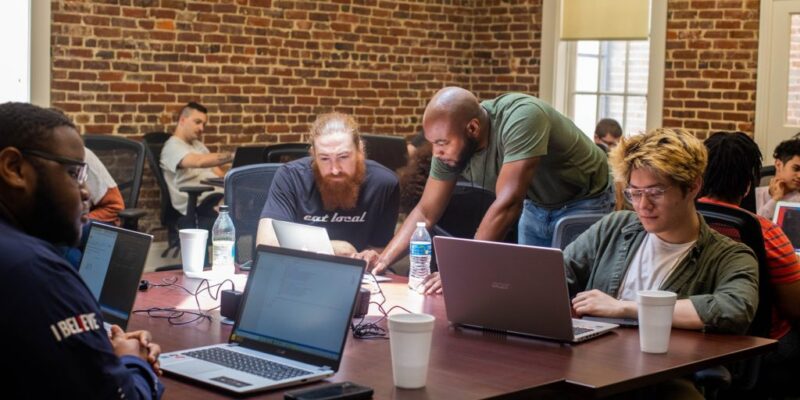
When Dedeaux walked in, she didn’t know what to expect. Many students arrive the same way: Can I really do this? Am I capable of learning this? MCA is built to meet them at that moment. The program provides laptops, transportation assistance, childcare partnerships, mentorship and flexible learning — removing the barriers that keep many people out of fast-growing fields.
Creating opportunity at home
Since 2017, MCA has trained over 500 individuals across five campuses, the majority from historically underserved communities, including students of color and first-generation college students. In regions where agriculture and manufacturing once dominated, young people are now building tech careers.
A typical graduate starts at a $40,000 salary — often two to four times their previous earnings. Graduates have landed jobs in software development and IT, and at companies like Amazon and Comcast, with six-figure salaries. According to MCA’s internal analysis, graduates have contributed an estimated $20 million to Mississippi’s economy over nine years. When people can build careers at home, their paychecks, taxes and families stay too.
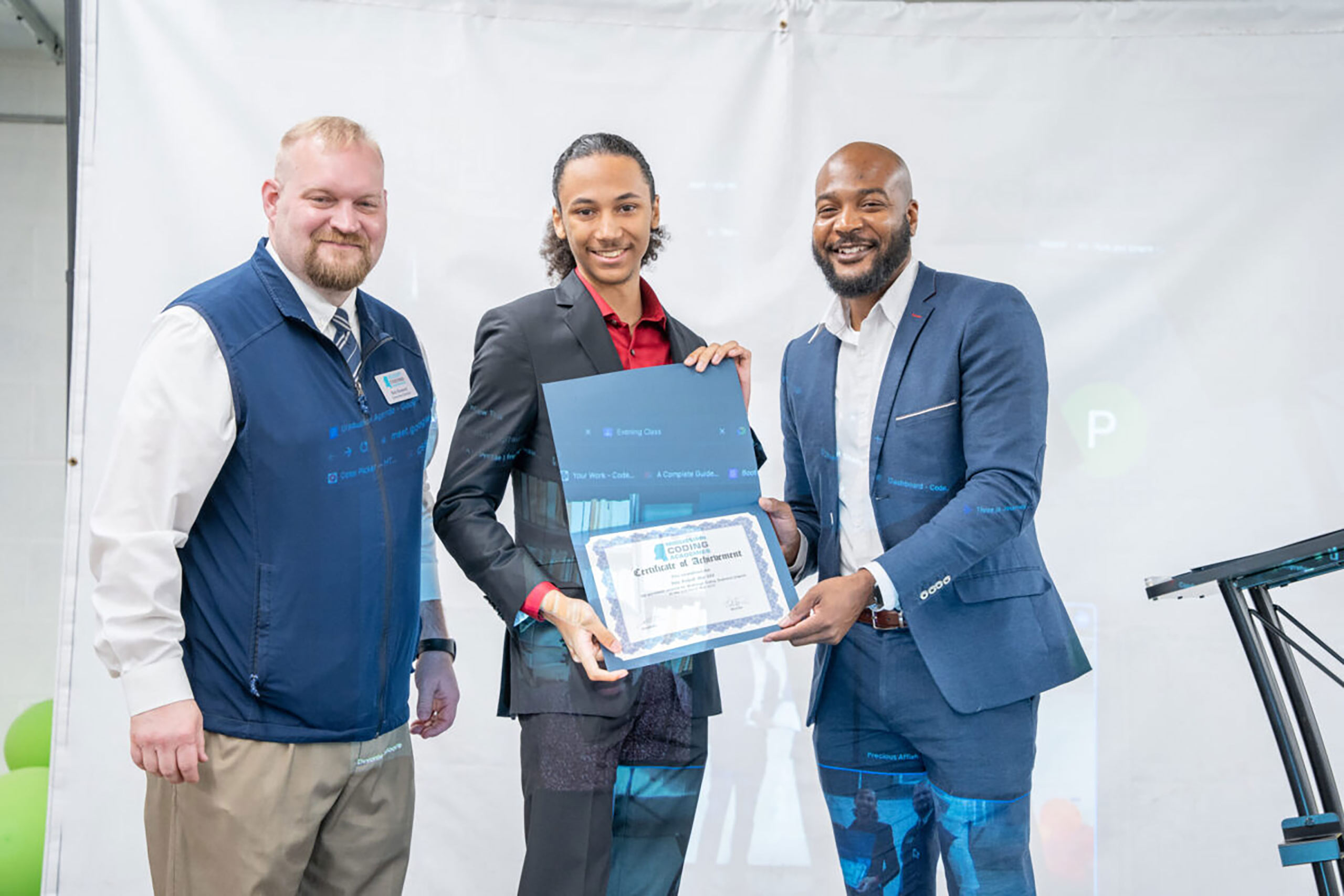
For Dedeaux, graduation opened doors she hadn’t known existed. She interviewed with banks and technology companies and began to see her own potential differently.
“It opened up more opportunities than just tech,” Dedeaux said.
She chose to return to MCA – this time as an employee. She’s not alone: nine of MCA’s 13 staff members are program graduates who stayed to help others make the same journey. Now Dedeaux is the one welcoming nervous new students, reassuring them that they belong and helping them build what she built: a future in tech, right here at home.
Explore more
- Mississippi Coding Academies
- Losing Our Minds: Brain Drain across the United States, United States Congress, Joint Economic Committee
- FAQ: The Mississippi ‘Brain Drain’ crisis, Mississippi Today





Comments