 By
By 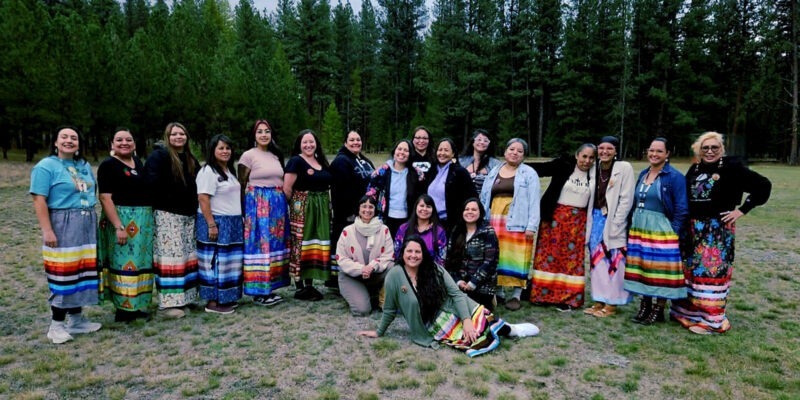
Each new life — ushered into the world with helping hands — is an opportunity to set a strong foundation for a healthy path.
High-quality maternal care is essential to that path. It respects cultural traditions and recognizes that effective prenatal and perinatal care supports mothers, babies and communities.
Two W.K. Kellogg Foundation (WKKF) grantees are proof of this commitment, building flourishing organizations that welcome babies into families and communities with open arms.
HealthConnect One: Sustained support for families
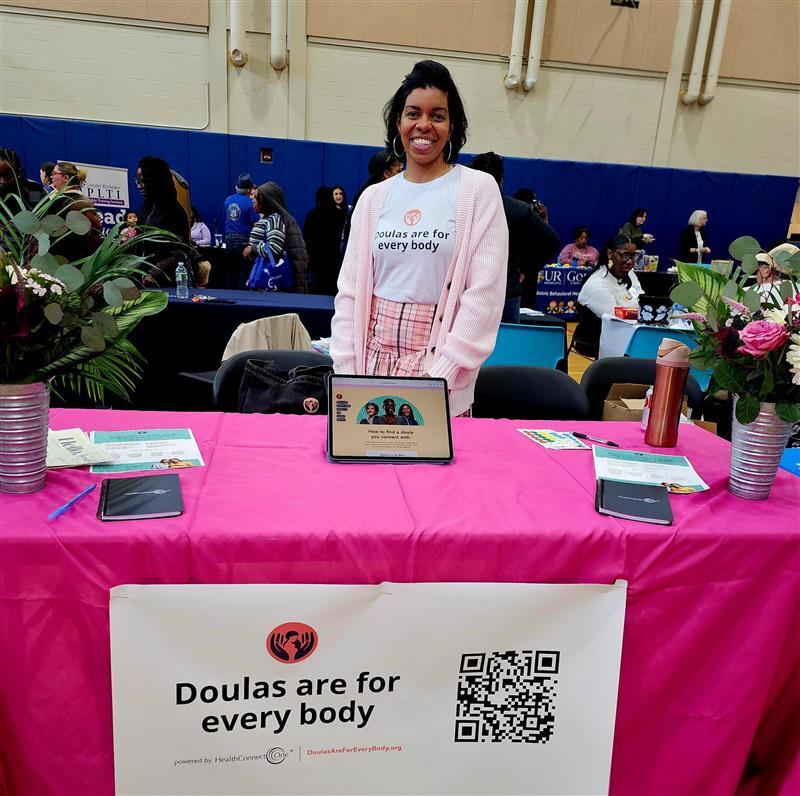
From its home base in Chicago, HealthConnect One trains and advocates for doulas, breastfeeding peer counselors and community health workers across the country.

“We’re building a community infrastructure that allows families — specifically Black, Brown and Indigenous families — to experience safe, respectful, cultural care,” said Dr. Twylla Dillion, president and CEO of HealthConnect One.
Well-trained birth workers help bring the wider community into the birth experience and the period after delivery.
“Birth workers’ roles are extended,” Dillion said. “There’s a continuation of support and care all the way through labor and delivery into postpartum.”
HealthConnect One’s emphasis on this extended commitment highlights that parents need love and connection even after their baby enters the world.
“A lot of the really scary stuff happens once you get that little bundle home,” said Dillion.
“And a doula is not just there for mom. The doula sees what's happening in the family, taking note of challenges and helping the family navigate their new reality.”
Every birth, even with a doula providing extra support, happens within a wider system of care that still has significant room for improvement.
“I wish the systems functioned better,” said Dillion. “But you can’t just instantly scrub the system, so you have to build things that help fortify families and communities for the long haul.”
Berry Medicine: Care and connection
Dillion calls the Midwest home but she is in community with Amy Stiffarm, who lives and works 1,500 miles away in Montana.
Stiffarm, a member of the Aaniiih (White Clay People) Tribe of the Fort Belknap Indian Community, is leading the newly formed organization, Berry Medicine Native BirthWork Initiatives, whose mission is to strengthen the health and well-being of Native families by restoring Indigenous cultural practices related to pregnancy, birth and early parenting.
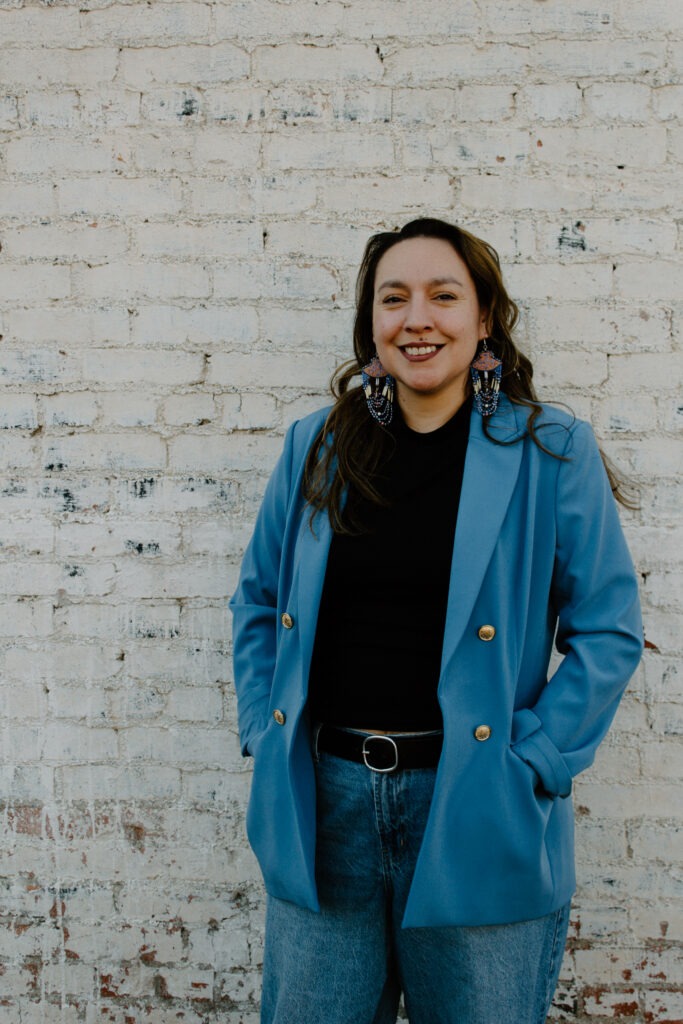
“We are not reinventing this work, we’re reclaiming it,” Stiffarm said.
WKKF provides support to help grow Berry Medicine’s internal capacity and create a strong foundation for the future. Collaboration and partnership with Healthy Mothers, Healthy Babies: The Montana Coalition (HMHB) also enables Stiffarm to transition smoothly from her work for HMHB into leading Berry Medicine.
“We want this to be something that people in Montana can rely on for a long time,” said Stiffarm. “Stability and longevity are really important.”
Just as Dillion and HealthConnect One draw on the insights of local communities, Stiffarm incorporates time-tested wisdom and traditions into her work with Montana families.
“The Indigenous worldview about birth is really holistic and more than just the mother and child,” Stiffarm said. “It's about the community. We’re helping to restore our cultural practices and improve these systems for the next generation.”
Indigenous communities have endured a painful history, including the separation of children, forced attendance at boarding schools, suppression of Native culture and languages, and more. Generations later, the impact is still unfolding.
“I feel like the systems we’re in have really isolated us and separated us and taken away our communal strength,” said Stiffarm.
Addressing the beginning of life is one way for Tribal communities to reassert their dignity and reset for the future.
“This is really about restoring those communal supports and that kinship network,” said Stiffarm. “We’re trying to make sure that everybody is taken care of, at birth and beyond.”
Challenges and change
Even innovative programs with the best intentions like HealthConnect One and Berry Medicine can run into systemic challenges.
Both Dillion and Stiffarm see how payment and reimbursement for services affect the actual reach of maternal and child health services.
“The social safety net can be a tightrope,” said Dillion. “And there are so many things polluting that landscape, so a lot of it comes down to how things are paid for.”
Stiffarm recalled how several years back the state of Montana had provided money for Indigenous doula training, but after completing it, some participants felt guilt and disappointment in themselves because the infrastructure was not yet in place for them to formally begin serving families. Stiffarm recalls saying to them, “Wait a minute. That’s not on you, that’s on us. This is a systems issue.”
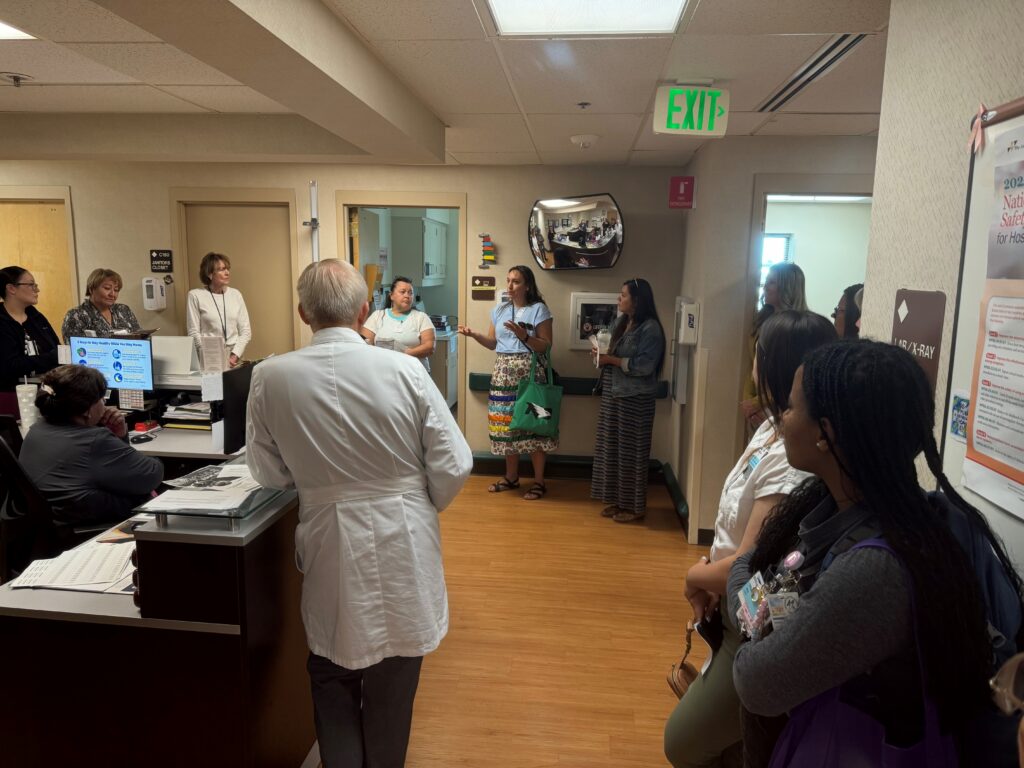
Many of the trained doulas were still working full-time in other roles or they didn’t have adequate child care. And then perhaps the biggest challenge of all — Medicaid didn’t yet cover doula services. Change may be coming to Montana, with the state government recently passing legislation for a doula licensing program that could be a pathway to Medicaid reimbursement.
Stiffarm said there were also powerful insights from the post-training evaluations. “A participant said to me, ‘Until this training, I had never thought about bringing culture into my birth.’ That said everything about what needed to change for Native families in Montana. We need to restore our cultural practices so we can have those protective factors and strengths to improve maternal and child health outcomes and our health overall.”
Family and future
Dillion is part of a long line of family members who have helped bring the next generations into the world. Her great-grandmother was a community midwife, and her grandmother was trained as a midwife in Great Britain. Both were in the room, helping at the delivery of their grandchildren.
“My grandmother was there when I had my first baby, and she was there in spirit when I had my last baby,” Dillion said.
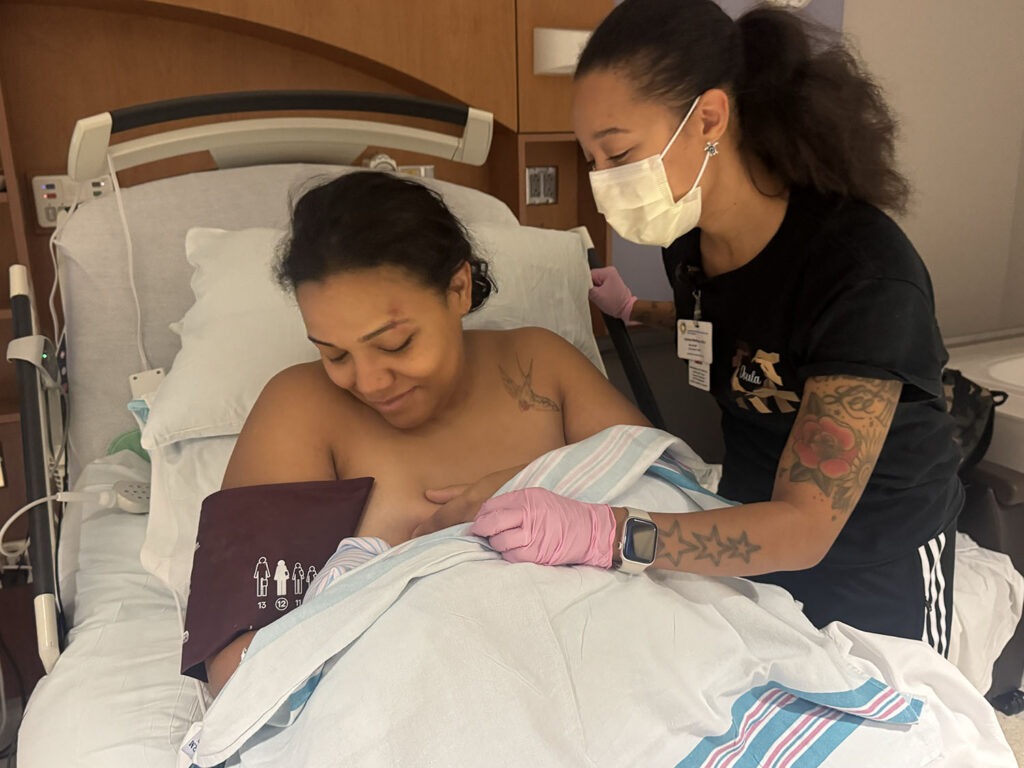
These generational connections are powerful in urban, suburban, rural and Tribal communities.
“When someone has a baby, the whole family shows up if they can, blood relative or claimed,” Stiffarm said. “Our goal is to ensure there is a cultural presence as well by ensuring that cultural knowledge about birth is accessible to those who seek it.”
Both Stiffarm and Dillion, along with support from WKKF, are combining longstanding traditions with modern approaches.
“This is about people being protected by their culture,” Stiffarm said. “And we can combine that culture with the strength of Western medicine. It’s not either or, and it’s not a competition.”
“We all — from the youngest to the oldest — deserve the best of both worlds.”
Explore more
For Indigenous communities, the care received from trained midwives and doulas saves lives and supports vital traditions. Learn how midwives improve health and well-being and watch how they are creating safer futures.
Comments