
 By
By 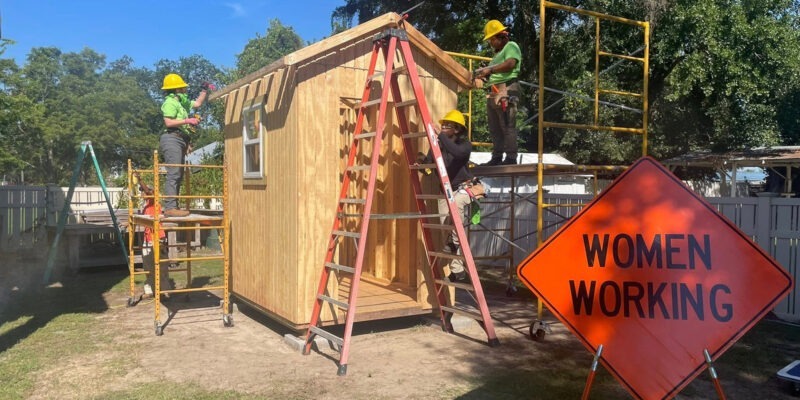
Eight years ago, Brianna Crusoe worked nights at a Mississippi casino to provide for her two young children. At $12 an hour, the job covered the basics — but little more. There was no room for child care, training or long-term stability.
“I knew it wasn’t enough. I was always struggling,” said Crusoe.
Like many working parents, she couldn’t afford to step away from work long enough to gain the education or skills that could lead to higher pay.
The gap
Brianna’s experience reflects a broader reality across the Gulf Coast — and the nation. Across the United States, women are disproportionately represented in low-wage work, especially in some of the lowest-paid occupations. Many are mothers supporting children on earnings that barely cover rent, let alone child care or transportation.
In Mississippi, the challenge is even more pronounced. More than 70% of low-wage workers are women, one of the highest rates in the country. For families, that imbalance often means parents working full time while still struggling to provide the stability children need to thrive.
At the same time, some of the strongest pathways to family-supporting wages remain largely out of reach. Construction jobs — in Mississippi and nationwide — often pay two to three times the minimum wage and offer benefits that can help families build long-term security. Yet women hold just 10% of those jobs.
The barrier isn’t skill. It’s access.
Many training programs assume participants already have reliable child care, flexible schedules, transportation and the ability to go weeks without pay — expectations that effectively exclude working mothers before they ever get started.
“Women are working,” said Ruth Mazara, program director at Moore Community House. “They’re just working jobs that pay terrible wages and have no benefits and no flexibility.”
Building a bridge
Moore Community House set out to change that reality after Hurricane Katrina, launching Women in Construction (WinC) to help rebuild the Gulf Coast while opening doors to higher-paying trades for women.
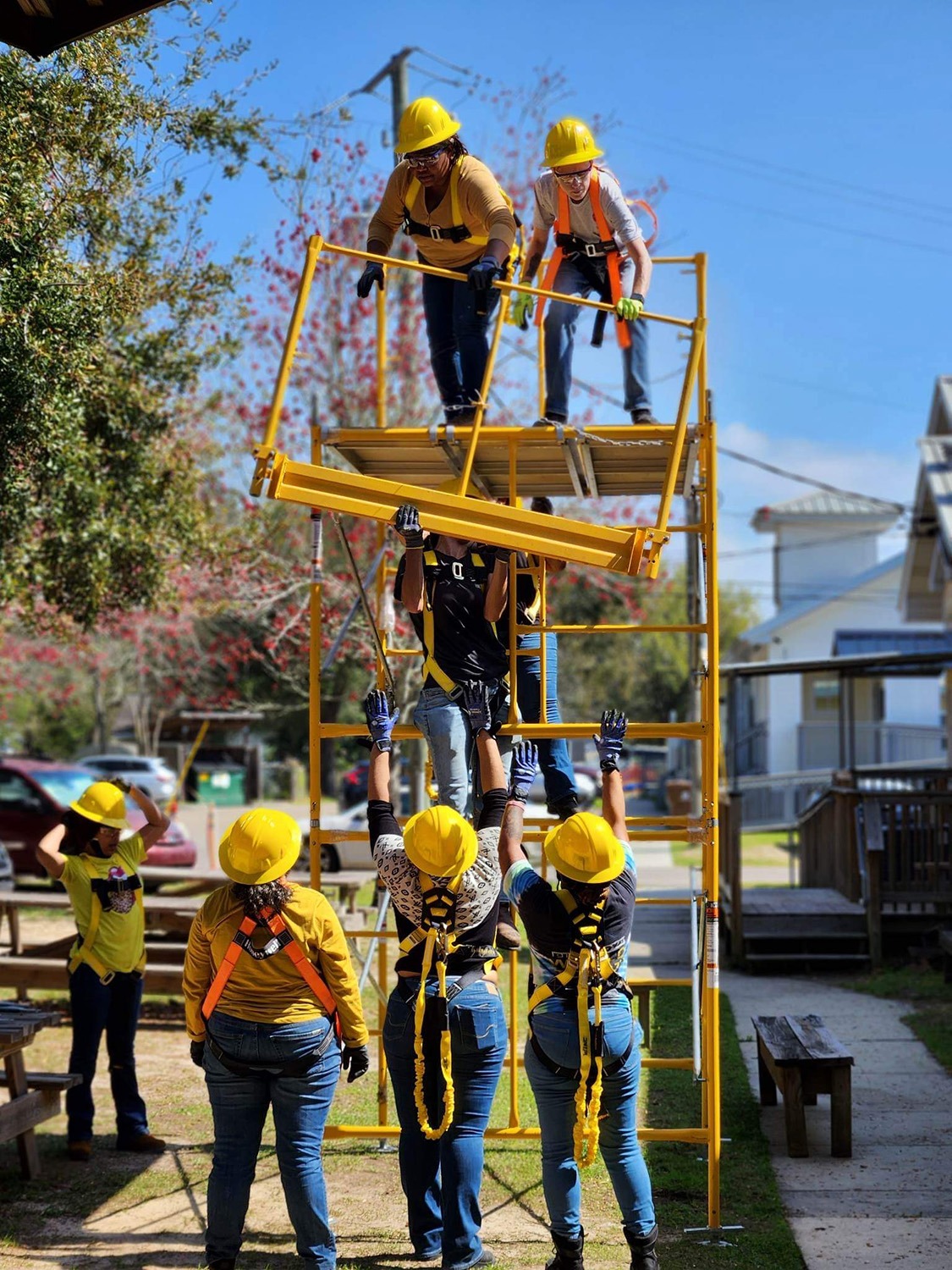
The tuition-free program trains participants in skilled fields such as electrical work and heavy equipment operation through courses ranging from two to 15 weeks. Graduates can also return for one-day classes to earn additional credentials as their careers grow.
But Mazara and the Moore Community House team understood that training alone doesn’t change lives.
Working mothers often face a web of interconnected challenges — including child care and transportation — that must be addressed together. With funding from the Mississippi Department of Human Services, the U.S. Department of Labor and the W.K. Kellogg Foundation, WinC helps remove those barriers by providing child care assistance, transportation support, tools and safety equipment. Job placement and coaching continue long after graduation.
“If we want children to thrive, their parents have to thrive,” Mazara said.
New foundations
For Crusoe, child care support made all the difference.
“Child care really stops people from working,” she said. “That’s why WinC will always win. They know that if the child is taken care of, we can go out here and make the money that we need to provide for the kids. I didn’t have to worry about any child care expenses. That’s a big weight lifter.”
During training, Crusoe earned multiple certifications, including OSHA safety credentials, CPR and heavy equipment. Today, she works as an electrician with health insurance and a 401(k). She also mentors women entering the program, sharing what she’s learned along the way.
“In a few more years, I want to have my own electrical business and employ women,” she said. “When I go to work, I’m not just working for me, I’m working for the next woman who doesn’t even know her life is about to change.”
Since 2008, more than 1,000 women have completed the program, with more than 75% moving into higher-paying careers.
Her story echoes that of Marisol Albizu, who arrived from Puerto Rico six years ago with her husband, their 8-year-old son and 1-year-old daughter. With no nearby family and child care out of reach, steady work felt impossible — until she saw a WinC post on social media.
“I had never picked up a hammer in my life,” Albizu said. But she didn’t need experience. She needed a chance.
She started as a helper at a Gulf Coast shipyard. Then became first class. Then supervisor. Today, she’s a foreman coordinating crews of 17 workers. Last year, she bought her first home.
“This program gives women security,” Albizu said. “And when women feel secure, they’re capable of many things.”
The women who come through Women in Construction build more than careers. They show what’s possible when workforce pathways are designed around the realities of working families — and when investments in parents are recognized as investments in children and communities across Mississippi and beyond.



Comments