Alec Devaprasad stands at Sprout's community garden, where he went from tending his first garden bed to becoming an independent farmer.
After graduating from college, Alec Devaprasad stood in a New Orleans community garden, imagining growing food for his neighbors. He had a clear vision for his future: a garden of herbs and vegetables, from leafy greens and edible gourds popular in South Asian cooking to native Louisiana produce that were hard to find in local grocery stores.
Turning that vision into reality wasn’t simple. He had no formal farming experience, and the path forward wasn’t obvious.His story reflects a broader reality across Louisiana. Many people want to grow food for their communities and build sustainable businesses. But starting a farm, especially as a new, small-scale or urban grower, can be difficult. Access to land remains one of the most significant barriers for aspiring farmers across Louisiana. Learning how to grow at scale and building reliable market relationships are challenges that often separate aspiring growers from long-term success as farmers.
Despite the challenges of getting started, local farmers are needed more than ever. Across Louisiana, families are navigating rising food costs and limited access to fresh, locally grown produce. Economic conditions have made nutritious food too costly to afford and small-scale farming harder to sustain. As a result, Louisiana continues to rank among the states with food insecurity levels well above the national average.
Young plants at Sprout's community garden, where participants in the Urban Agriculture Cohort practice their new skills.
A community gardener becomes a farmer
What Devaprasad had was determination. Sproutbecame the support system that helped turn his vision into a viable path forward.
Through the organization’s Urban Agriculture Cohort — a hands-on training program that covers everything from irrigation and pest management to greenhouse practices and selling at market — Devaprasad learned the foundations of farming. He and other program participants also gained something invaluable: their own garden bed in a shared community space, a place to practice new skills with ongoing support from experienced growers.
“That was my first space of my own to tend to,” he recalled.
From that first row, Devaprasad kept growing. He connected with other local farmers and expanded to a larger plot at Press Street Gardens. Then, through Sprout’s work to help producers find and stay on land, which is supported by the W.K. Kellogg Foundation (WKKF), he acquired his own land through a city initiative that makes vacant lots available for urban agriculture.
Today, he’s growing the foods he envisioned on land he owns in the Lower Ninth Ward.
“Building relationship to a space and the land — just thinking about myself as a steward, and being able to tie it with food production and bringing people together around food — it just feels so nourishing to me,” Devaprasad reflected.
“We know that talent and determination are everywhere, but opportunity is not,” said WKKF Program Officer Kathryn Parker. “Sprout is helping close that gap — supporting growers from their first garden bed to full-scale production, while creating markets where families can afford fresh food. When we invest in the infrastructure that connects land, learning and local markets, we’re not just supporting farms. We’re building a stronger, more equitable food system for Louisiana.”
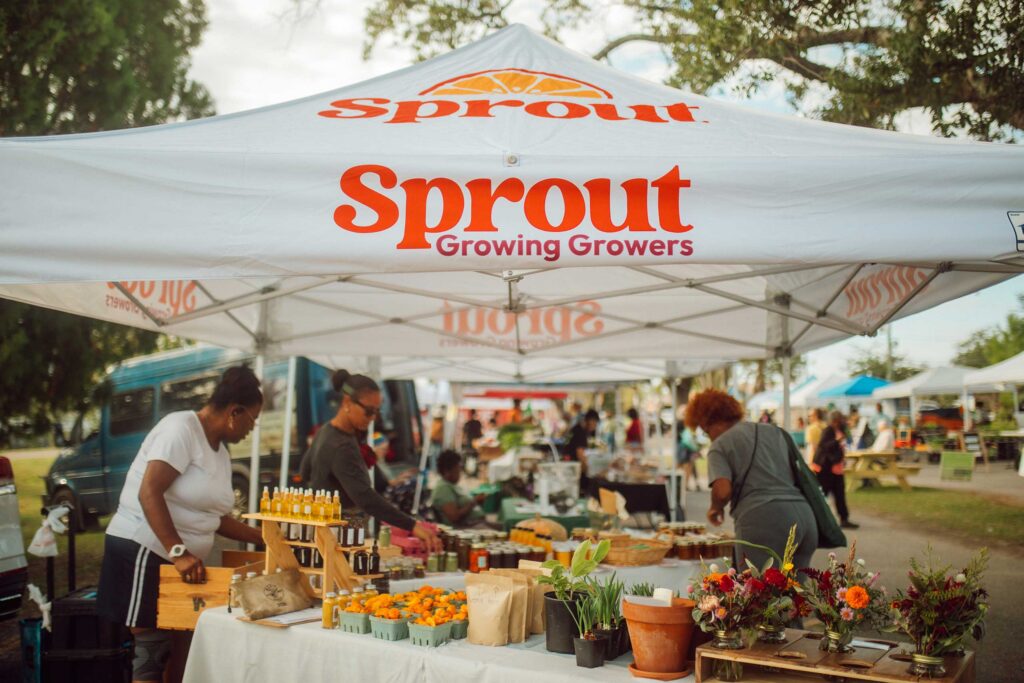
Sprout-supported farmers sell fresh produce at New Orleans farmers markets, connecting families with locally grown food.
Planting the infrastructure
Devaprasad’s journey is one of
more than
400
farmers
Sprout has supported since 2012. Through hands-on assistance navigating United States Department of Agriculture programs, Sprout has helped growers secure
over
$500K
in federal funds
for granting opportunities to GNO small-scale farmers and growers.
Sprout’s approach makes farming possible for people who have the skills and the will, but not the land, capital or connections to get started on their own. The organization helps move growers from curious beginners to independent producers while recognizing that training alone isn’t enough.
Even seasoned farmers face a crucial next step: getting their produce to customers who can afford fresh, local food.
Running a booth at farmers markets requires hours away from the fields and staffing costs that many early-stage farmers cannot absorb. This is where Sprout’s Truck-Farm Table helps. The initiative sells growers’ produce at markets without charging fees or taking a cut of the sale, enabling farmers to focus on growing while building their customer base.
By reducing the cost and complexity of market participation using the principles of cooperativism, Sprout helps ensure that small-scale farmers can sell in markets where SNAP is accepted, expanding who can participate in Louisiana’s local food economy.
The Truck-Farm Table has generated over $50,000 annually for participating farmers. Since 2018, 18 farmers have graduated from the program to run their own market stands or join member cooperatives, strengthening the local food economy long after their first sale.
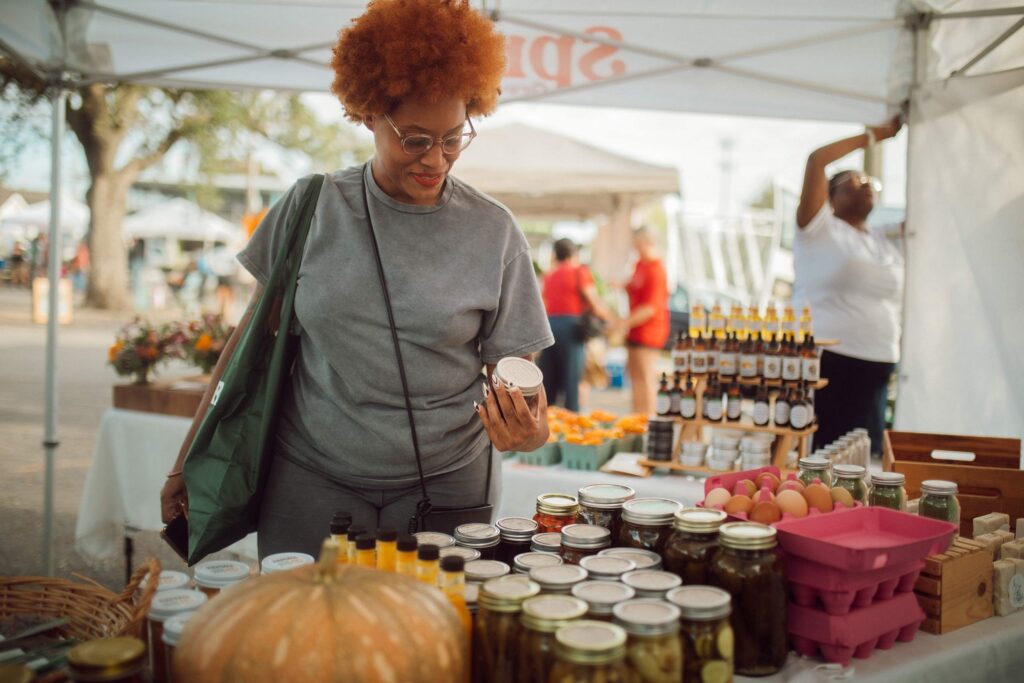
A customer explores locally made preserves at the Crescent City Farmers Market, where families can buy fresh produce, including with SNAP benefits, directly from Sprout-supported growers.
Building a food system that works for everyone
Sprout’s work demonstrates how local food systems function best when farmers and consumers are connected through stable, well-designed markets. At farmers markets across New Orleans, shoppers use SNAP as a purchasing tool, choosing fresh produce grown by local farmers in markets that Sprout helps make accessible and economically viable for small growers. These purchases keep food dollars circulating within the regional economy.
In this context, SNAP operates as economic infrastructure. It strengthens demand for locally grown food, provides predictable revenue for farmers, and reinforces farmers markets as community-centered places of exchange.
Sprout’s work connects SNAP dollars with locally owned farms, strengthening both household food access and the long-term health of Louisiana’s food economy.
From technical workshops and shared tools to market connections and community partnerships, Sprout shows what it looks like to build a food system that works for everyone — one where aspiring farmers can turn their vision into livelihood, families can afford fresh food and communities grow stronger together.
Sprout’s Market & Aggregation Manager Erica Johnson at the Crescent City Farmers Market, where the organization’s work increases access to fresh, healthy food for families and strengthens the community
 By
By 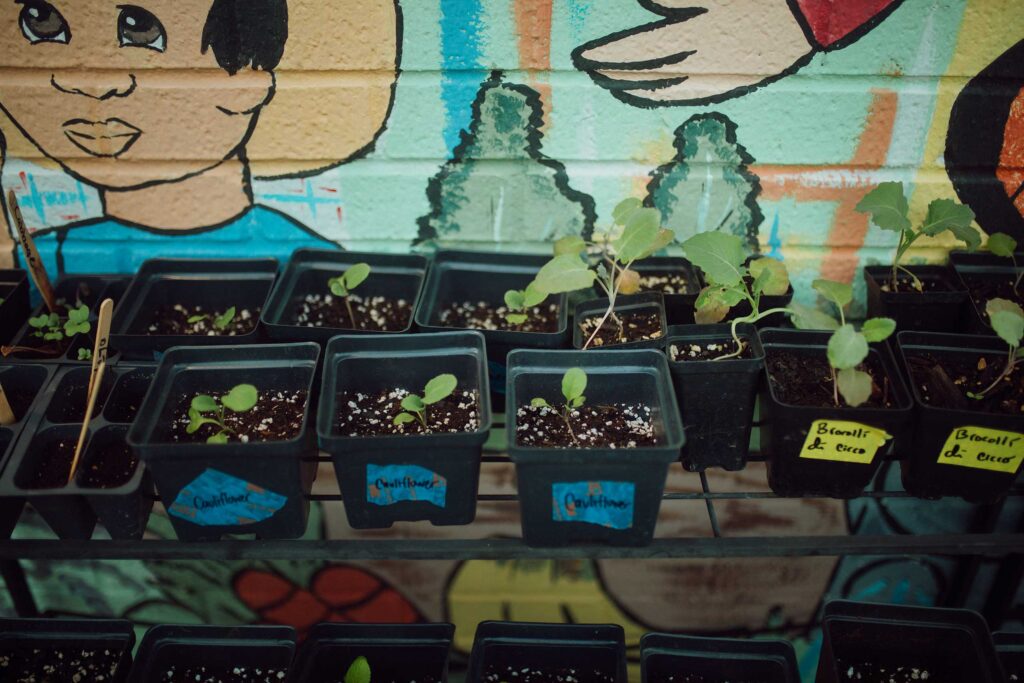








Comments