 By
By 
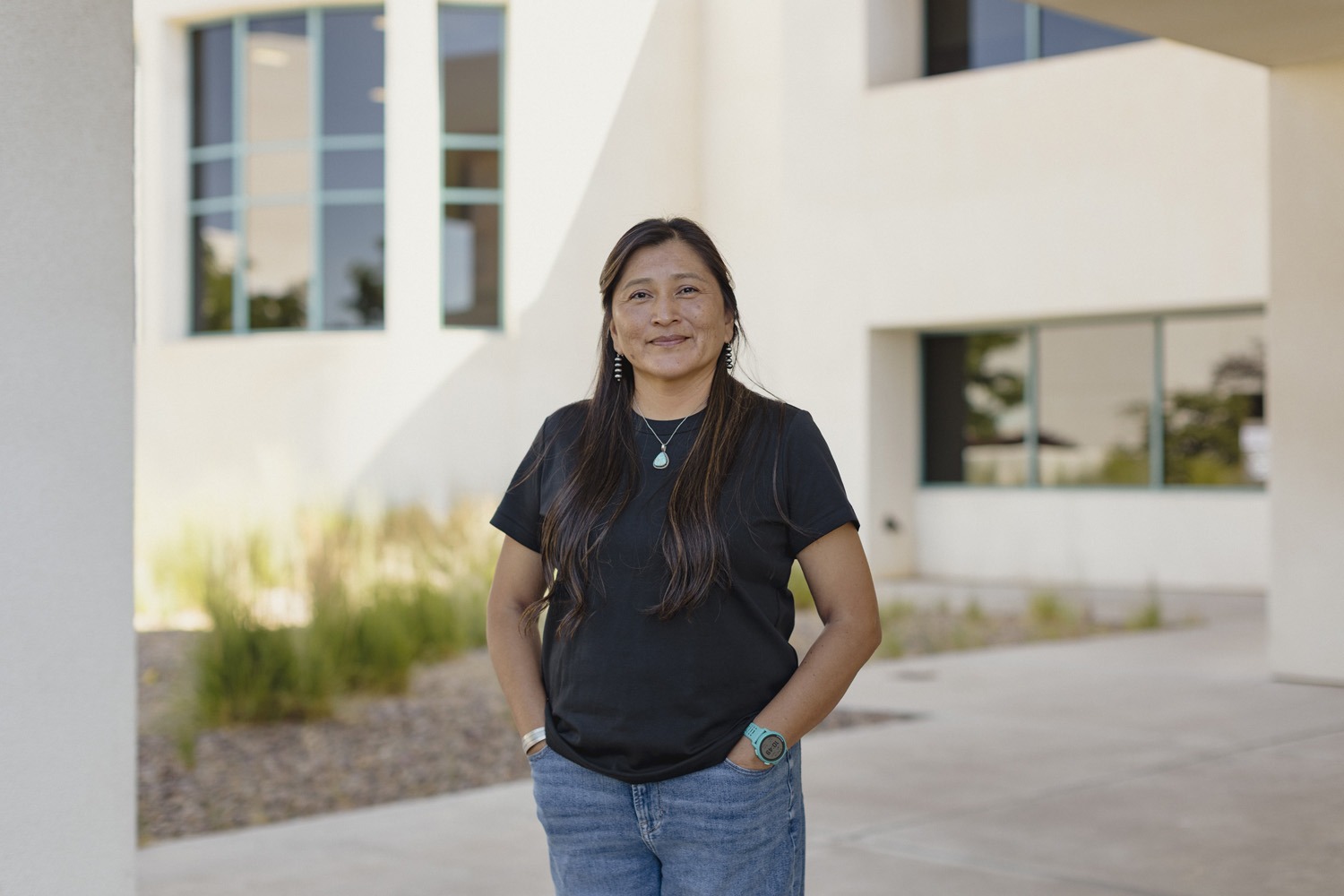
For as long as she can remember, Tonniale Clichee has longed to be a kindergarten teacher.
As a busy mom raising two kids in the rural Four Corners region of northwest New Mexico, Clichee found a balance between family obligations and her career dreams, working for a while as a substitute teacher before taking a stable job with the Bureau of Indian Education. But something felt off.
“My job was still with education, but it wasn’t at a school or in a classroom setting,” says Clichee, a member of the Navajo Nation who lives in Shiprock, New Mexico. “I started to miss seeing the kids.”
In a state with a shortage of more than 700 teachers in 2024, helping passionate future educators and especially teachers from underrepresented racial and ethnic groups, like Clichee — find a smooth, supported pathway to the classroom is a critical undertaking. The San Juan College Educator Academy is doing just that. Over the course of its three-year history, the program has helped dozens of future teachers — among them bus drivers, cafeteria workers, educational assistants and people who thought becoming a teacher was beyond their grasp — find a soft landing in a long-hoped-for career.
A faster route to the classroom
Like other states nationwide, New Mexico offers alternative teacher licensure — a sort of fast track to the classroom. People with a bachelor’s degree in any field are placed in a school as teachers of record and draw a salary immediately, while taking teacher-preparation classes at the same time. For future teachers like Clichee, this means avoiding lost income while pursuing their dreams.
The problem with most alternative-licensure models — seen as a quick fix to widespread teacher shortages — is that it’s often “sink-or-swim,” says ElizaBeth Utley, who joined SJC in 2022 as its senior director of teacher education. The K-12 school year starts several weeks before teachers’ licensure curriculum begins, so new teachers are thrown into the classroom without training. When she joined San Juan College, Utley knew something had to change.
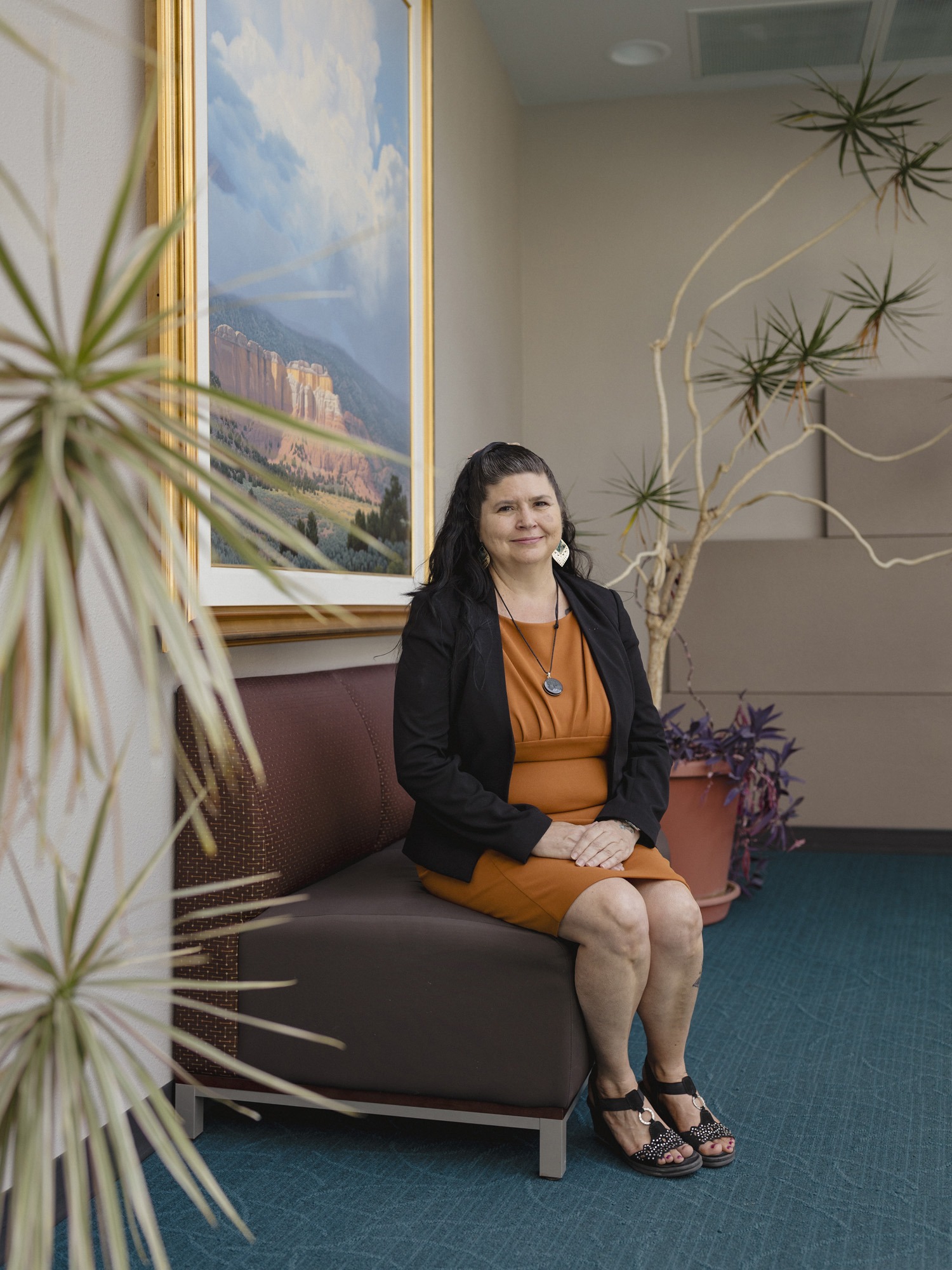
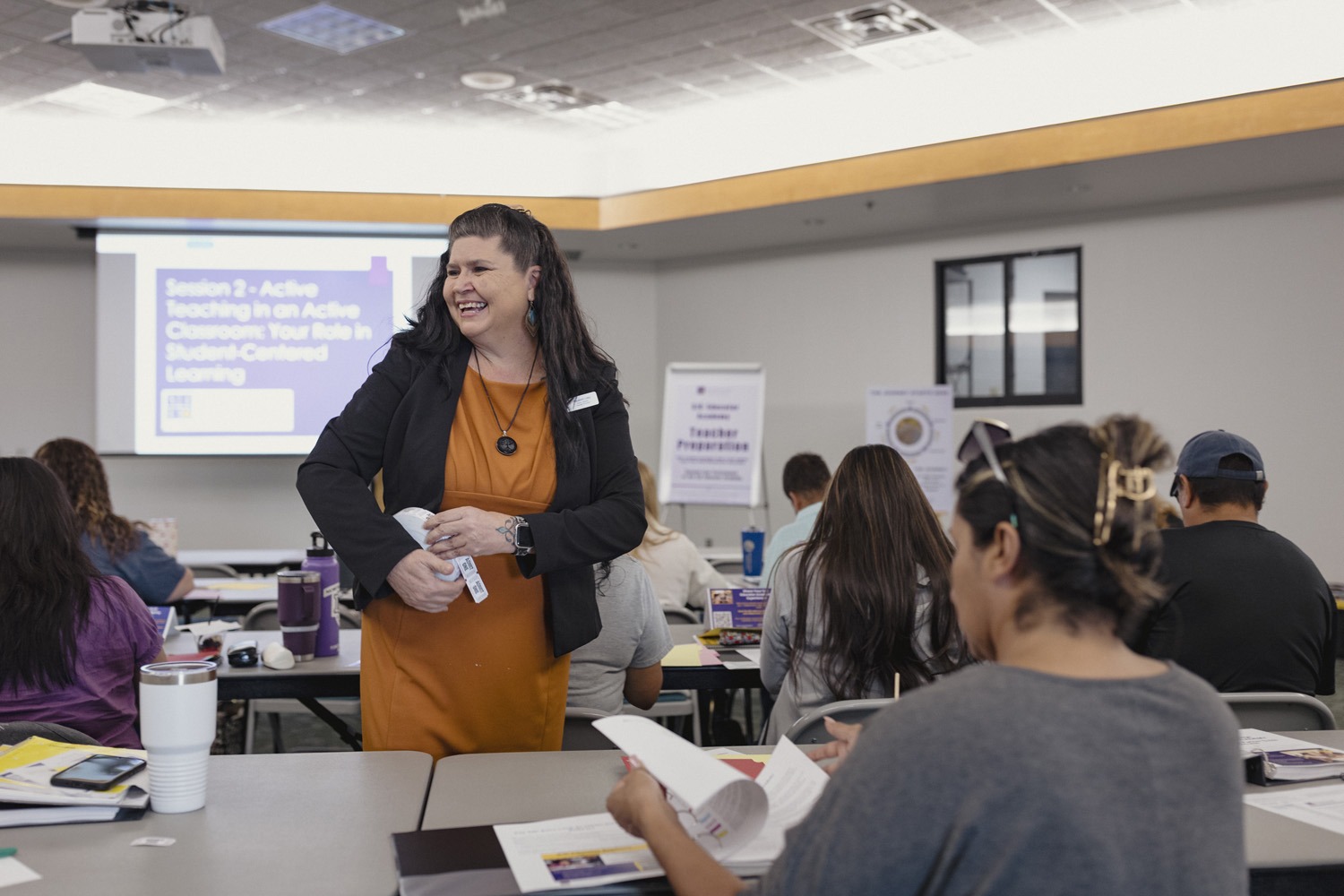
“We kept hearing, ‘I know the alternative licensure program is there, but it really scared me to just go straight into teaching without knowing anything about it,’” Utley recalled. “So we’re removing the barriers.”
Wanting to turn the tide, Utley and her team decided to revamp the alternative-licensure program from top to bottom. They established a two-day kickoff workshop through the Educator Academy, ensuring that new alternative-licensure teachers get a jump start on the professional training, resources and support they need before stepping into the classroom for the first time.
To better support new teachers, Utley and her team also introduced paid teacher residencies and robust mentorship. Instead of being thrown into a classroom on their own to sink or swim, students now build skills and confidence by spending their first year co-teaching with an experienced mentor teacher. “This gives them a much softer landing into the field,” Utley says.
The W.K. Kellogg Foundation has supported the Educator Academy from its inception in 2022, funding three of the program’s areas of focus — the kickoff workshop, ongoing mentorship and professional development.
Difficult realities and promising solutions
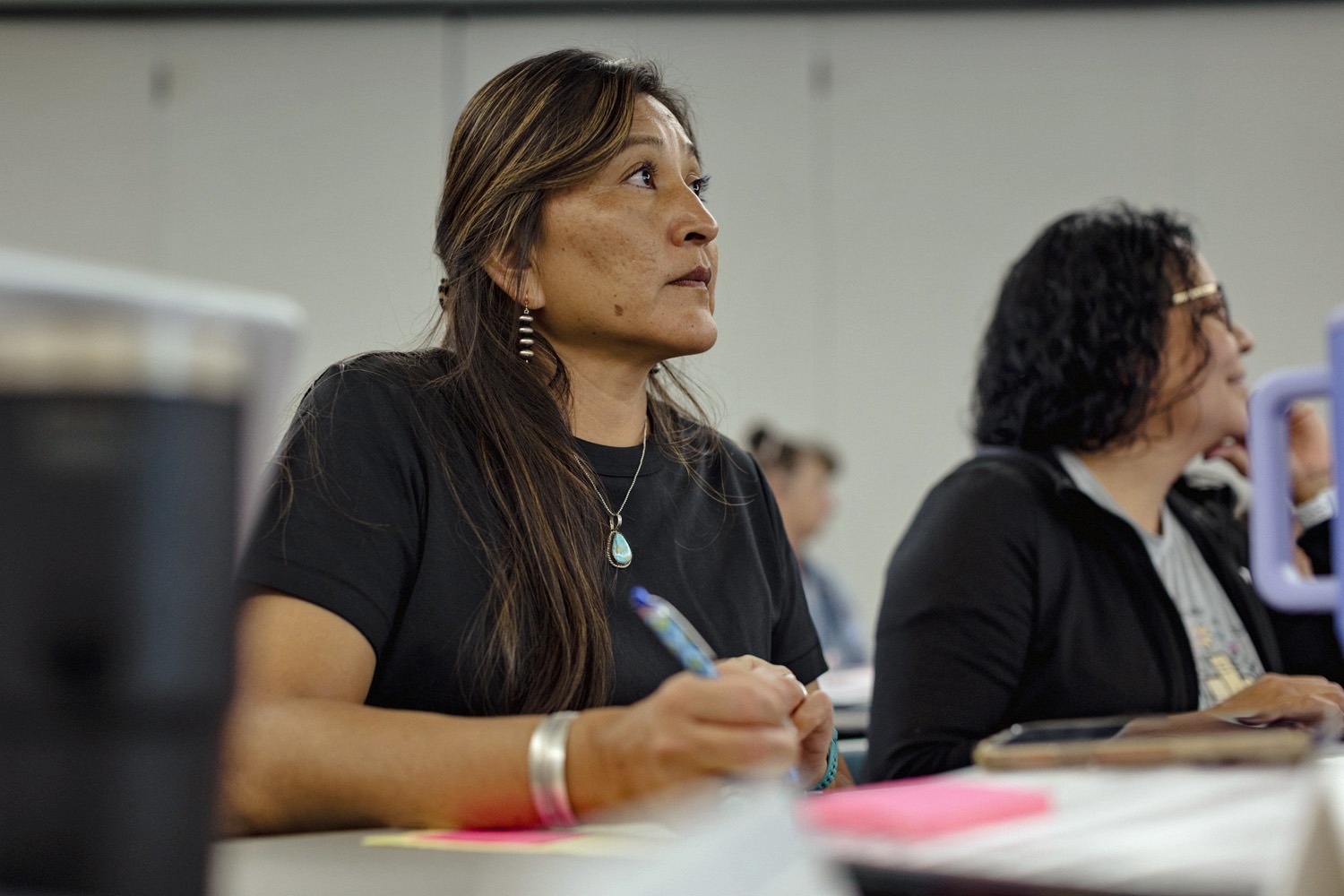
Clichee, the former substitute, says that working with her mentor teachers during her yearlong residency at Nizhoni Elementary School in Shiprock helped her get comfortable with her roles and responsibilities as a full-time teacher — everything from classroom management to parent-teacher conferences and report cards.
“Seeing how they both teach was really helpful, and I was glad they kind of stepped back and let me do some of the teaching,” she said. “I would say, ‘How did I do?’ And they would say, ‘You did great.’ Or, ‘You can do this or that about this situation,’ such as how to help a student who wasn’t listening.” Today, Clichee is Nizhoni Elementary’s new first-grade teacher, fulfilling her dream of teaching in her hometown.
As word has spread about the high-quality teacher preparation the academy provides, Utley and her team have broadened their mission to include support not just for soon-to-be teachers, but for existing educators as well.
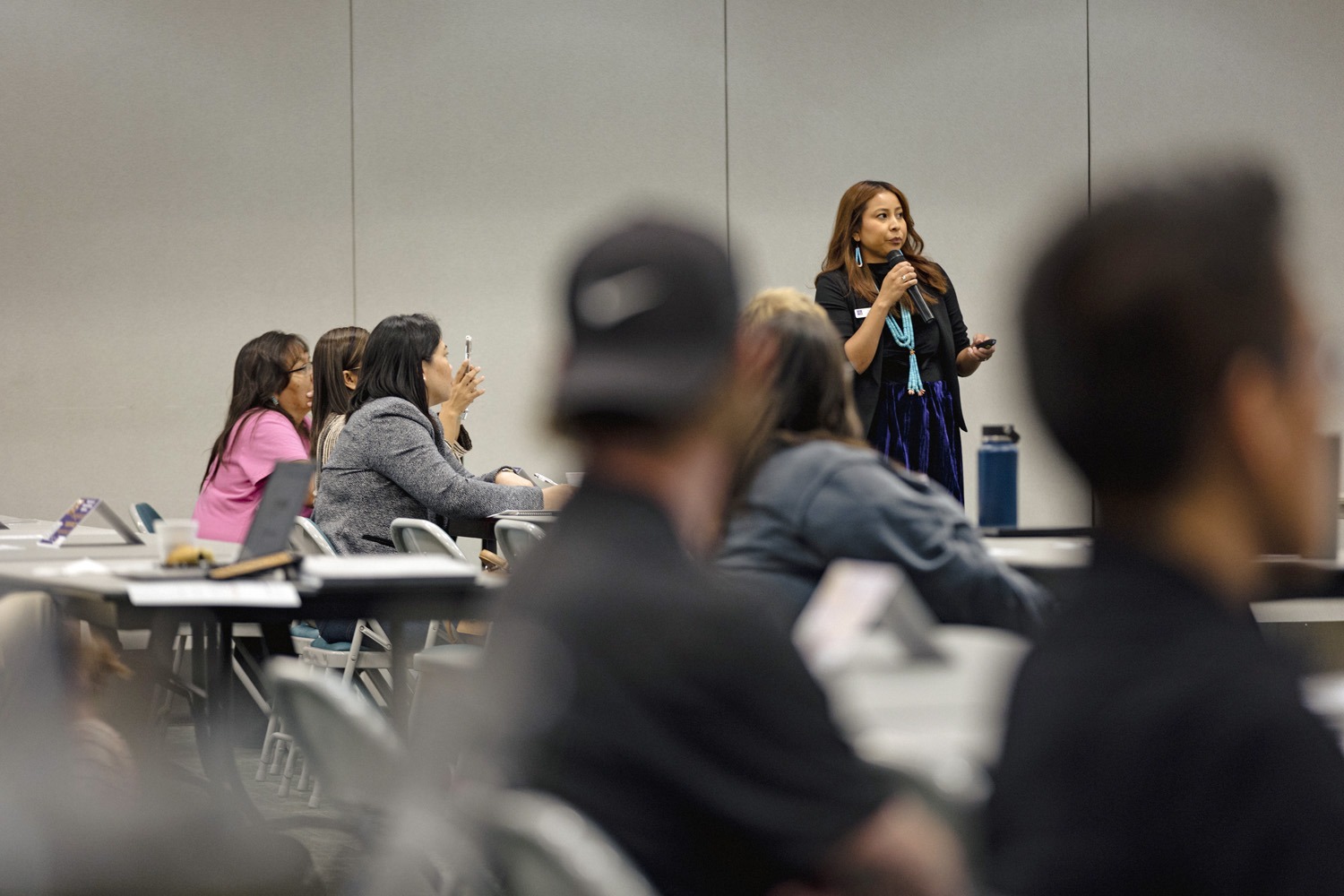
This August, over 175 alternative-licensure students joined current educators, including education assistants, long-term substitutes, and even veteran teachers and principals, at the college’s Henderson Fine Arts Center. Amid Navajo fiber art and signage in bright turquoise, educators of all ages broke into small, lively groups for two days of professional development, collaboration and community. Throughout the year, they’ll also attend monthly Zoom trainings and receive a wealth of teaching materials, all free of cost.
On average, about 200 participants have enrolled in the academy each year, and the residency program’s first crop of newly minted teachers is starting in the classroom this fall. Utley ultimately hopes the support they have received trickles down to families and children.
“I keep coming back to the research that says a highly qualified, veteran teacher who has been in the field for many years, their students’ literacy scores and math scores are much higher,” she said. “Our hope is that we can stop that attrition of teacher candidates and that revolving door in order to give the students of our community a fighting chance. Truly, that is what I would love to see come out of this.”
Retention is an ongoing challenge for alternative-licensure programs statewide. Data suggests that about 58% complete their programs. That’s in contrast to the roughly 73% of students in traditional teacher-preparation programs who graduate and become teachers.
SJC’s residency program is still in its early years, but anecdotal evidence suggests retention is already on the rise.
“We’re hopeful,” she said. “We’re definitely hearing from our residents that this first year was amazing, and now they’re excited to go into the field.”

A ‘full circle’ moment
For Lana Nacki, a former social worker who also completed her residency on the Navajo Nation, her mentor’s support was invaluable, especially when faced with the emotional challenges of teaching. “Not every kid’s going to come from a perfect background, and it was really hard to see that firsthand,” she says. “My heart just bleeds for these kids.” Talking to her mentor teacher, Mich Sandoval, who is also Navajo, helped her get through tough moments and find practical solutions.
Now, in a sign of the Educator Academy’s impact, Nacki is the new kindergarten teacher at Ladera del Norte Elementary School in Farmington, the school Sandoval attended as a child. That’s important, as Sandoval recalls a different challenge growing up. “My teachers were predominantly White,” she says. “When I did see a Navajo adult, it was in the cafeteria. I did always wonder: Where are the Navajo teachers?”
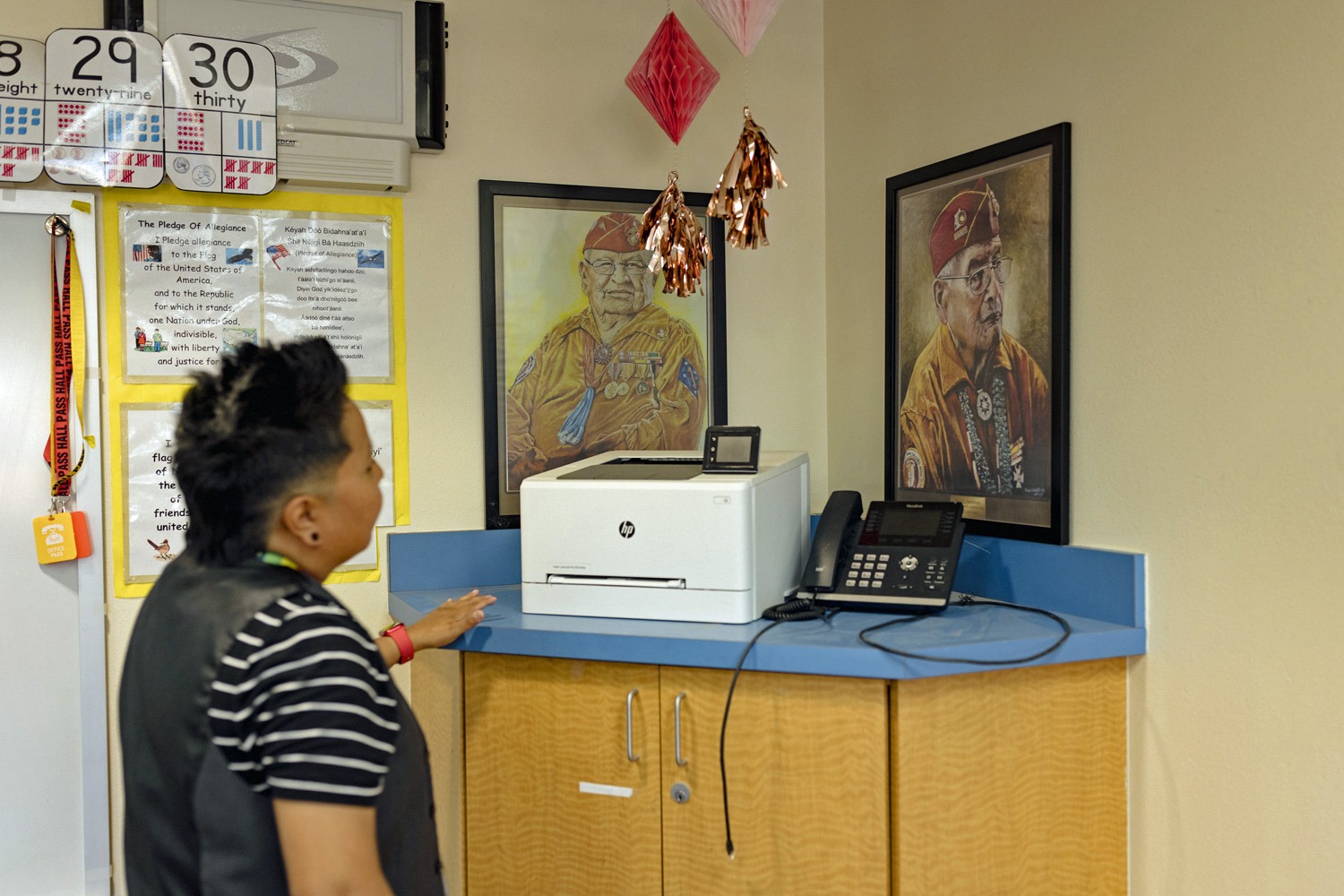
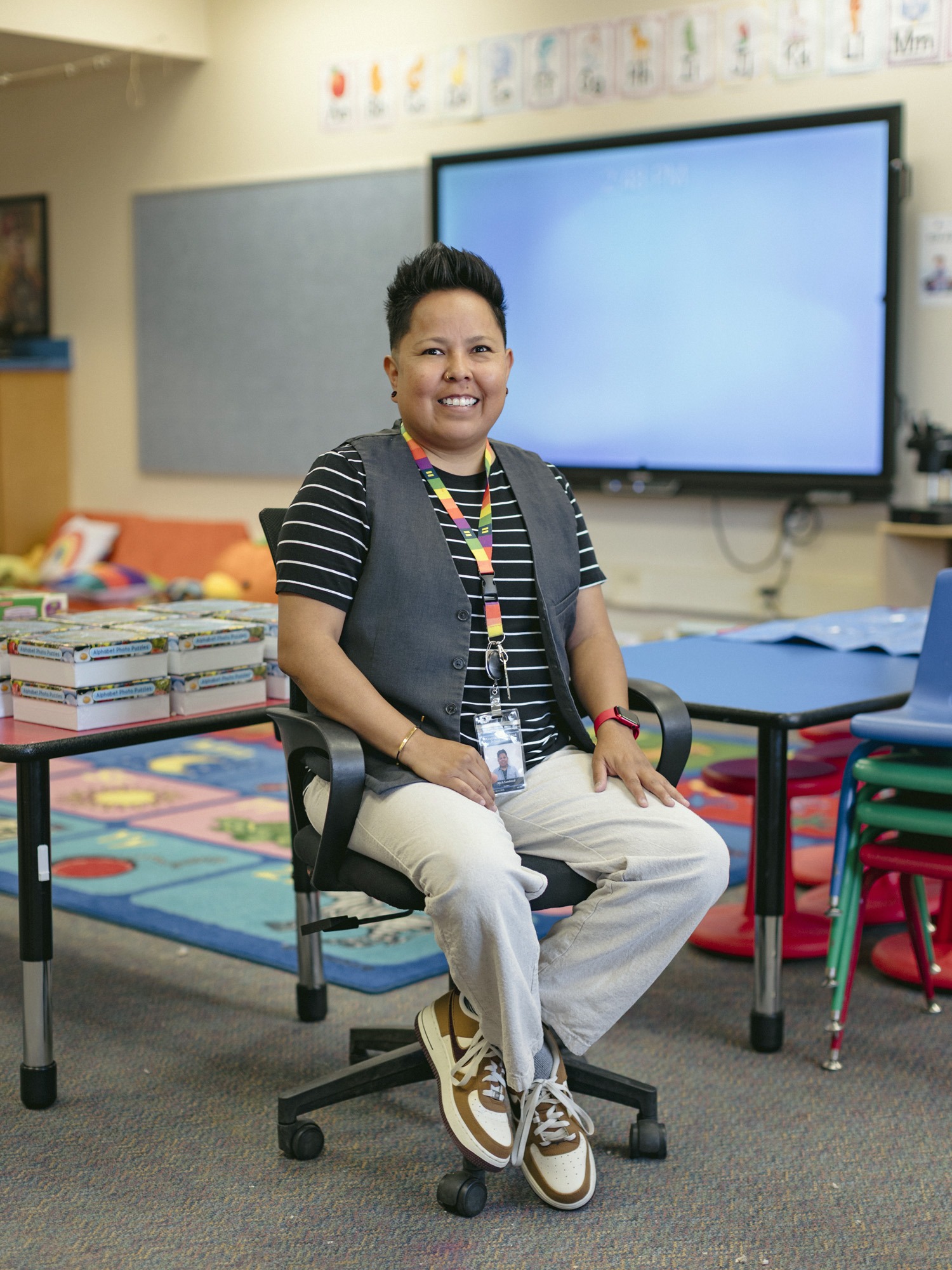
San Juan College serves a geographically large, remote county that is 38.5% Native American. In New Mexico overall, Native American students make up 10% of the public school population, but just 3% of teachers are Native American. Research suggests that when children learn from teachers who reflect the communities they serve, academic performance, graduation rates and social-emotional outcomes improve.
Sandoval decided to be a part of that change when she moved back home, aiming to teach on the Navajo Nation. Now, she is paying forward the skills and support she received from her mentor to another Navajo teacher through the Educator Academy.
“I was once that person, and it felt like I did it alone,” says Sandoval. “It’s exciting, and it’s kind of full circle that there’s going to be a Navajo woman teacher at the school where I went. And I had a part in that.”

Comments