
 By
By 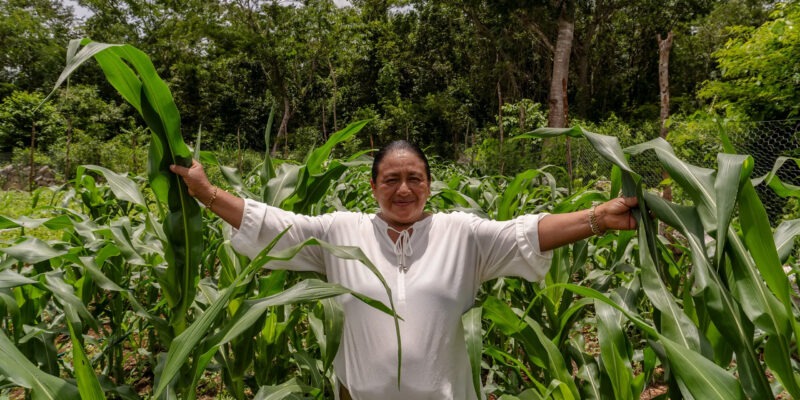
This post is also available in:
This post was originally published on Gatopardo.com.
Since 2025, members of the Túumben Sáastal collective, supported by the civil association Ko’ox Taani, have developed self-managed projects in the municipality of Chankom, Yucatan. Given their reach and rapid roots, they are living proof that a new model of prosperity is possible, outside the routines of welfare assistance. This chronicle portrays Verónica del Jesús Chay, “Aunt Vero,” a prominent member of the community who works to guarantee her food sovereignty with a backyard garden.
Text: Mateo Peraza
Photography: Marcos Moisés Sánchez
In collaboration with the W.K. Kellogg Foundation
Verónica del Jesús Chay Noh welcomes me to her garden in Xanlá, a small town with 381 inhabitants in the municipality of Chankom, Yucatan. At first glance, no feature of the community defies preconceived judgments: difficult life, isolation, dependence on the outside world. One must penetrate, inquire, to learn that Xanlá is riding a modest yet consistent wave of innovation; to see how its inhabitants put into practice a business model that feeds on ancestral knowledge, but with cutting-edge dynamism. One only needs, for example, to walk through Verónica’s garden and chat with her.
It is July 13th, at 11 in the morning. The first thing the 55-year-old woman says, after greeting us, is that life is a cycle, like that of plants in the field; and that seeing each other today means we will meet again because she enjoys “planting and cultivating friendships.”
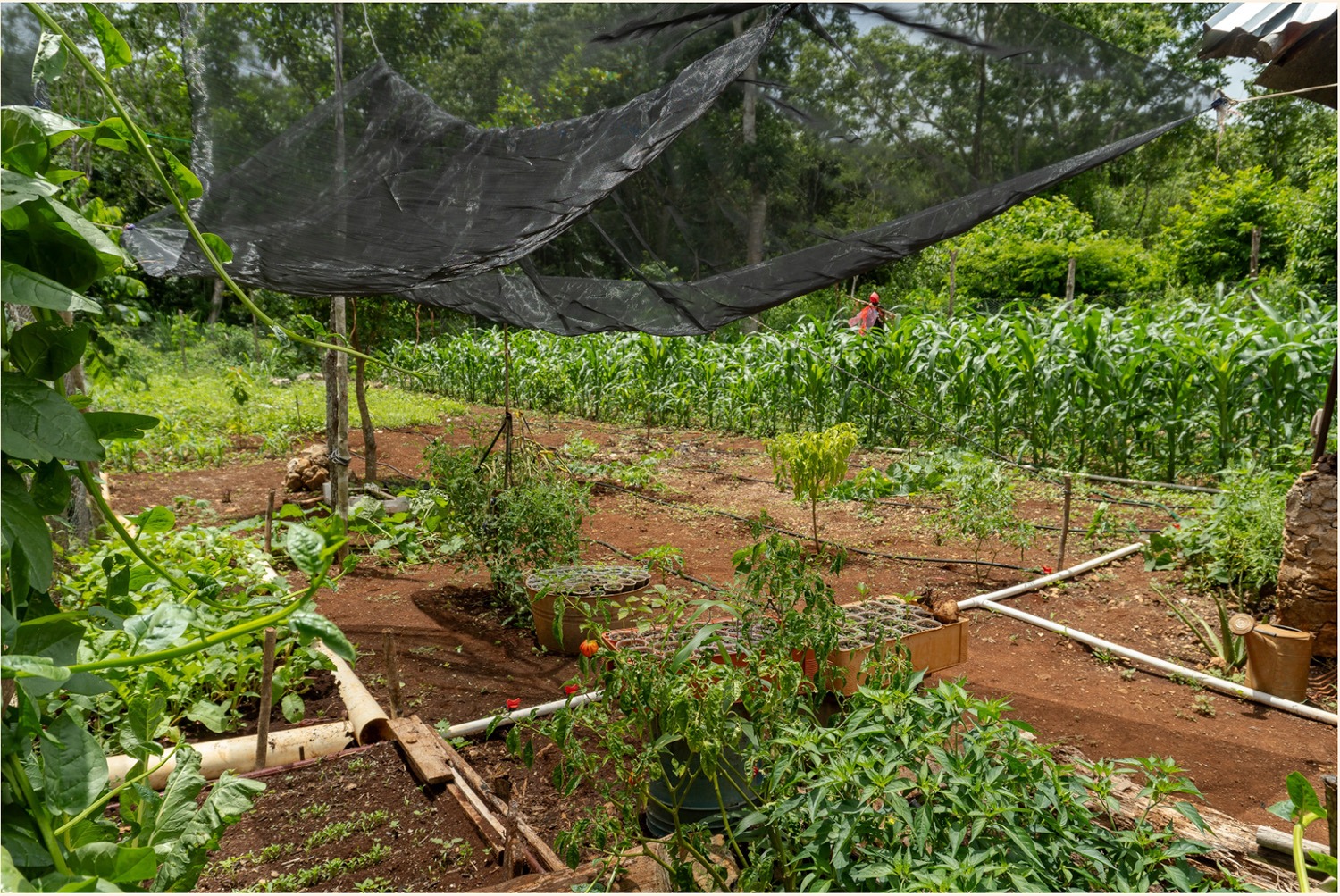
Verónica walks through her crops. She moves cautiously across the red dirt floor, dodging newly sprouted chili plants and cucumber and pumpkin vines. She smiles, strokes the husks enveloping the corn cobs, and praises the quality of her spinach, oranges, and radishes. The latter are her favorite vegetable.
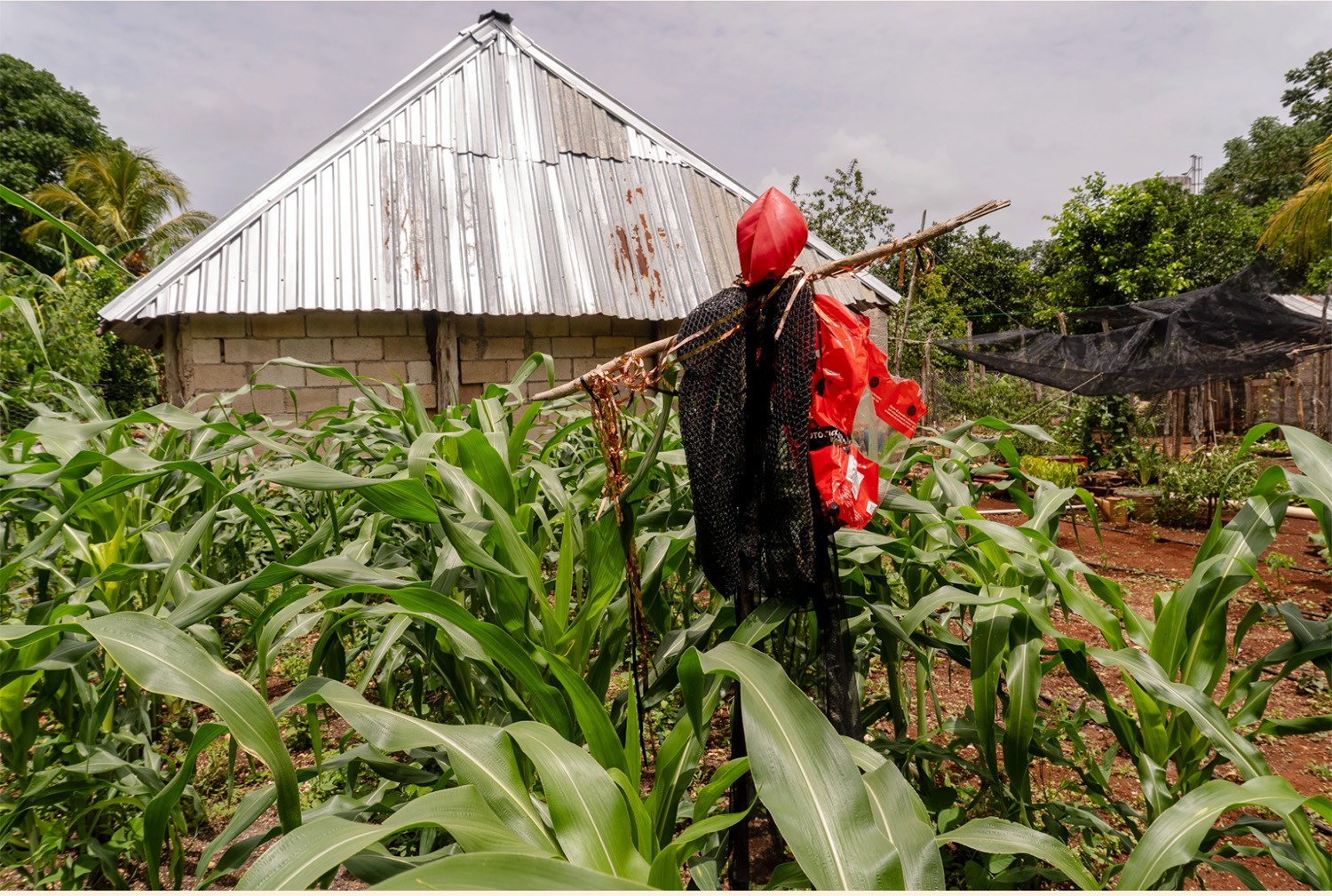
Today Aunt Vero, as she is known in town, woke up at 5 in the morning to water her plants and avoid the midday heat. She ate breakfast made from products she harvested herself and ate meat from animals that she or her companions raised. They have been without electricity in Xanlá for more than 24 hours, but she does not waste time: yesterday, when she learned I was coming to interview her, she built some stone seats in her plot so that “we could talk in the cool, under the shade of the orange tree.”
“Cultivating has helped me, first of all, with my health,” she replies when I ask her what makes her happiest about watching her own food grow. “As soon as dawn breaks I get up and think about coming to clean my garden. It gives meaning and joy to my life.” All in all, what Aunt Vero does is far from being just a romanticized display of the strictest subsistence economy.
She started in a four-by-four patio. Now, after gaining more space, she has hoses, a pump-operated irrigation system, and some mesh nets to protect her cilantro and spinach from the heavy rains of this season. She obtained the tools thanks to a project led by Ko’ox Taani, Fundación para el Desarrollo Comunitario y la Inclusión Social, A.C. (Foundation for Community Development and Social Inclusion)
Ko’ox Taani, from the Maya language, means “Let’s move forward.” Its general coordination is led by people born in the state of Yucatán. It currently has a central office in Mérida and two regional offices: one in Chikindzonot, which serves communities in the municipalities of Chankom and Tixcacalcupul, and another in Espita, which serves communities in that municipality as well as in Calotmul.
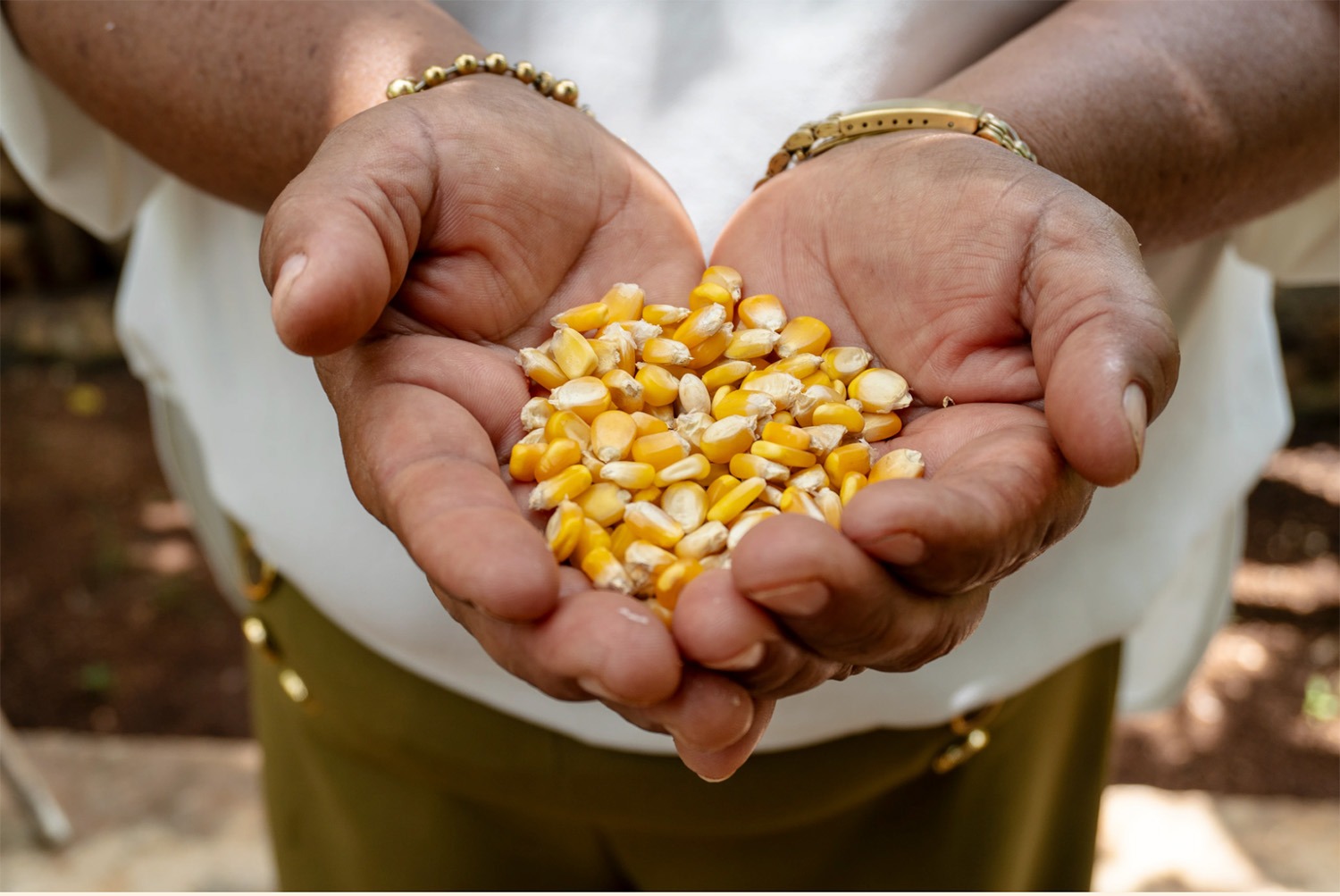
Through a fund supported by the W.K. Kellogg Foundation, in February 2025 they were given seed capital — which consists of a grant to start productive activities — courses, instruments, and training to set up the garden. The goal is to replace welfare assistance with self-management in municipalities like Chankom, which show alarming signs of marginalization. More than 80% of Chankom’s inhabitants live in poverty; and according to the latest census by the Government of Mexico, dated 2020 and based on data from the Instituto Nacional de Estadística y Geografía (National Institute of Statistics and Geography), 32% of that total was in extreme poverty.
Those participating in the seed capital projects will reach “graduation” after a period of between 18 and 24 months; that is, after critical shortages, they will have a level of autonomy where they will no longer need the subsidy or constant supervision of the foundation. They will have achieved food stability, strengthened their savings capacities, and secured livelihoods through productive activities. At that point, they will be equipped to care for assets and develop a sustainable business.
The program’s target population is women in extreme poverty and people with disabilities in moderate poverty. With a 10-year track record, Ko’ox Taani’s vision is that, by 2040, vulnerable families in the Yucatan Peninsula will be able to “manage their own inclusive socioeconomic processes, with a dignified life and free from conditions of misery and marginalization.”
Seed capital is not an ordinary loan. It involves providing resources that allow families to invest to secure their own income. It should not be spent on immediate needs; on the contrary, it must be invested in assets that generate long-term value. Thus, families can save biweekly or monthly. As such, it is proposed as a way out of extreme poverty.
“Here there are no payments,” Vero explains to me. “We earn from what we produce and what we recover. There you will see the fruit of work, sweat, sun, thirst, hunger. That is how we work here. You get those fruits when you have a lot of something. Like now, since we have a lot of beans, you sell it, you exchange it for what you need. And those who don’t have come to buy from you. That is why there are achievements. Although there is always the risk of losing due to the weather.”
I sense that this is how fairer value chains are built, sustained by the community itself, and Aunt Vero confirms it. It is common for Xanlá farmers to exchange their agricultural products during the harvest season. “Since I was a child I was always behind the planting. I grew up with farmer parents and I was always behind them. They didn’t go to Cancun or anything, they always worked in the field. In my house where I grew up we would get between 10 and 20 corn stalks. That is what I yearn for here.”
In a society immersed in the ignorance of food rights, Vero fights to retake a key and distant concept: sovereignty in food production and consumption. Own, healthy foods, free of pesticides and GMOs. The very ones she exchanges with her peers and neighbors, also included in Ko’ox Taani’s seed capital project. “Here we don’t use any chemicals,” she says in front of her new seedbeds. “Tomorrow I have to plant again.” Her system has improved. At first, she faced hurricanes, droughts, pests, soil problems, and the intrusion of some wild animals. With the foundation’s support, such as the installation of a water pump, things are easier. “When you have this, it turns out very good, healthy for our bodies, wholesome,” she says, pointing to the plants. “By September-October I already know the harvest will be ready.”
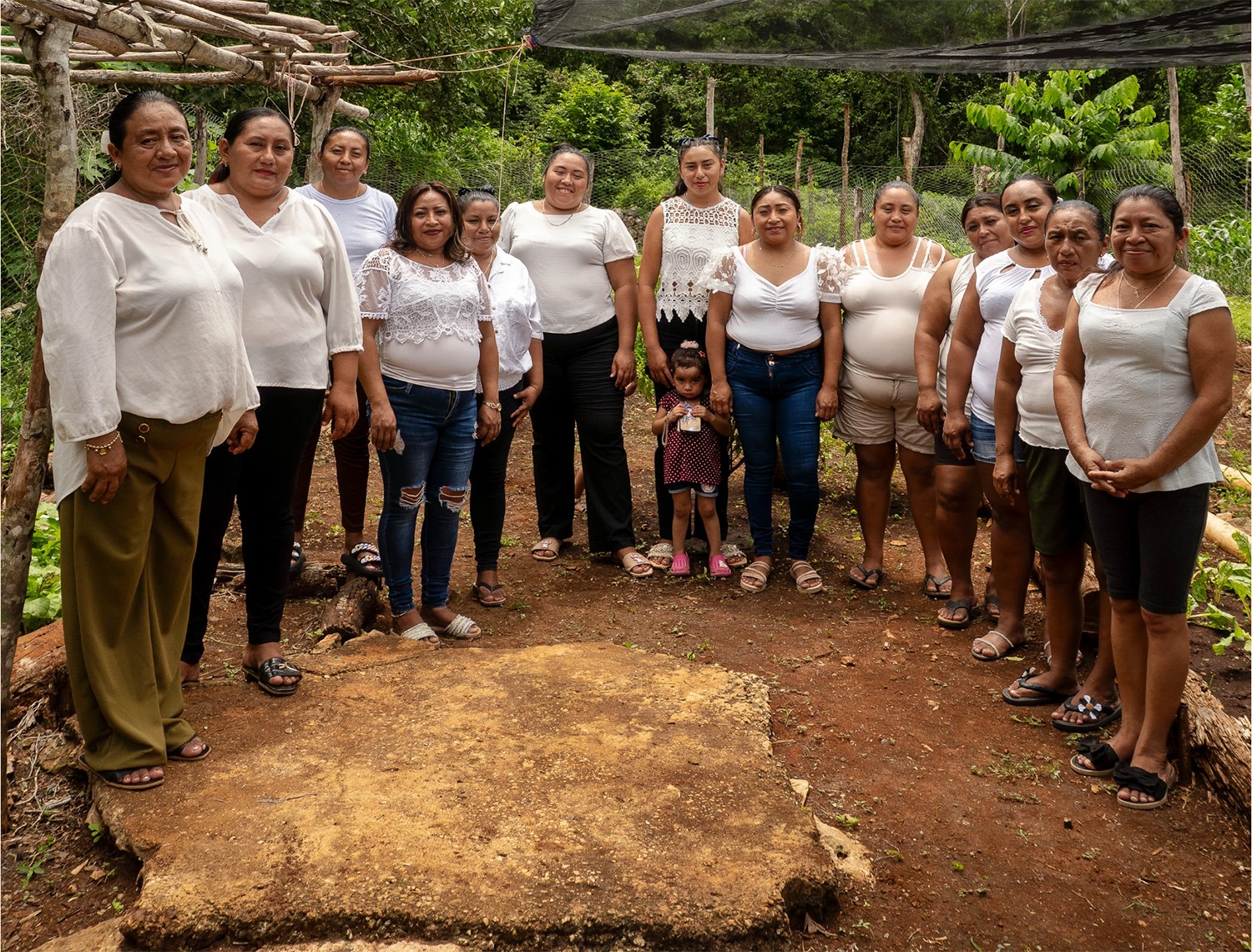
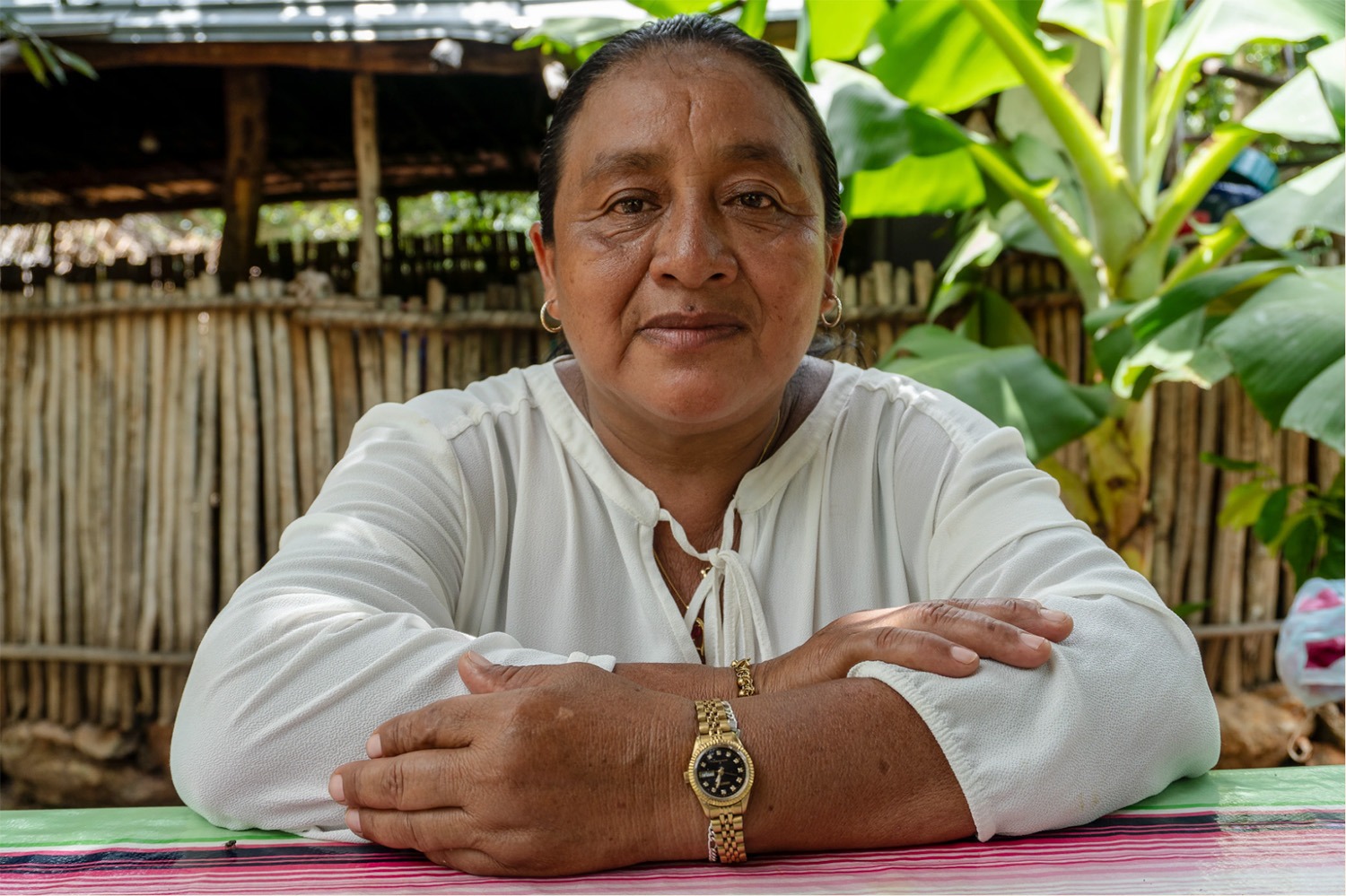
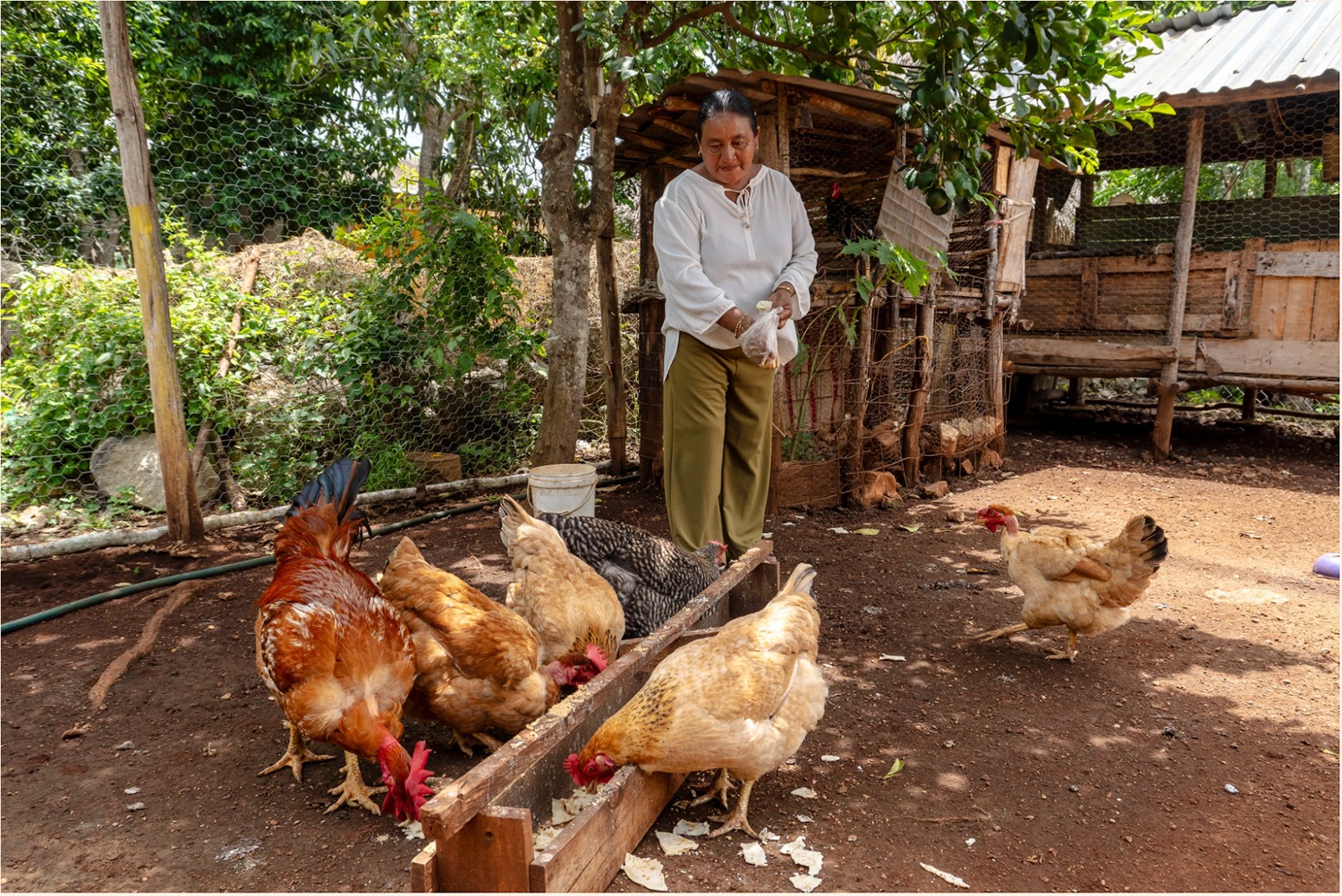
I enter her kitchen. It is a traditional Mayan construction of guano and wattle and daub. They cook with firewood. Her dog, Bruno, guards the entrance and plays with some cats. Inside, the other members of the project are making tortillas for lunch. With the support, they have undertaken businesses selling chicken, auto parts, butcher shops, snacks, and desserts. They are a group that knows and appreciates each other. Martha Elizabeth Mazún Dzul, a pastry chef, gifts me a flan and a plate of buñuelos. Both she and Vero say this project has reduced the poverty they were in; furthermore, they have managed to generate savings thanks to the sales of their products. “It is very good to see everything the companions are doing,” Vero says.
Now, in July 2026, she is already planning how to get a transportation system to take the fruits and vegetables from her garden to other municipalities. “Not all of us stayed. Something good came and I grabbed that good thing, I embraced it. And those who wanted to follow it, followed it,” she tells me. “I save because I don’t spend on food, and because I can sell my products. I save 100, 150 pesos; when December arrives and I withdraw it, we are happy because there is something good.”
The significance of the project is intergenerational. Her 16-year-old son, Eliezer Daniel Castro Chay, whom she calls “my baby,” and her 25-year-old daughter Wendy Verónica Castro Chay, collaborate in planting, cultivation, and care. They strengthen their relationship and she passes on a legacy to them. She hopes he will watch “how this planting yard will fill up” and will see the fruit that “will come down from here.” Her closeness makes her feel loved and valued. A nephew also helps her with planting and sales. “Sometimes I have doubted if I chose the project well. And my nephew made me feel good because he told me: ‘You will get ahead, aunt. As long as I am here, I will support you’.” That same nephew takes her products to fruit shops. “We formerly, before the foundation, had not learned to manage the sustenance of what came into the house,” she adds. “And we didn’t think we could use the yard’s soil to save money. What we no longer have to go buy, we get from here. And that is how the savings were built. By 2026 we are much stronger than before.”
The greatest lesson the plants have given her is their nutritional relevance. While checking the compost in the middle of her orchard, fed with leaves and fruit peels, weeds she cleared, and vegetable scraps, now almost turned into soil, she remembers her peasant father, a milpa farmer who taught her work in the fields, and says, stroking a long leaf: “Our foundation is corn on the cob, maize, the tortilla. Beans are the other most important basis for us Yucatecans. And it is very good to be able to work on something and be able to eat it. Something with your own hand. Besides, there are some things that are very good for us because they bring in money. Like pumpkin seeds, which cost forty, fifty pesos a kilo. And sometimes, when the harvest is good, the seeds are sold cheap. That’s when the farmer sells and recovers the payments for what one labored to cultivate,” she says.
She is clear about the difference between those who dedicate themselves to cultivating and sowing, and those who do not. There are different notions about life and the value of each plate on the table. I understand it myself now: she invites me to eat some chicken broth raised by her community, accompanied by freshly made tortillas on her comal, as well as pickled onion, hibiscus, and chilis from her garden.
“Do you have any short-term dreams?” I ask her.
“I want to fill all of this,” she says, pointing to an open path, at the beginning of which some plants have already sprouted, “with different types of chilis. I am going to fill it all with chilis. Lots of chilis. Green ones, habaneros, red ones. They sell very well.”
“And how do you imagine the garden in 10 years?”
“If God grants me life, because He is the one who knows things, I would like to see greater production. Provide home delivery, because that way your product sells quickly. And always replant because as the plants bear fruit, their yield decreases.”
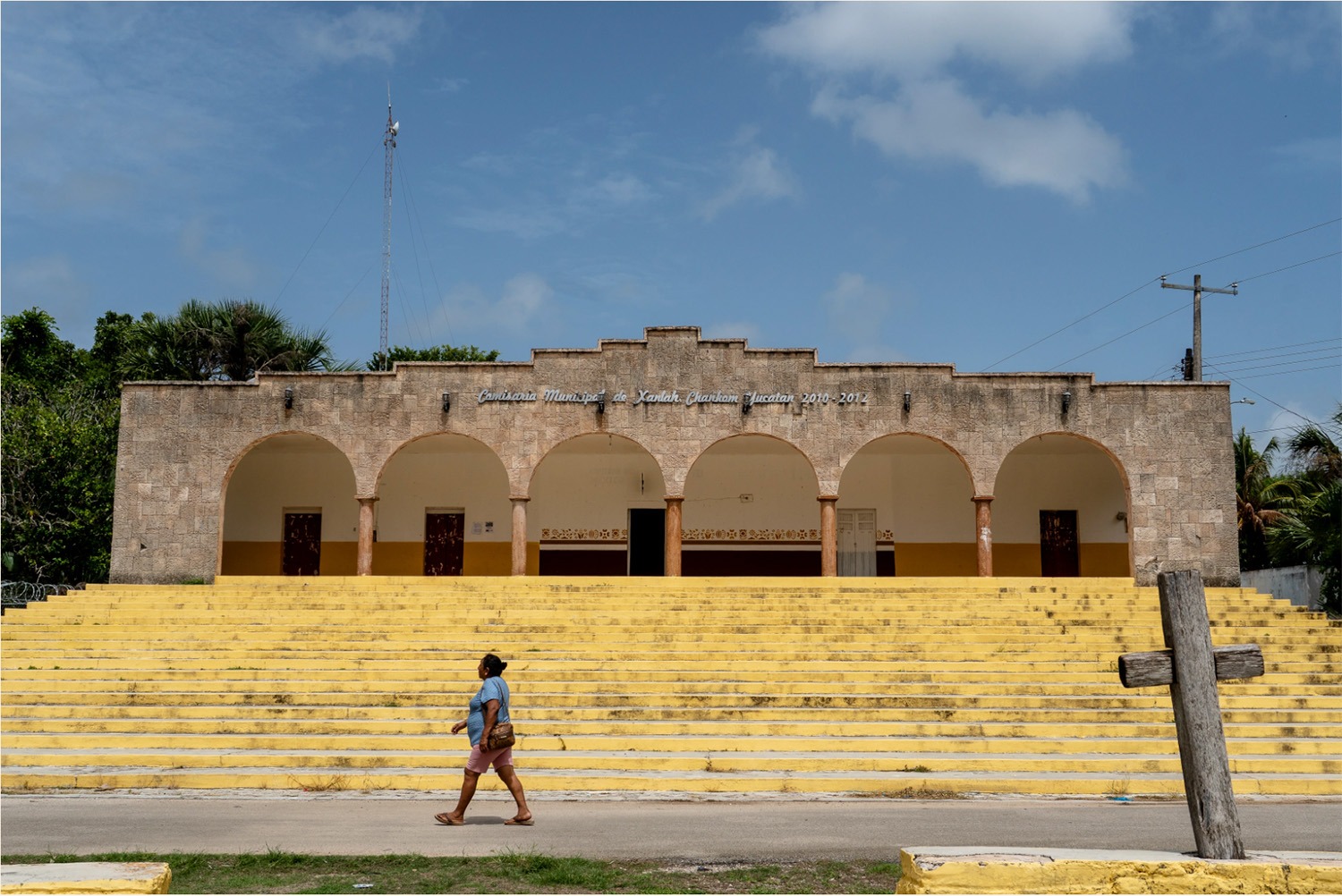
Gathered around an outdoor table, Aunt Vero gifts me some pear guavas while I chat with the other members of the Ko’ox Taani project. The women are the ones who have stayed since the arrival of the foundation’s technicians in 2025 and have chosen Tuesdays as the days to train and build their savings. These are the days when the advisors give talks with strategies to improve the quality of life. Alejandra Santana, the advisor accompanying us on the visit, assures that in Xanlá great results have been seen with the seed capital and that this group of women is evidence of it.
At this point, near graduation, they are given resilience workshops based on hypothetical scenarios. How could they face adverse moments in the near future? The 13 women form a group with a name of great metaphorical weight: Túumben Sáastal, which means “New dawn”.

Comments