 By
By 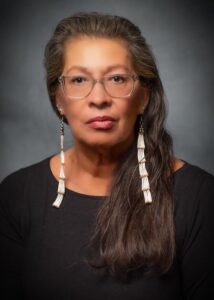
Judith LeBlanc, Native Organizers Alliance
Judith LeBlanc, a citizen of the Caddo Nation of Oklahoma, has spent more than five decades building movements for justice. For her, the work isn’t about any single moment, but about what lies ahead.
“The only place where the past and the future come together is in the present,” she said, with her granddaughter cradled in her lap. “What we do now is decisive in determining how our descendants will live.”
This wisdom fueled a lifetime of organizing and now guides Judith’s leadership as executive director of the Native Organizers Alliance (NOA), which builds the collective power of Native communities. Its work is grounded in Indigenous values, particularly the principle of being a good relative, which centers a sacred responsibility to past, present and future generations.
The roots of Judith’s leadership
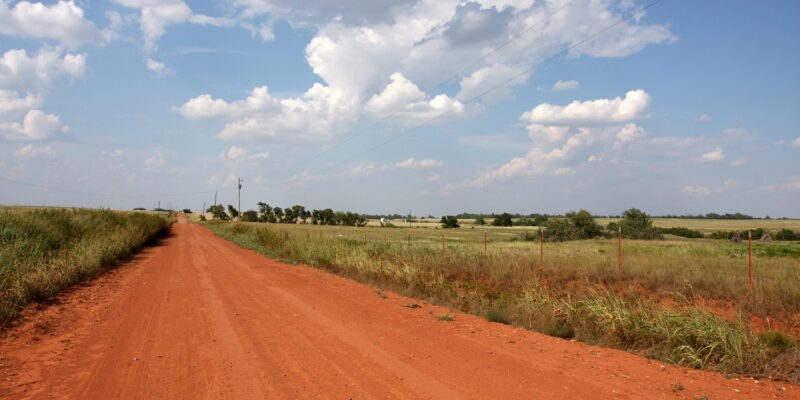
Judith was born in Texas and moved from New Mexico to Massachusetts at five years old during the 1960s, spending summers on her family’s land in Oklahoma. Though she grew up in two very different worlds, within both she experienced the pain of the impact of systemic racism, which affected many aspects of her family’s history and present lives. She remembers the drive from Massachusetts to her grandmother’s home in Oklahoma, passing through towns that were known to be violently racist against Native peoples. Her parents wouldn’t allow their children out of the car on those trips.
The impacts were also felt in everyday circumstances. “My grandma worked so hard yet lived without running water and electricity,” she said. “It was a source of sadness and confusion.”
But the strength and power of the collective culture and history of the Caddo Nation community gave Judith a sense of balance and connection. Later in Judith’s organizing life, she began to understand the significance of their enduring values: a deep connection to the past that bound the community together and a sense of relationship with place and all that led to the Caddo Nation’s forced removal to Oklahoma. Judith believes a lot of people today are hungry for this holistic understanding of the relationship between the present and the past as the guide for living a values-driven life.
As a child, Judith remembers the stories of how her family and others protected Native American Church ceremonies. The ceremonies and ways of understanding ancestral responsibilities became a core element of her activism, community organizing and appreciation of what it takes to heal the harms of systemic racism, with the value of intergenerational life at the center of those teachings.
“Being a good relative and respect for all living beings provided ways for tribal and urban Native communities to not only survive but also heal and build a better future for their communities no matter what federal policies were used to attempt to sever the connection to culture, land and language for Native communities,” according to Judith.
“The ancestors were able to maintain community, self-governance and living in balance no matter what challenges arose. That reality gave me strength and an understanding of the importance of being in relationship with others guided by empathy and love.”
As a young adult, Judith’s social consciousness grew in the midst of social movements sweeping across the U.S. and globally. She learned about the power of advocacy and movements to drive justice, including the Civil Rights Movement and the United Farm Workers’ Grape Boycott and she attended a speech by Dr. Martin Luther King Jr. at the Boston Common. Those early experiences inspired her to believe in the power of organizing community grassroots power.
Recognizing the system behind the struggles
Her turning point came a few years later at Wounded Knee in South Dakota. She left college to support post-trial defense work following the American Indian Movement’s 1973 occupation of the historic site of a massacre by the U.S. Army. The Wounded Knee occupation was centered on addressing the treatment of Indigenous people and safeguarding tribal sovereignty. As an urban Indian who had never lived on a reservation, she described the experience as rough, but credits elders in the community for taking her under their wing and helping her to understand the traditional practices of the Lakota people.
She witnessed intense violence and killing that continued even after the occupation and how corruption within tribal leadership created division within the community. Through these experiences, she began to understand how all these struggles and movements were connected.
“That’s when I had an ‘aha’ moment. I realized it’s not just a few White people doing terrible things …That racism is systemic. That the division between communities was the main obstacle for our descendants’ wellbeing,” Judith said. “Native communities continue to exist because we’re grounded in the perspective that we’re all in relationship with one another and have a responsibility to care for all living entities and Mother Earth.”
A vision spanning generations
Judith emphasizes the importance of being guided by the “horizon,” a long-term vision that spans generations.
“If you don’t have a strategy that includes the distant horizon, you’re caught in the binary of right or wrong,” she explained. “But if you know where you’re headed, then you know there are strategies and tactics that will keep us on the path towards the horizon.”
At 73, Judith continues to lead movements that invest in generations of Indigenous organizers. Through traditional practices, strategic planning and grassroots support, NOA empowers Indigenous communities to rebuild governance, safeguard their sovereignty and carry forward the legacy of their ancestors.
“From an Indigenous perspective, we’re a very small sliver in the history of humankind,” she said, still holding her granddaughter close. “So when we pray in our ceremonies, we aren’t praying just for our own people, we pray for humanity and Mother Earth.”
It’s powerful medicine Judith believes Native communities offer the broader world and movements for social change — a reminder to embrace our interconnectedness and think beyond ourselves, while building movements rooted in empathy, humanity, love and compassion.
Comments