
 By
By This post is also available in: Kreyòl (Haitian Creole)
During FIFA World Cup 2026, Haitian families, youth and community leaders gathered across Haiti and the diaspora to celebrate their national team and much more. They waved flags, paraded in Rara bands, sang and danced, sharing their culture with neighbors and soccer fans from around the world. For Haitians, the tournament offered a moment of collective pride that crossed many boundaries. For people whose exposure to Haiti was primarily through crisis headlines, it offered a new way to get to know their neighbors through joy, history, culture and possibility.
Haiti is back at the World Cup after more than 50 years. What does that mean?
Click on the photos below to expand the slideshow
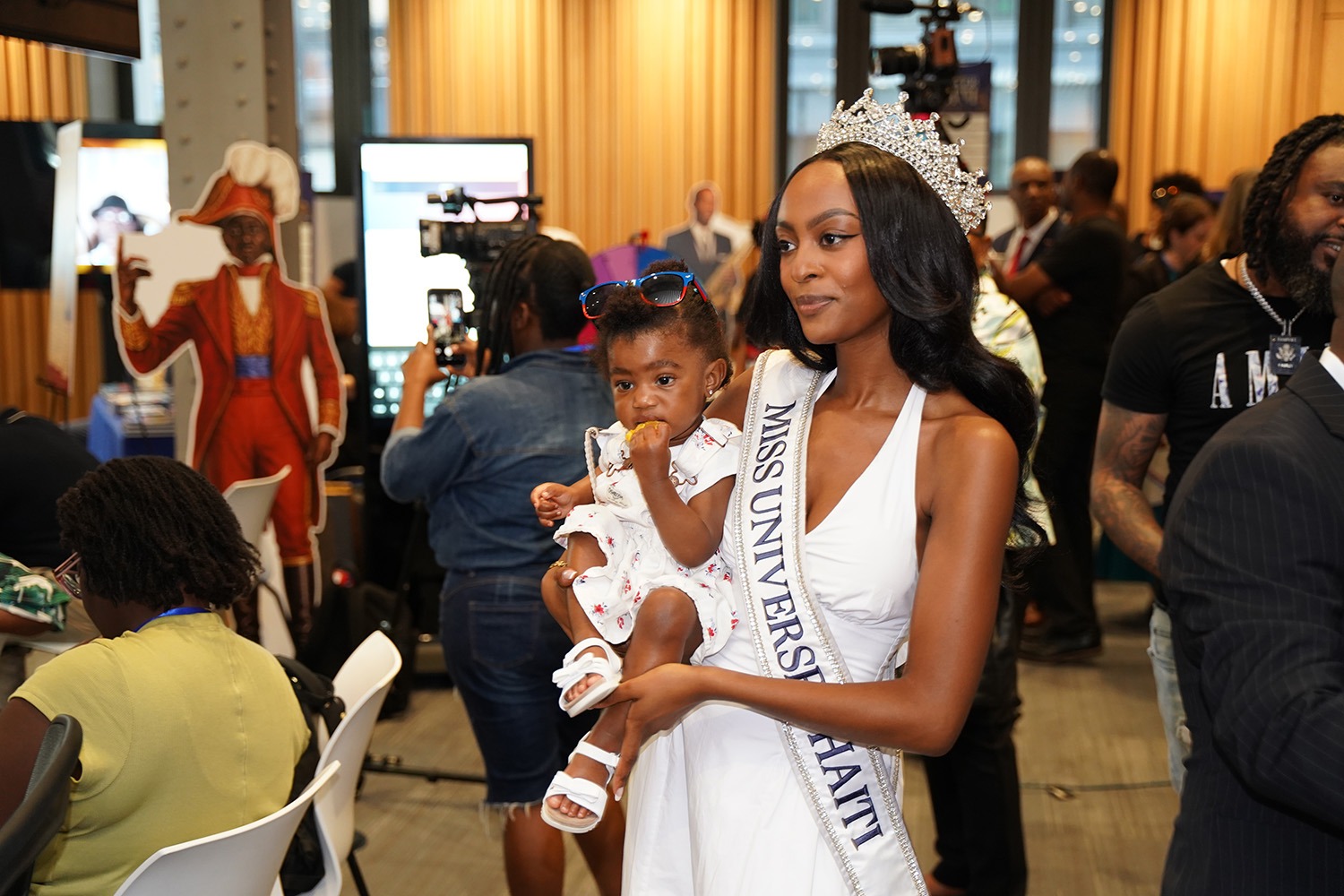
Melissa Queenie Sapini is a journalist who was crowned Miss Universe Haiti 2025, and Miss Massachusetts USA 2024. Sapini hosted Boston’s Haiti vs. Scotland viewing party. “The room shook,” she wrote on Instagram. “History was being made and we felt every second of it.”
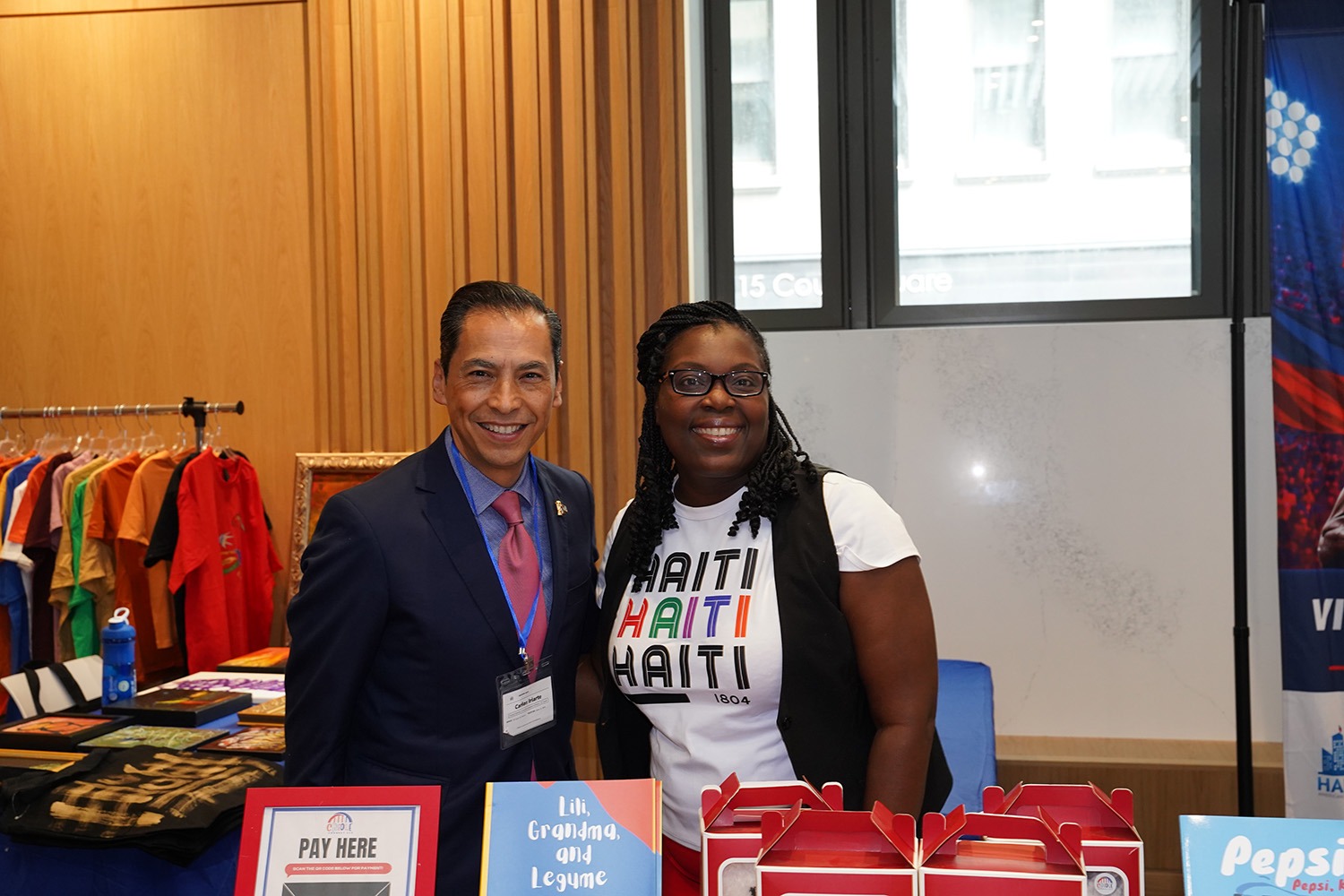
Carlos Iriarte, Consul General of Mexico in Boston, with a vendor at Discover Haiti. Iriarte was one of several dignitaries from various countries who came out to celebrate Haiti.
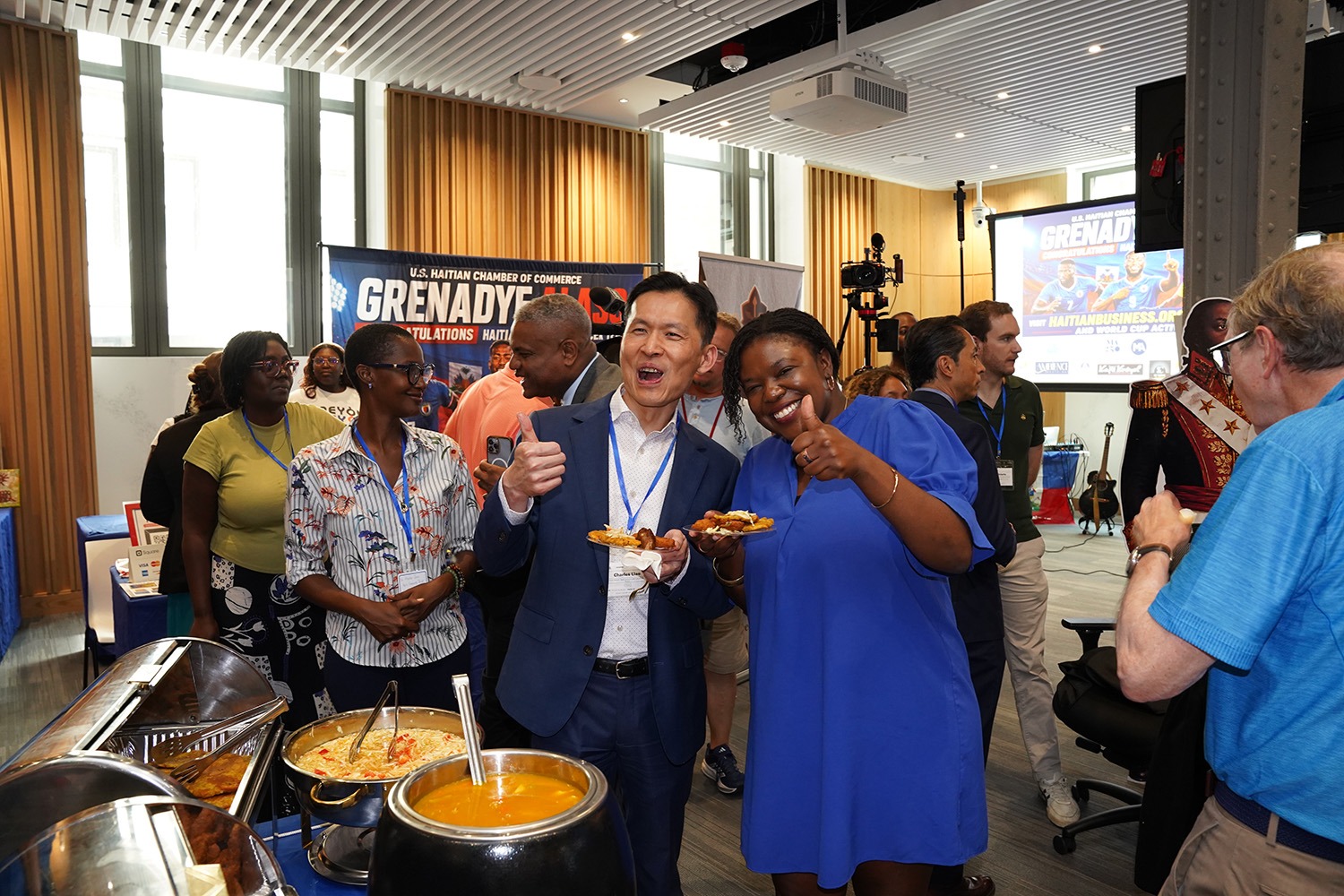
Charles Liao, Taipei Economic and Cultural Office in Boston, with Ruthzee Louijeune, Boston City Council member and child of Haitian immigrants. A post on the Taiwan in Boston Facebook page reads, “Director-General Liao extended his best wishes to #TeamHaiti for a successful tournament and expressed confidence in the team as it proudly represents Haiti on the world stage.”
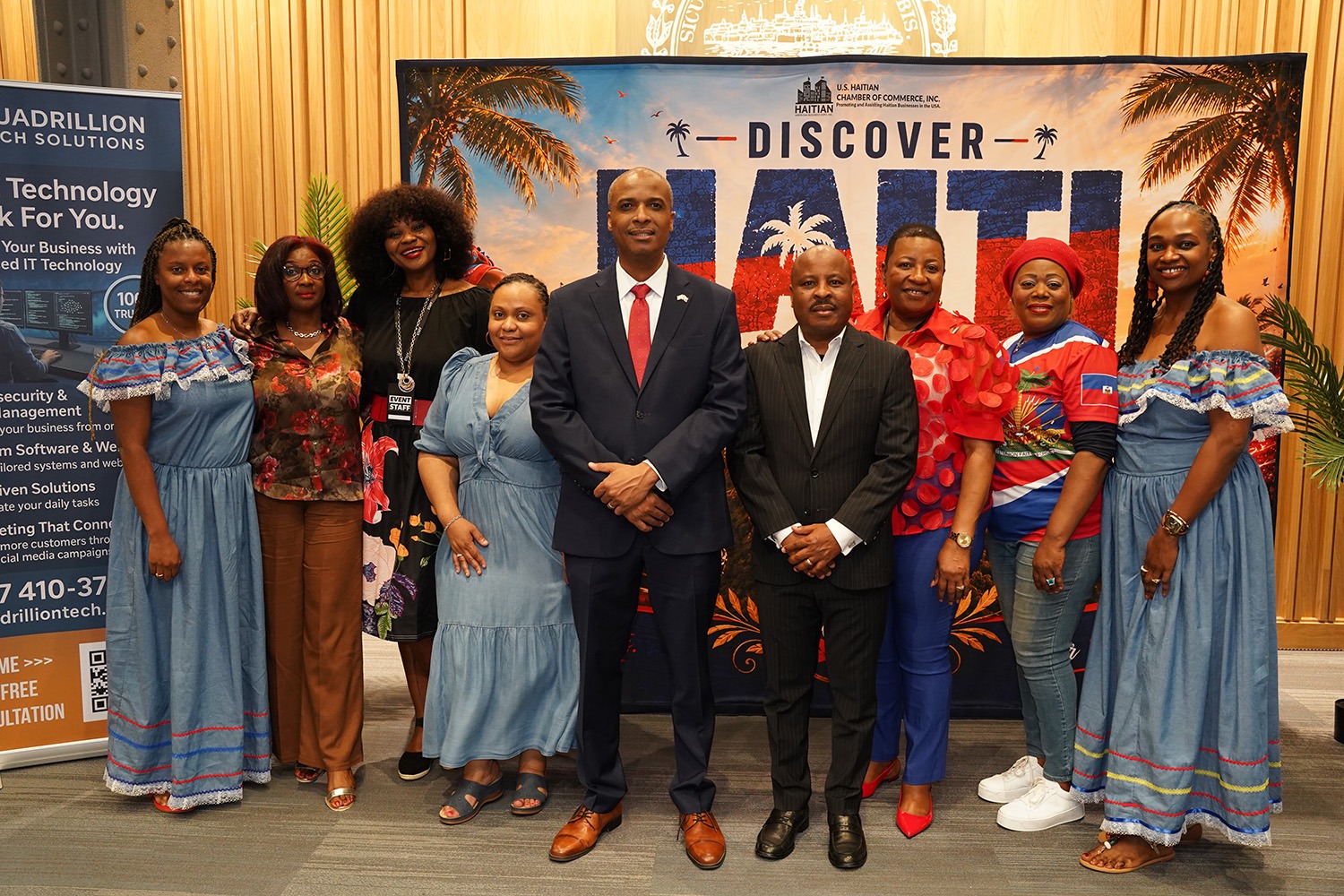
Hans Patrick Domercant and Emmanuel Jean of the US Haiti Chamber of Commerce, with other participants in Discover Haiti. “Soccer is part of our culture, part of our identity,” Domercant told CBS Boston at the event. “This is one of the popular ways to bring people together.”
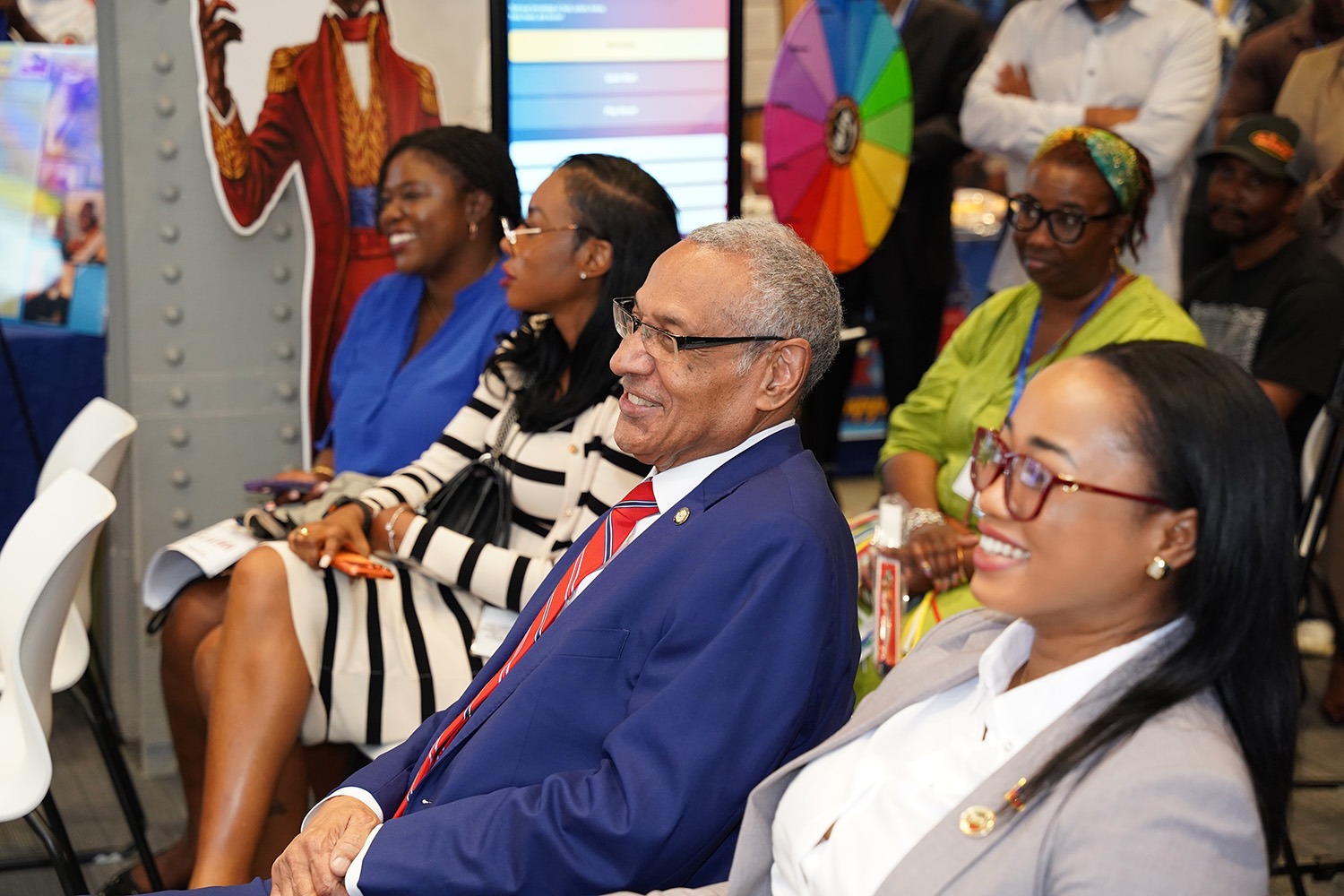
Haitian Ambassador Lionel Delatour at Discover Haiti. Ahead of and during World Cup 2026, Delatour took the opportunity to meet several times with leaders in philanthropy and business in World Cup host cities and elsewhere.
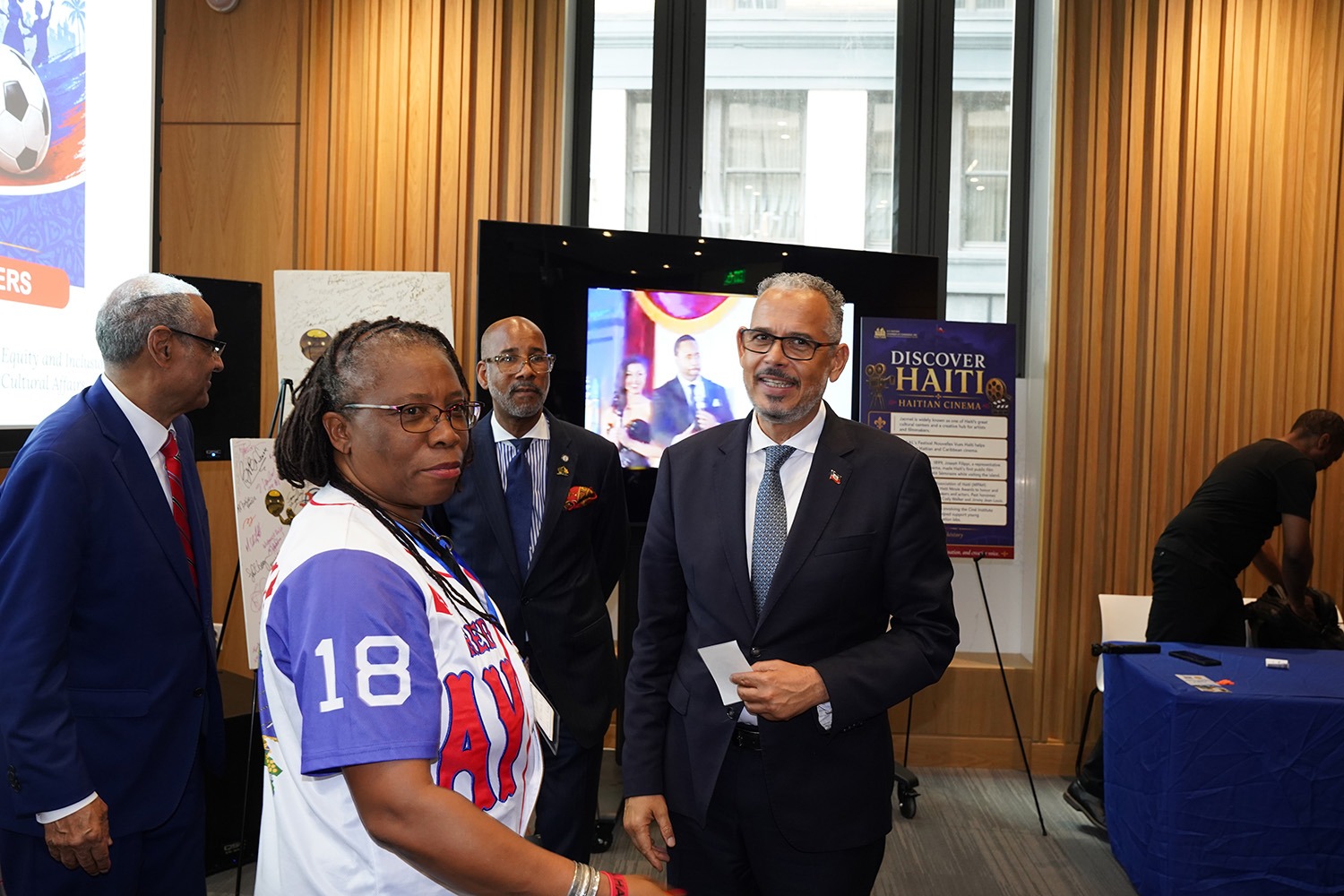
Haiti Prime Minister Alix Didier Fils-Aimé with Guerda Nicolas, professor of clinical psychology, president of Ayiti Community Trust and hardcore sports fan. At a time when it is needed perhaps more than ever, civic leaders in Haiti and the diaspora are showing they are up for the challenge of pursuing solutions for Haiti.
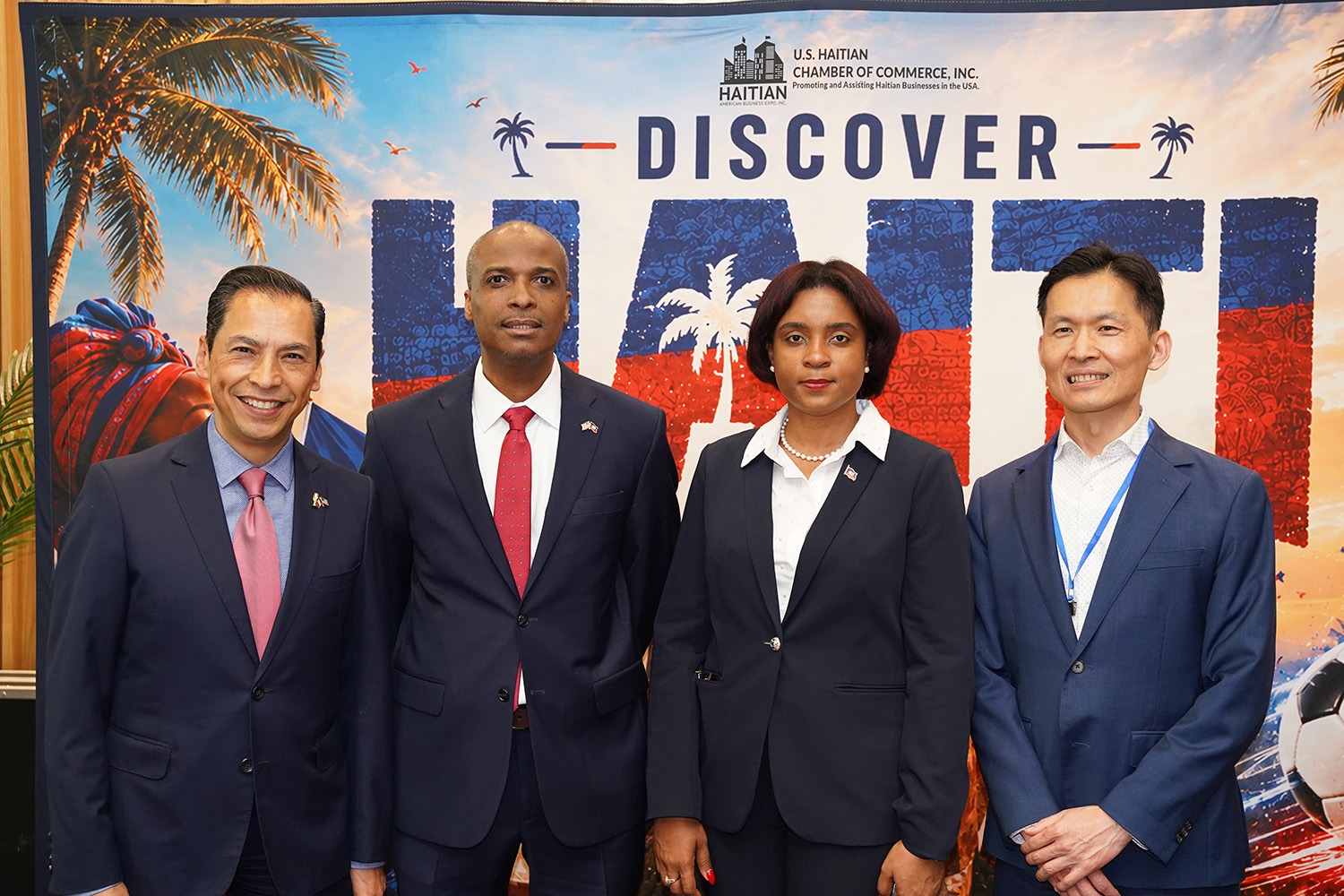
The high-level diplomatic presence at Discover Haiti shows the opportunities a major sporting event can create. From left to right, Mexican Consul General Carlos Iriarte, US Haitian Chamber of Commerce President Hans Patrick Domercant, Haitian Consul General Regine Etienne, and Charles Liao of the Taipei Economic and Cultural Office in Boston.
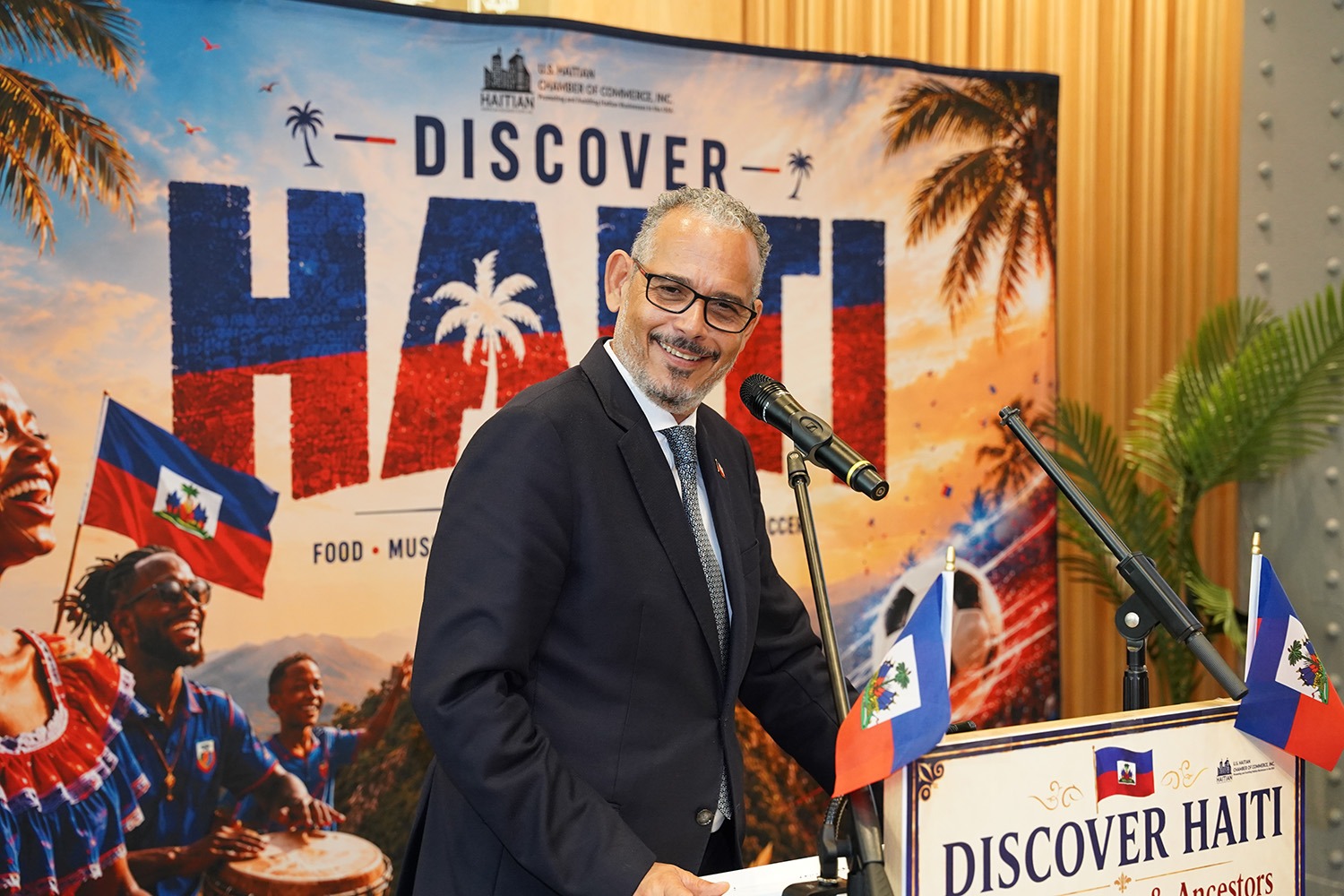
Haiti Prime Minister Alix Didier Fils-Aimé delivered a speech and mingled with the crowd at Discover Haiti. During his remarks, Fils-Aimé emphasized the importance of “trade not aid” for Haiti’s future.
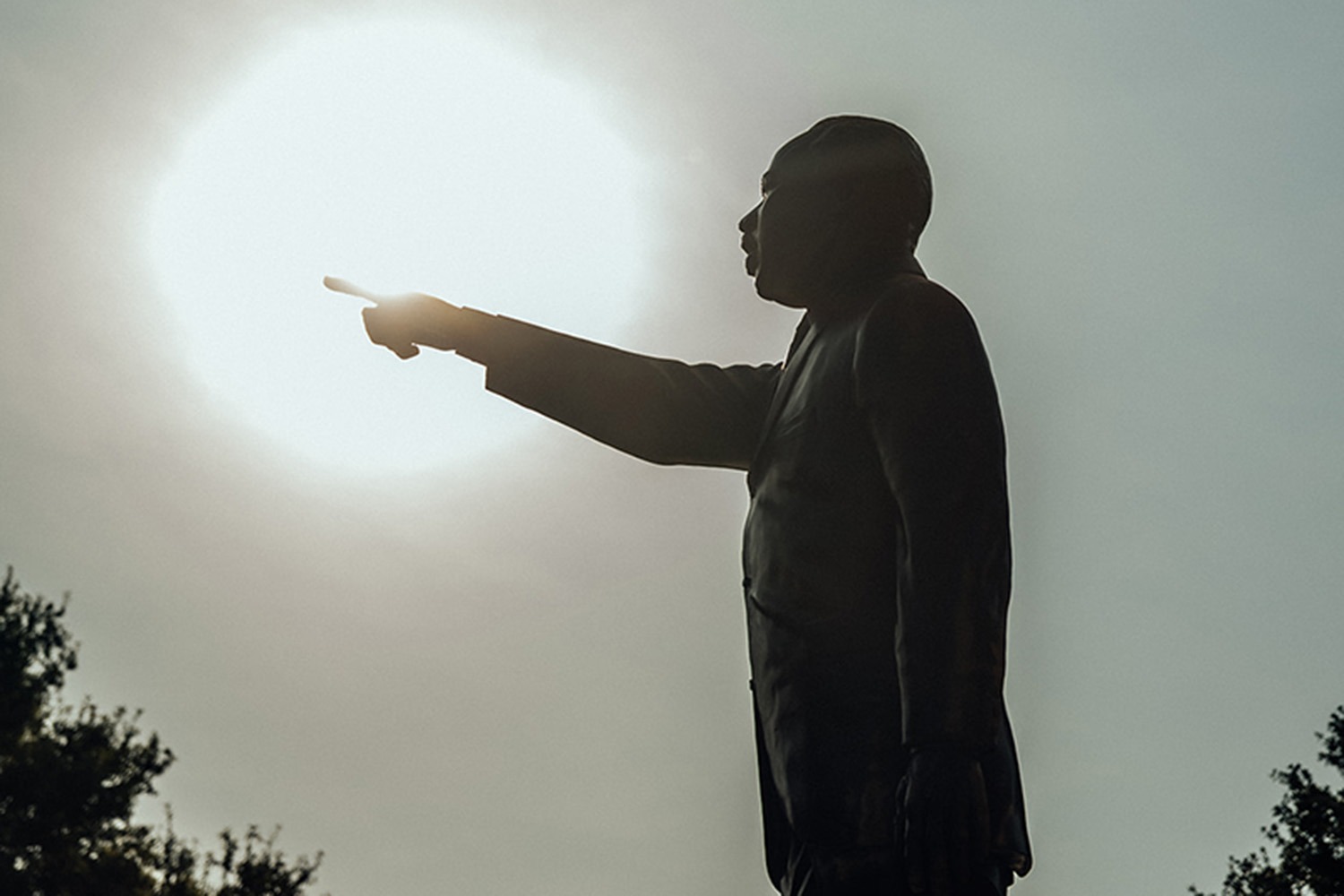
Statue of Martin Luther King Jr. at Atlanta-based Morehouse College. The institution is linked to Haiti through academic and cultural programming and humanitarian efforts. Morehouse faculty member and dean Dr. Regine Jackson is the current president of the Haitian Studies Association, and Morehouse has hosted multiple HSA events.
In Boston and Atlanta, families gathered together with excitement and joy
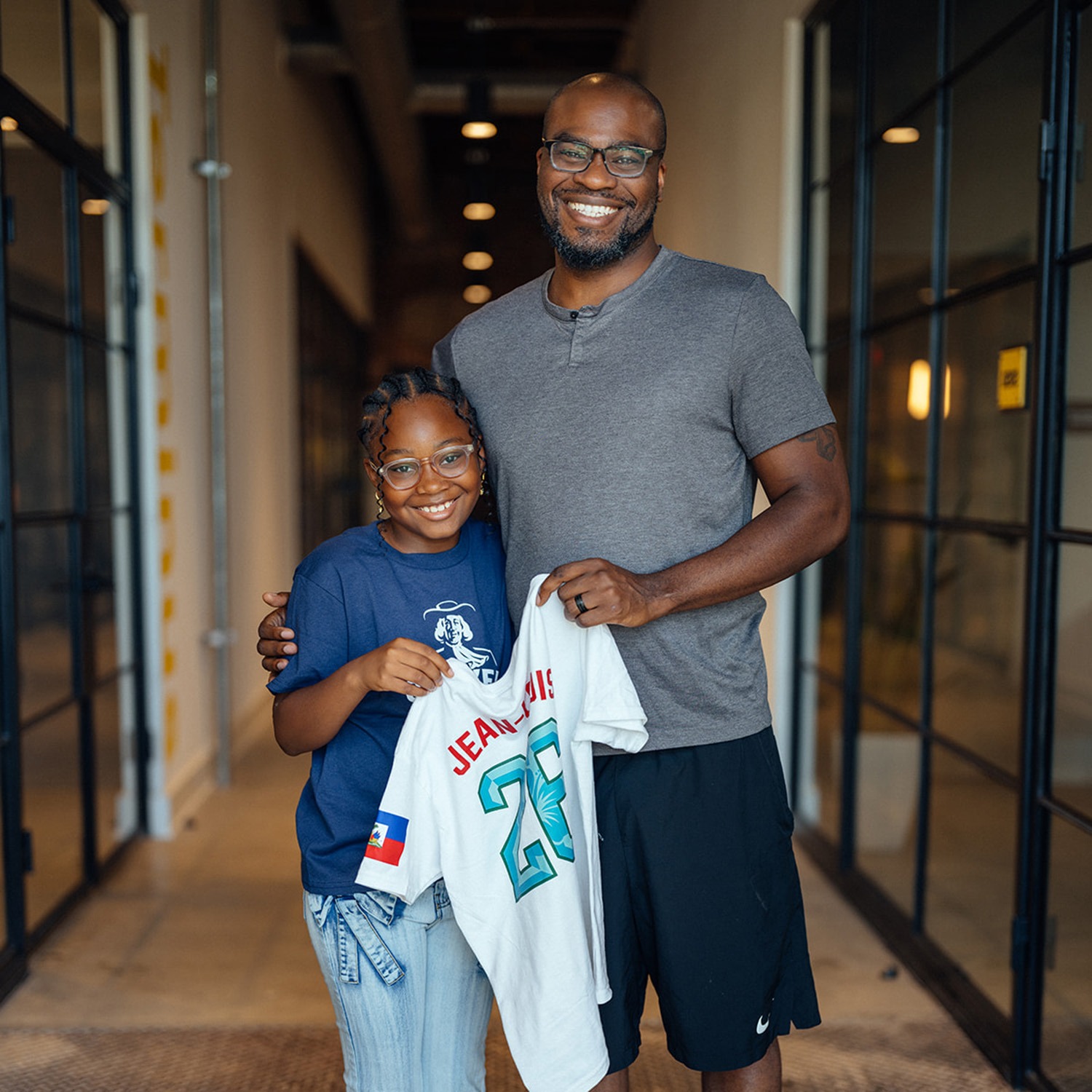
Noelle-Grace Jean-Louis and her father, Darren, holding a Haiti fan jersey. They are among about 25,000 Haitians in the Atlanta area, making it the fifth largest population in the US. Many maintain ties to Haiti, including staying in touch with family, sending remittances, and promoting the culture overseas.
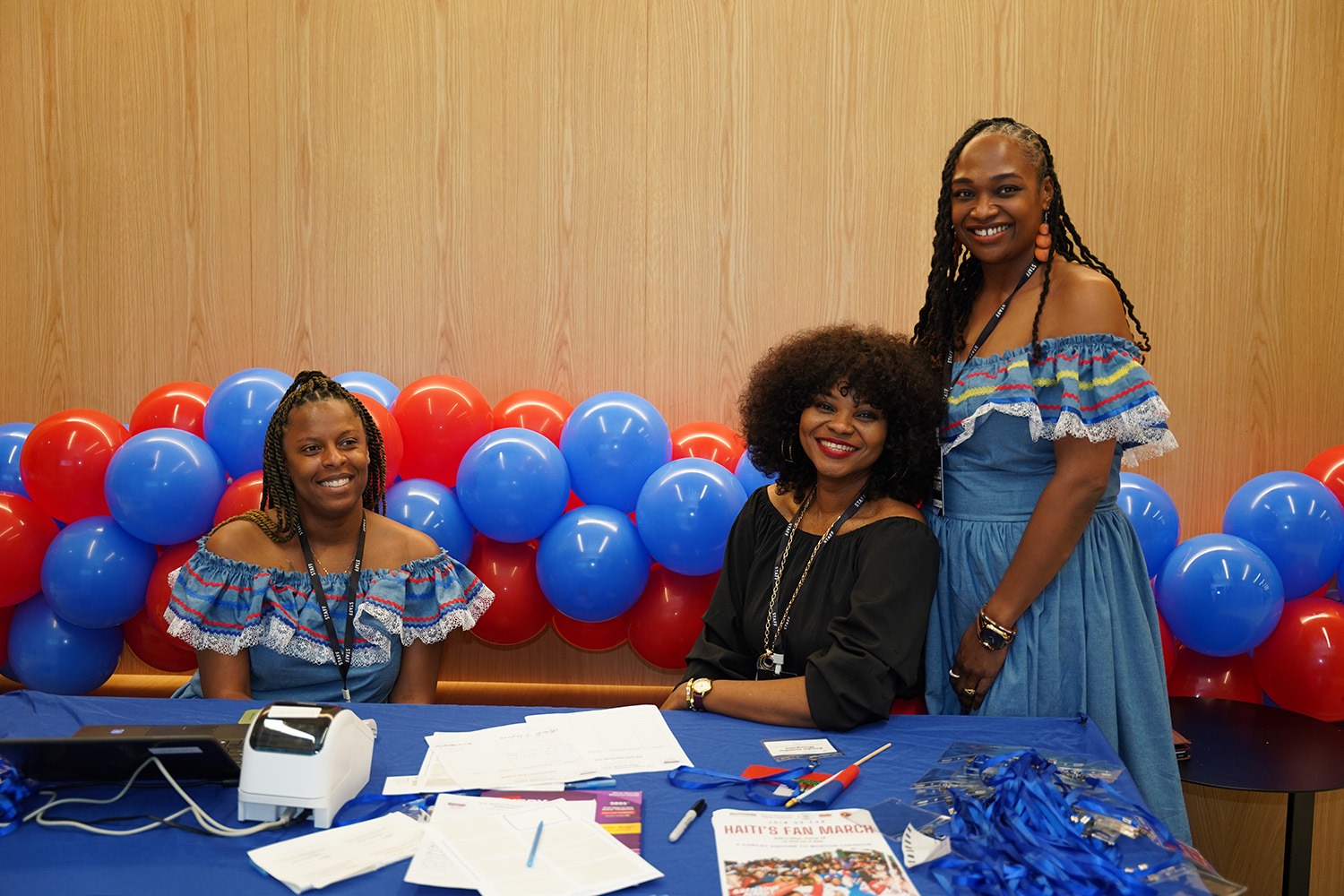
The event was organized by the US Haitian Chamber of Commerce, with Haiti’s consulate general of Boston, the City of Boston, and WKKF. It was free and open to the public, with the aim of celebrating Haitian culture ahead of Haiti’s first game in the World Cup.
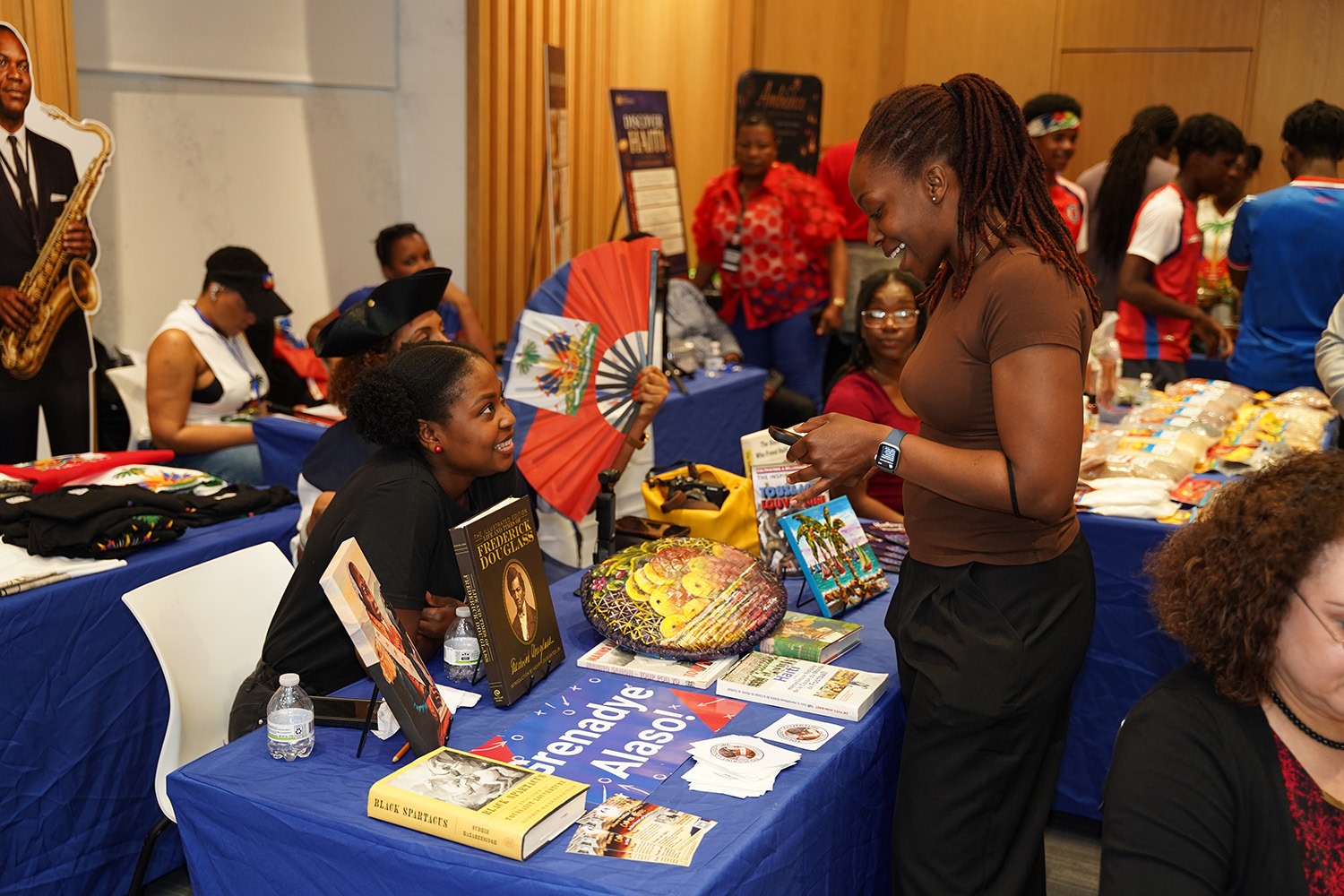
Table of the Toussaint Louverture Cultural Center of Massachusetts. The TLCC opened in 2025 near Boston’s North Station. An initiative of Haitian Americans United, it promotes Haitian culture through educational programming and events, showcasing Haiti’s language, history and art.
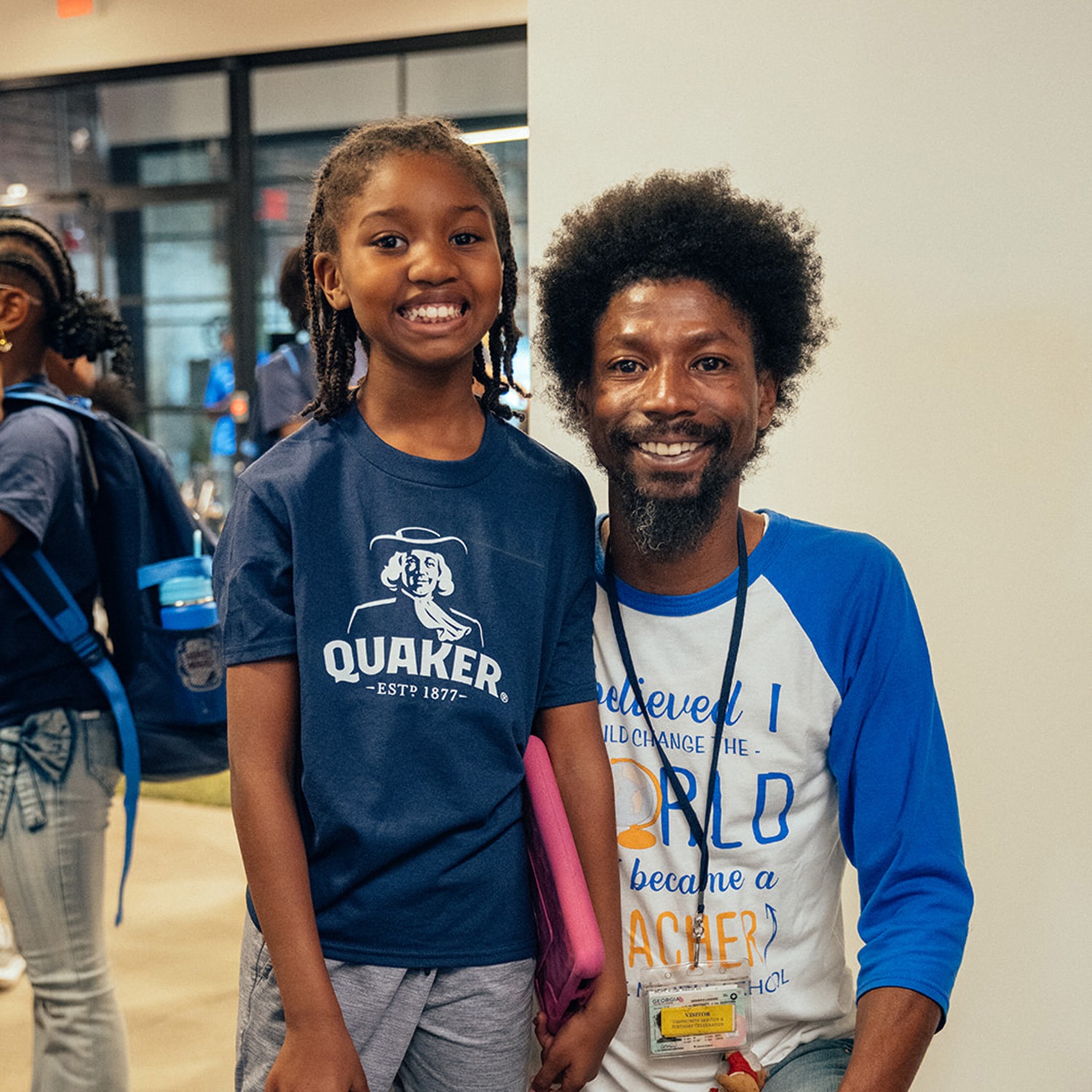
Soccer in the Streets player Taylor Willis and her father, Antwon.
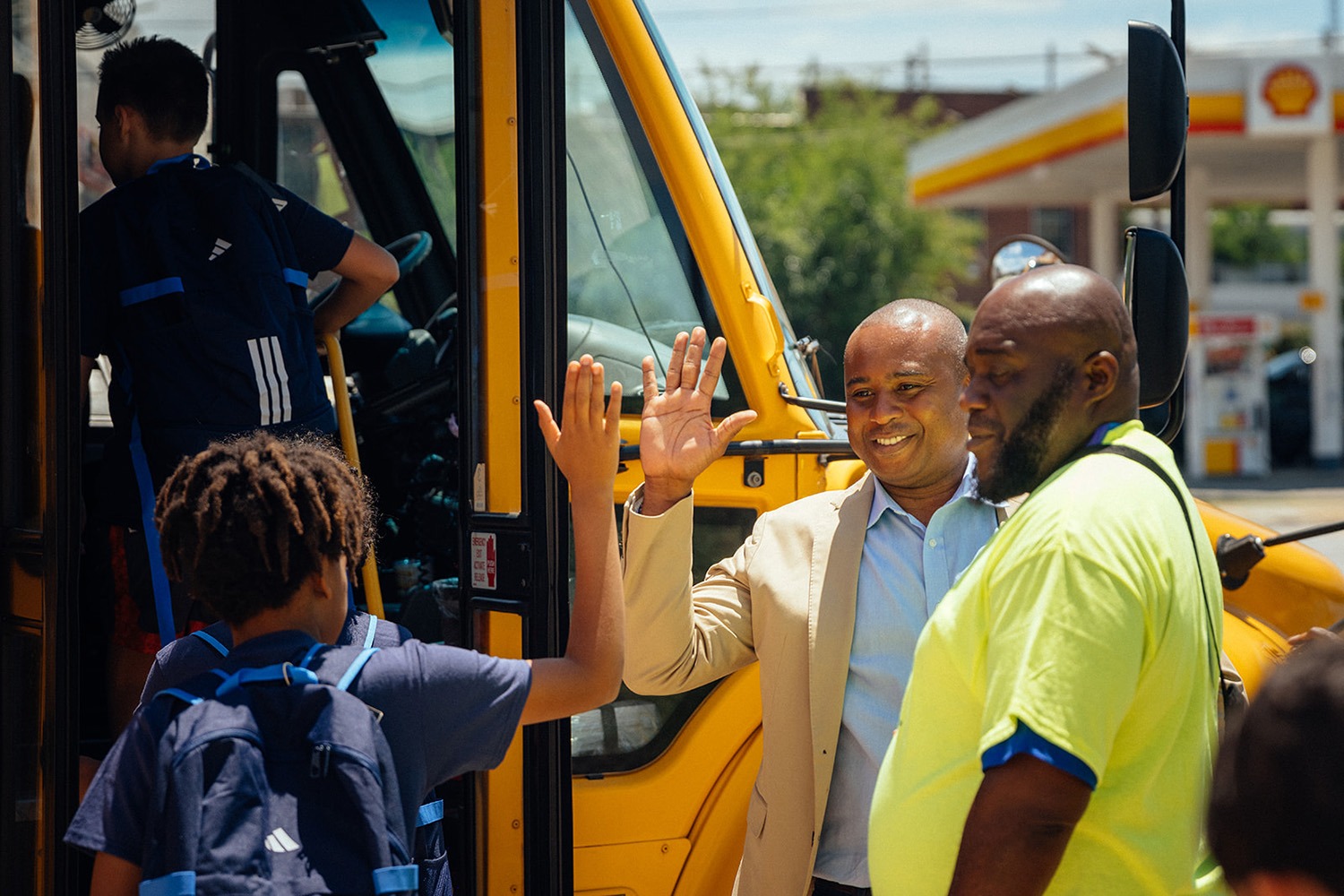
Kaseem Ladipo and Rony Sanon welcome youth players onto a bus headed to Mercedes-Benz Stadium to escort the Haiti and Morocco teams onto the field for their June 24 World Cup match. Soccer in the Streets is among the community organizations that recognizes how sports can influence people’s perceptions of themselves and those around them.
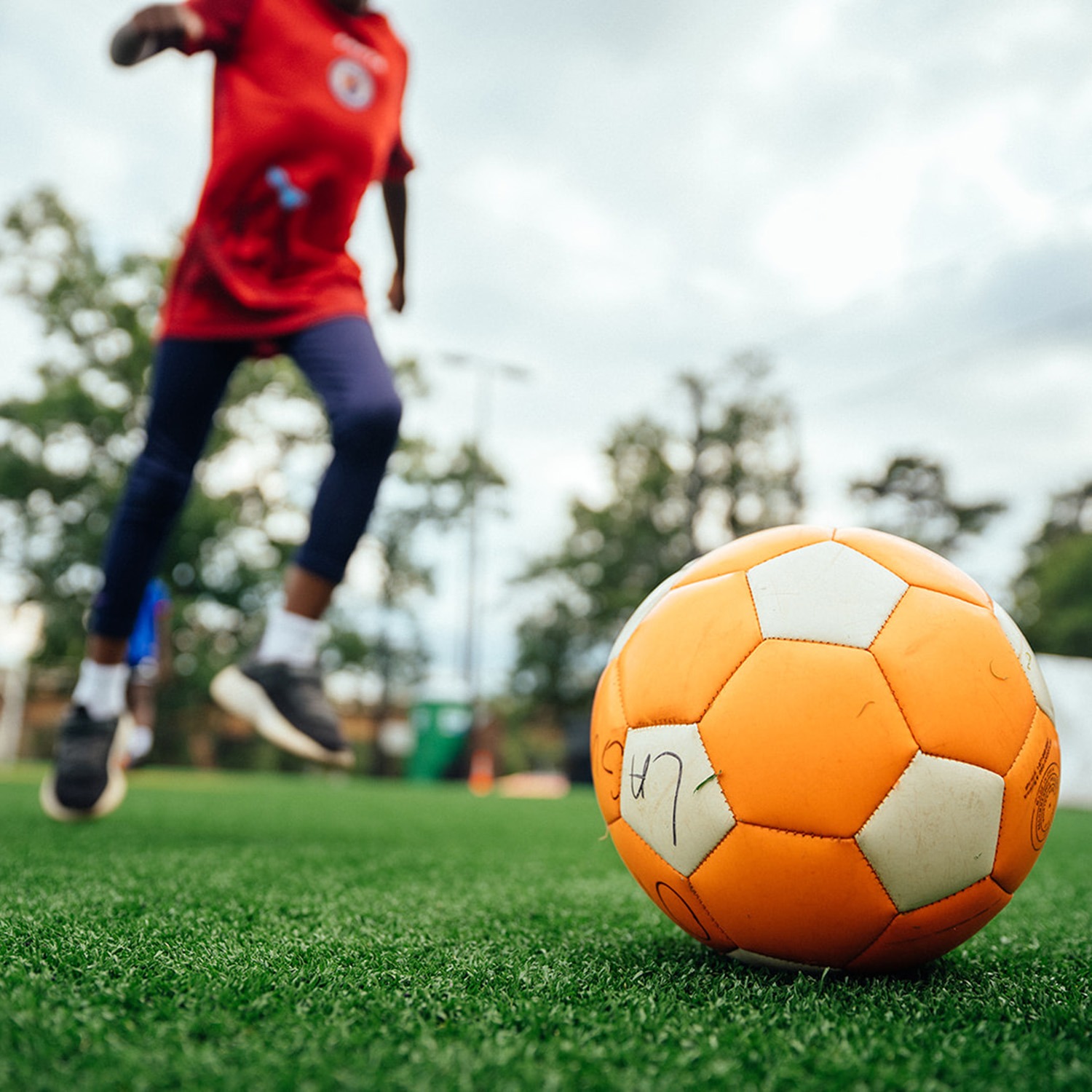
Soccer in the Streets transforms empty parking lots in the Atlanta metro area and elsewhere into soccer fields, where children and community members can get exercise and play.
When Haiti qualified for its first World Cup in more than 50 years, it felt to some fans like they had already won. On the world’s biggest stage, millions of people across the globe would hear the Haitian national anthem, La Dessalinienne, sung from stadiums in the United States. One die-hard Haitian sports fan said that hearing that stirring tribute to Haiti’s revolutionary hero, Jean-Jacques Dessalines, was more meaningful than any medal. A return to the World Cup was also an opportunity to introduce Haiti beyond the headlines.
Sports fans of all stripes listened to that anthem, saw that flag, and heard the chants of “Grenadye Alaso!” In doing so, they got a taste of Haitian history.
There is evidence that sports moments like these can have a lasting impact. Research from the Robert Wood Johnson Foundation (RWJF) found that exposure to messages about important social issues through sports can motivate people to take action, including starting conversations with friends and family about those issues.
Something commonly witnessed in World Cup host cities was fans showing curiosity or even rooting for teams from other countries. In Boston, Scotland fans leading the so-called “Tartan invasion” were seen dancing in the streets to Haitian music and checking out Haitian eateries far from the stadium and their hotels.
For a few extraordinary weeks, the World Cup showed millions of people a Haiti too rarely reflected in the headlines. They caught a glimpse of a nation connected across borders, rooted in a remarkable history and culture, and filled with people who have every reason to celebrate who they are and imagine what comes next.
Meet the Haitian children, parents and community leaders of Atlanta
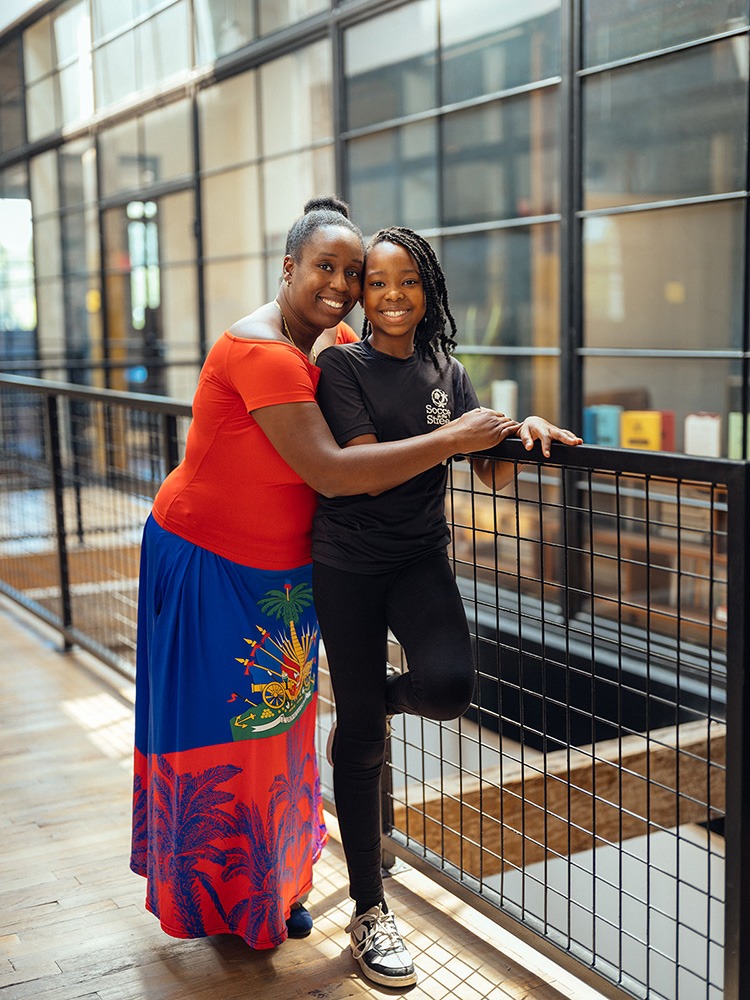
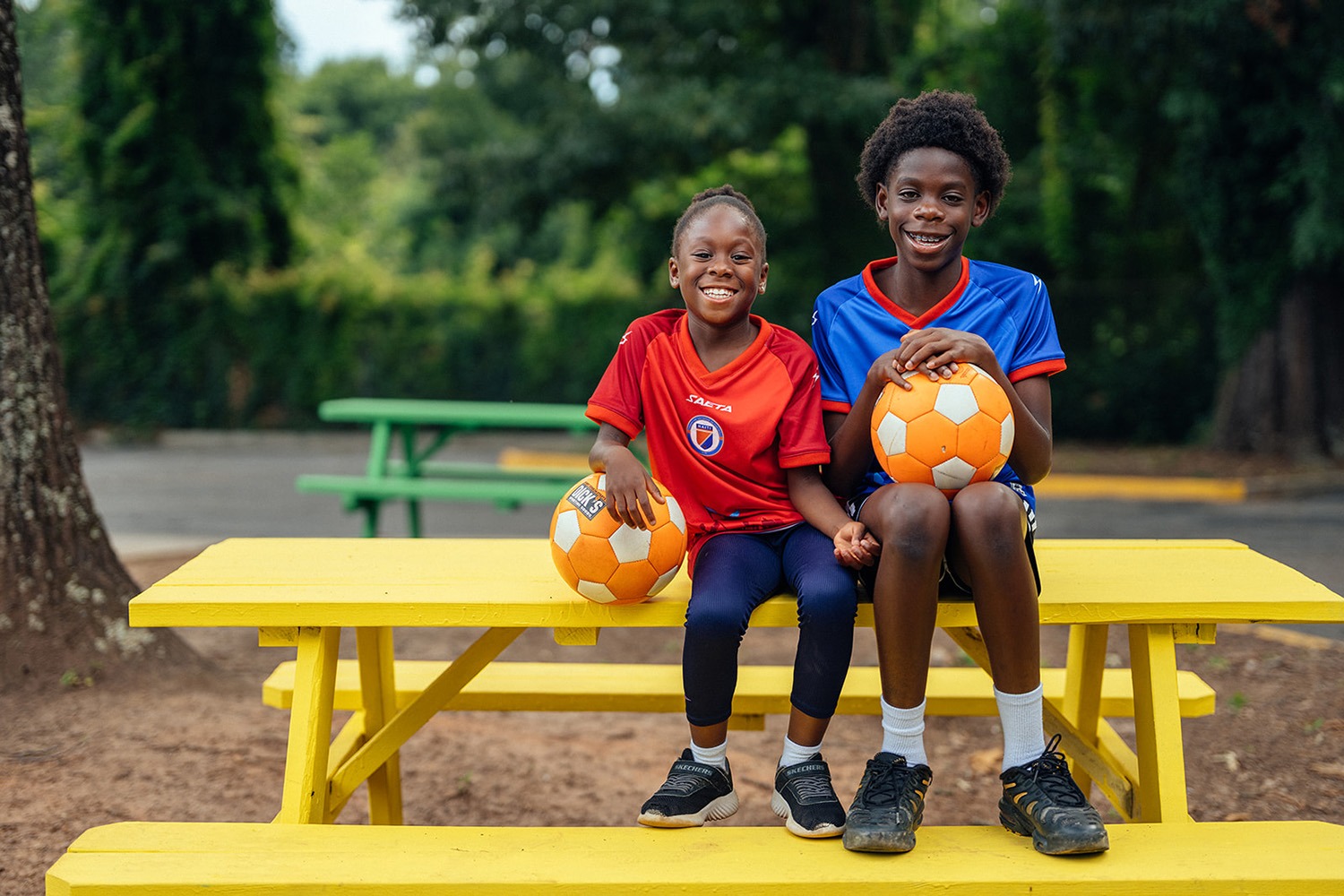
Johanna Kernizan-Van with her 10-year-old daughter, Josephine “Josie” Van, a soccer player with the Atlanta-based non-profit Soccer in the Streets. She escorted Les Grenadiers goalie and team captain Johny Placide onto the field for the Haiti-Morocco game on June 24 at Mercedes-Benz Stadium.
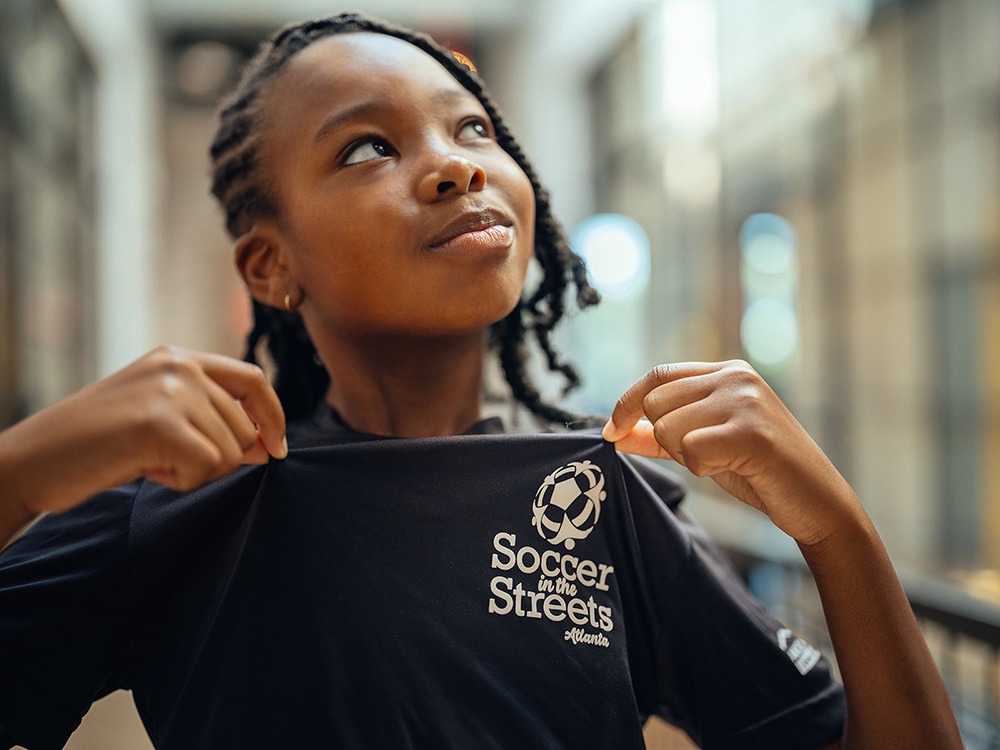
Ten-year-old Josephine “Josie” Van is part of Soccer in the Streets, a sports and youth development organization. She was excited to escort Les Grenadiers’ goalie and captain onto the field in Atlanta. She told Atlanta News First that she hoped to send a message that “people, especially Haitian girls, can be anything you put your mind to.”
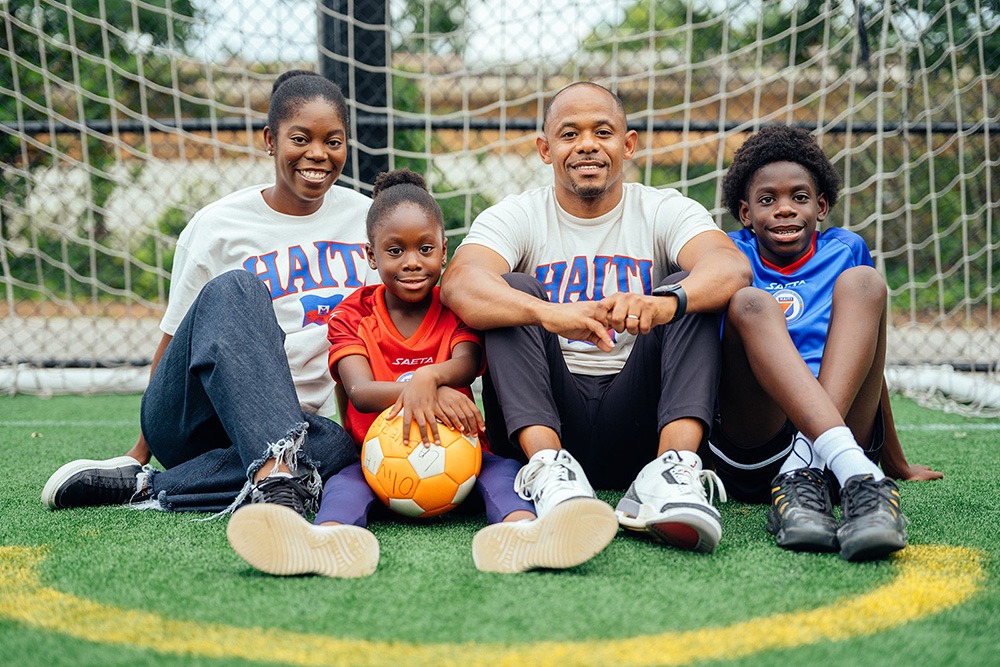
The Laguerre family. Salomon Laguerre is a Haitian immigrant who now practices corporate employment law, while also actively volunteering in his community. He’s an example of how Haitian immigrants commonly contribute to society in various ways, paid and unpaid.
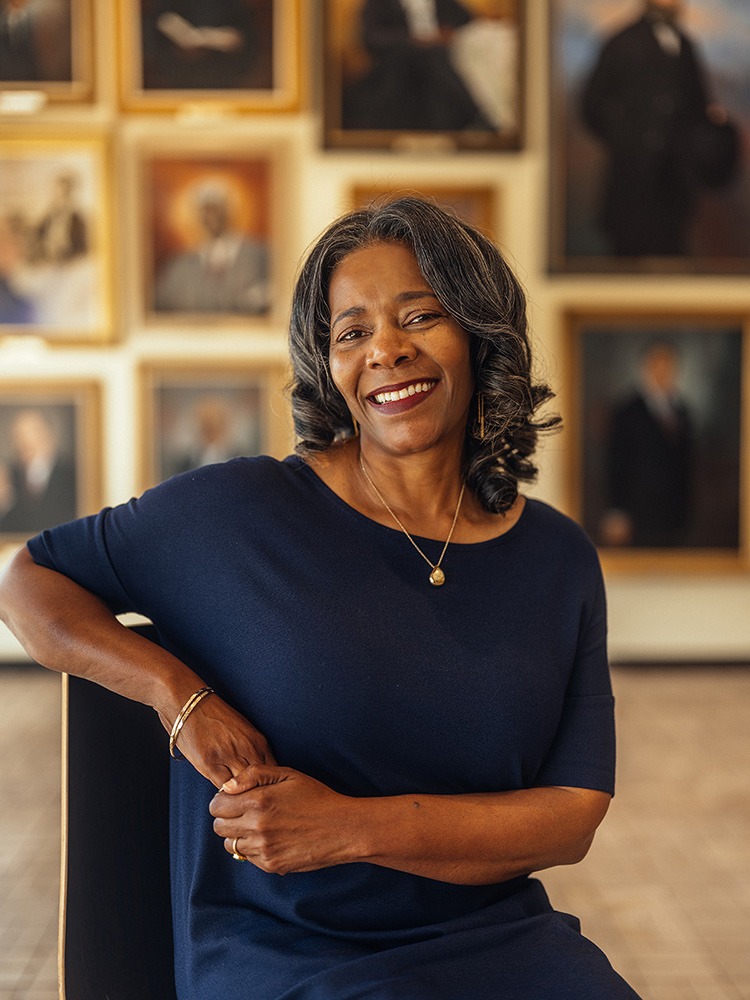
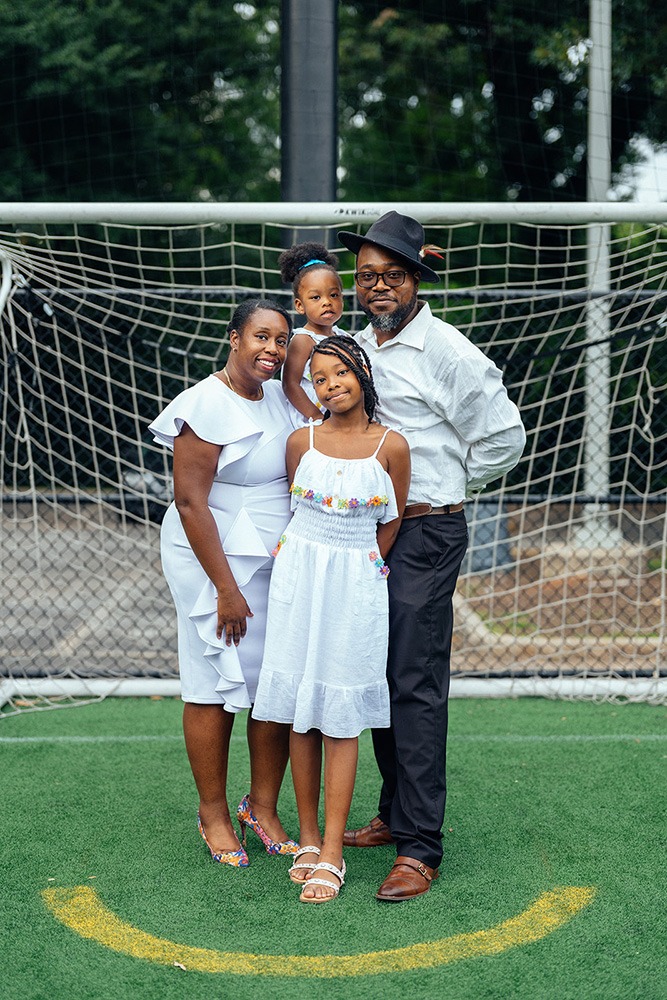
Josie Van with her mother Johanna Kernizan-Van, her father, and her little sister.
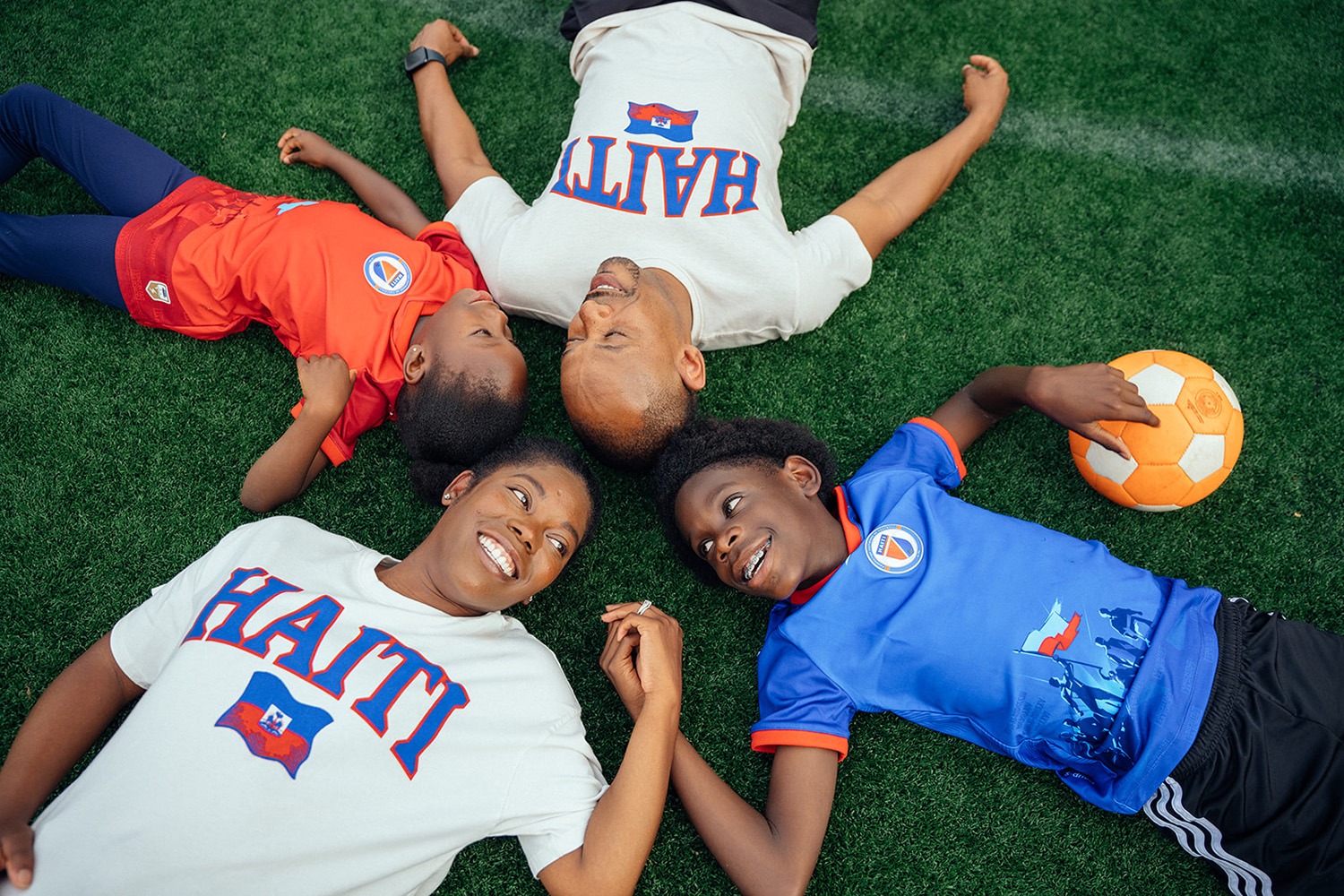
Soccer serves as a link between generations and between Haiti and the diaspora
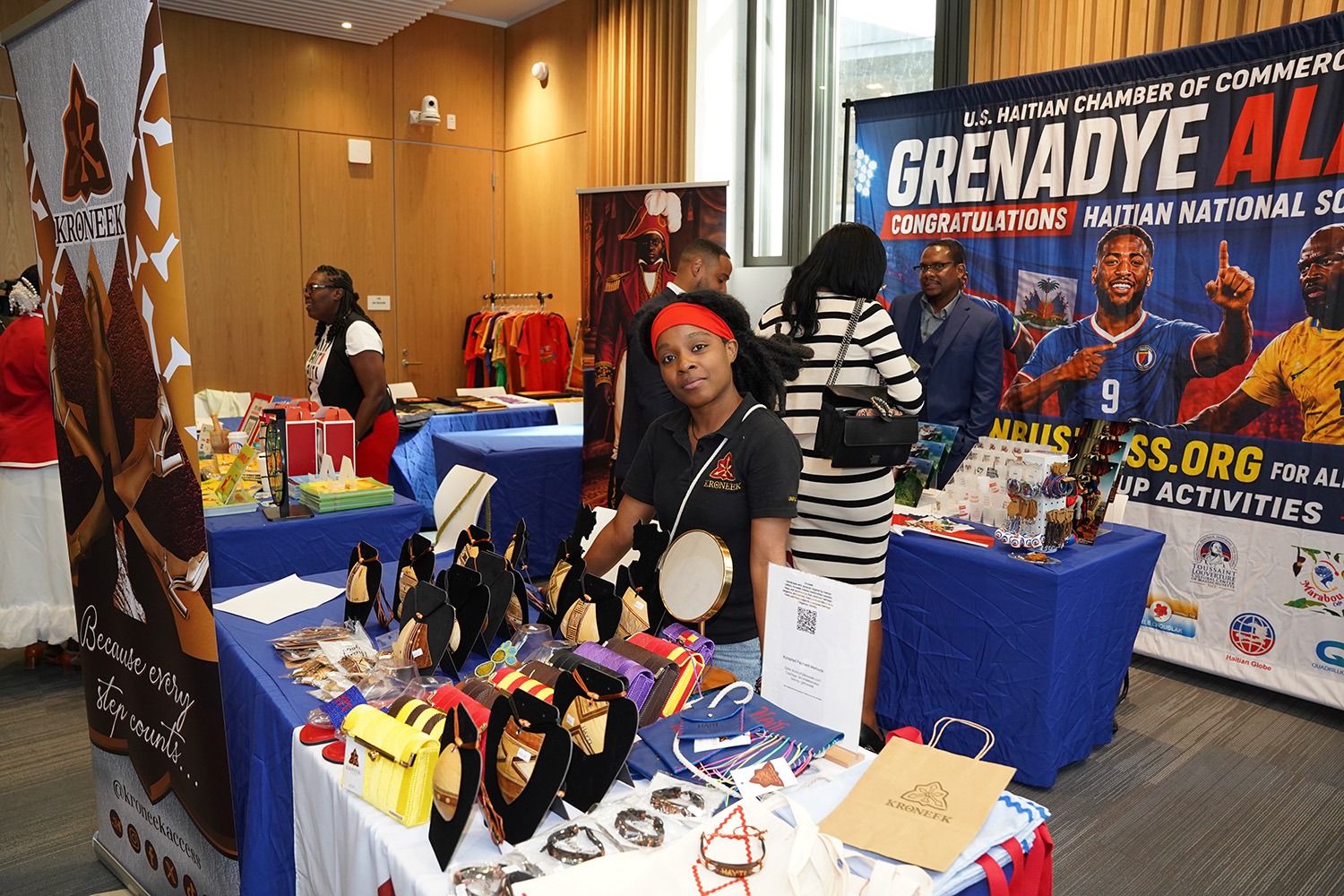
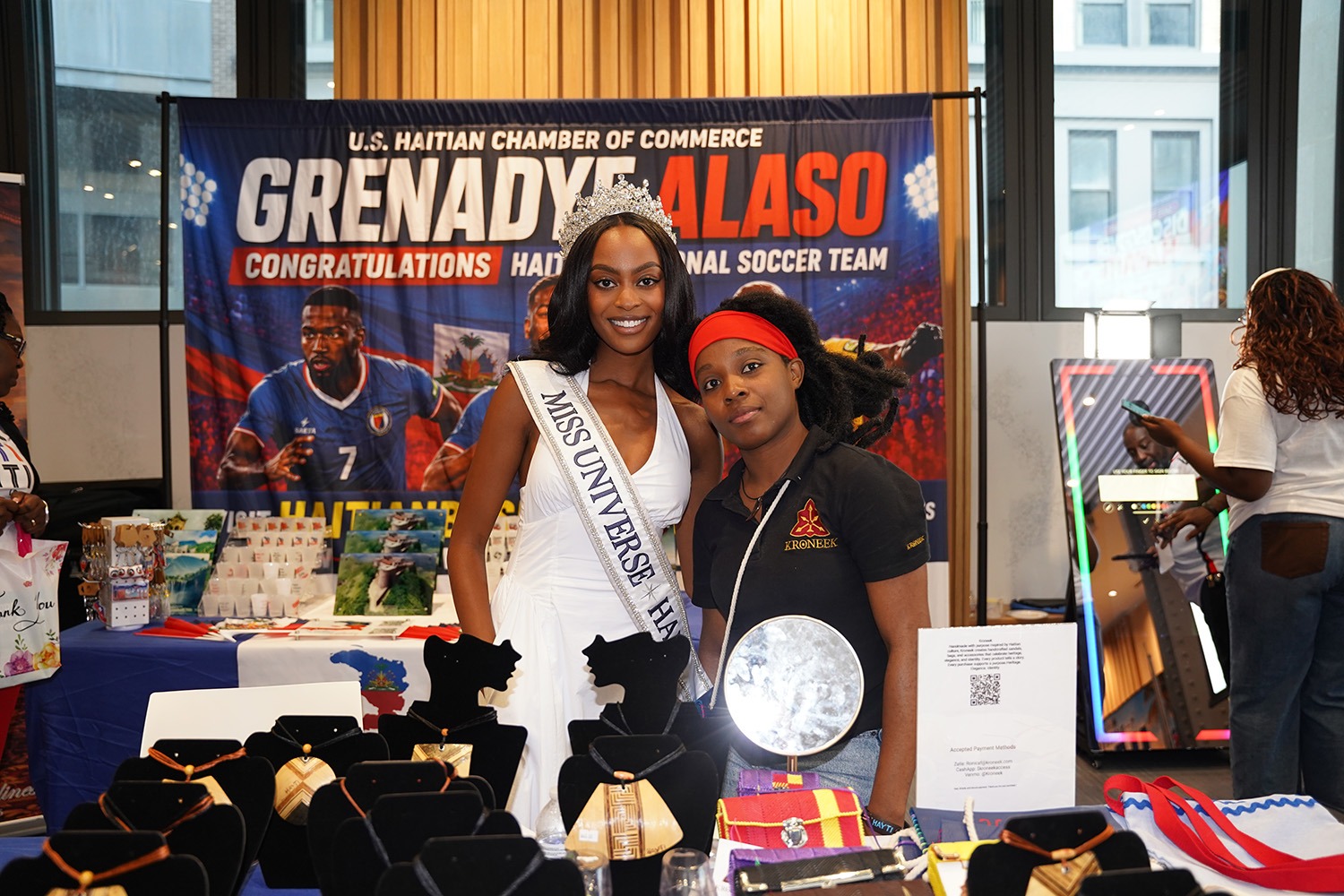
Ronica Fortuné, founder of Kroneek, a leather goods and accessories brand from Port-au-Prince. Fortuné was one of several Haitian artists featured at Discover Haiti, scratching the surface of Haitian creative energy in Haiti, Boston and across the diaspora.
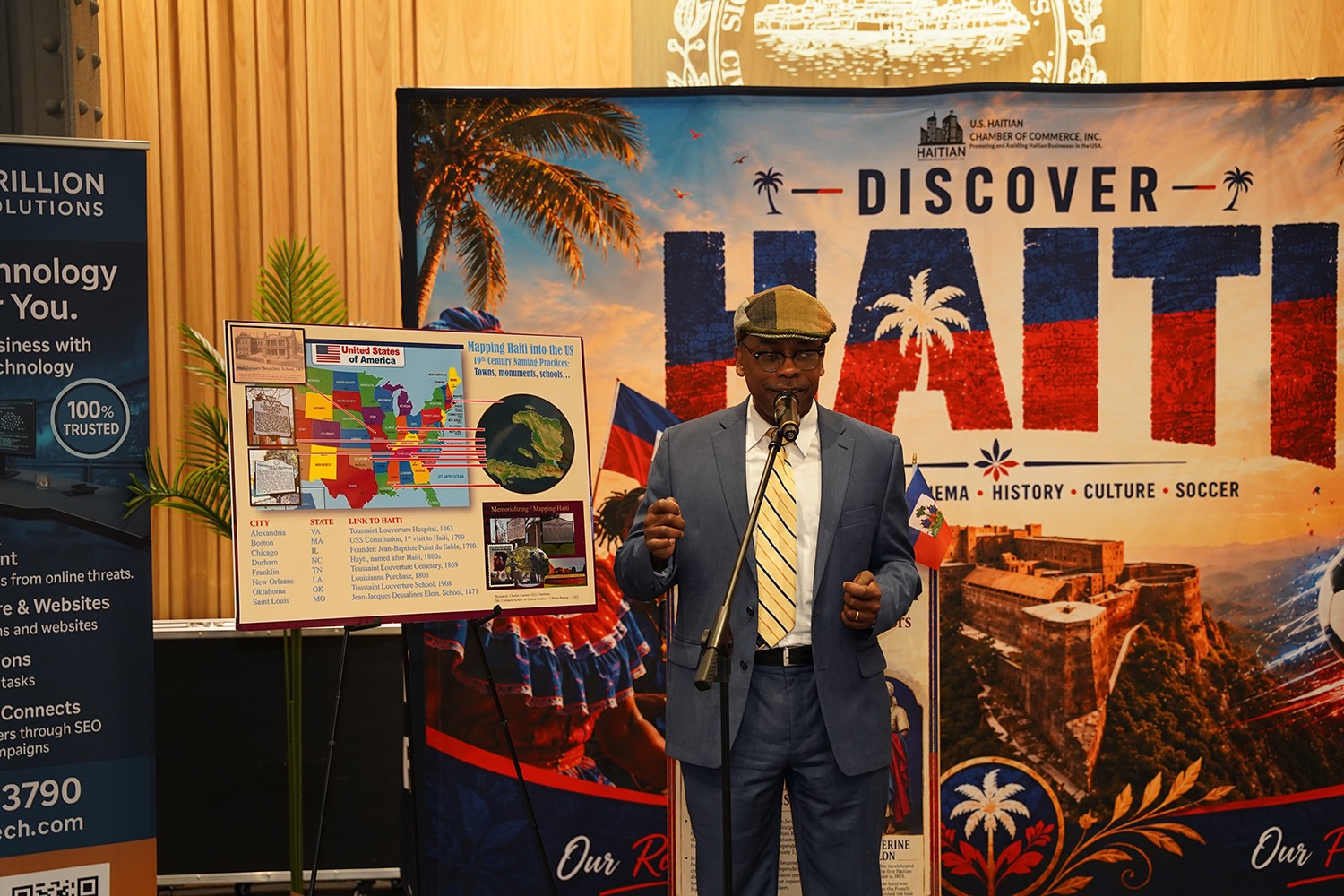
Charlot Lucien, local leader and poet, with a map of Haiti-related historical sites in the US. He and his wife, Marie Evangeline Roussel, visited locations around the United States with connections to Haitian historical figures and events. He also promotes Haitian artists in New England, including publishing books of local Haitian paintings.
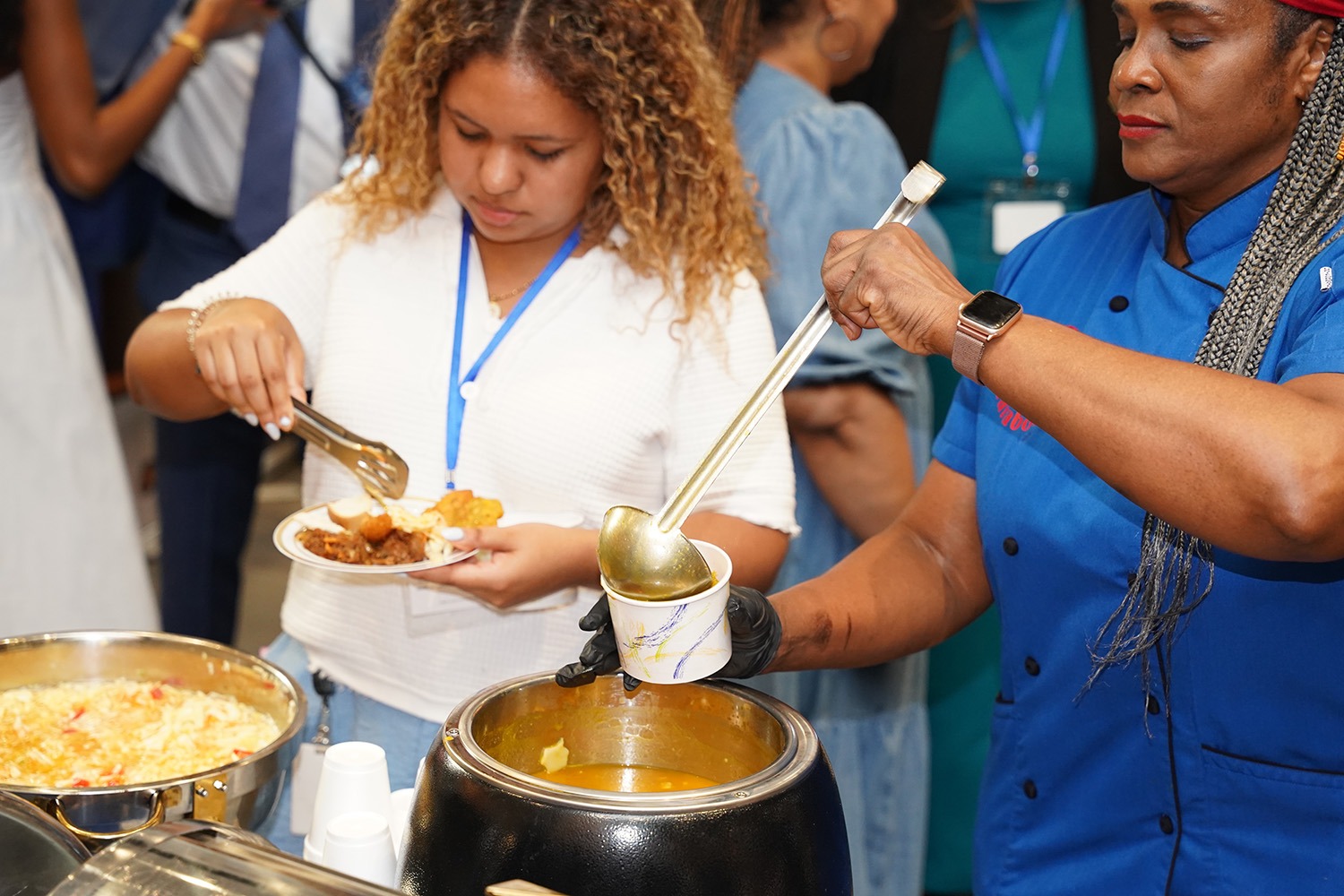
Paulette Firmin served traditional Haitian dishes from her local restaurant, Marabou Café, at Discover Haiti. Firmin wrote on Facebook she was happy to be one of many vendors “who got to witness so many Haitian and other countries’ prominent figures come together to celebrate and discuss history being made.”
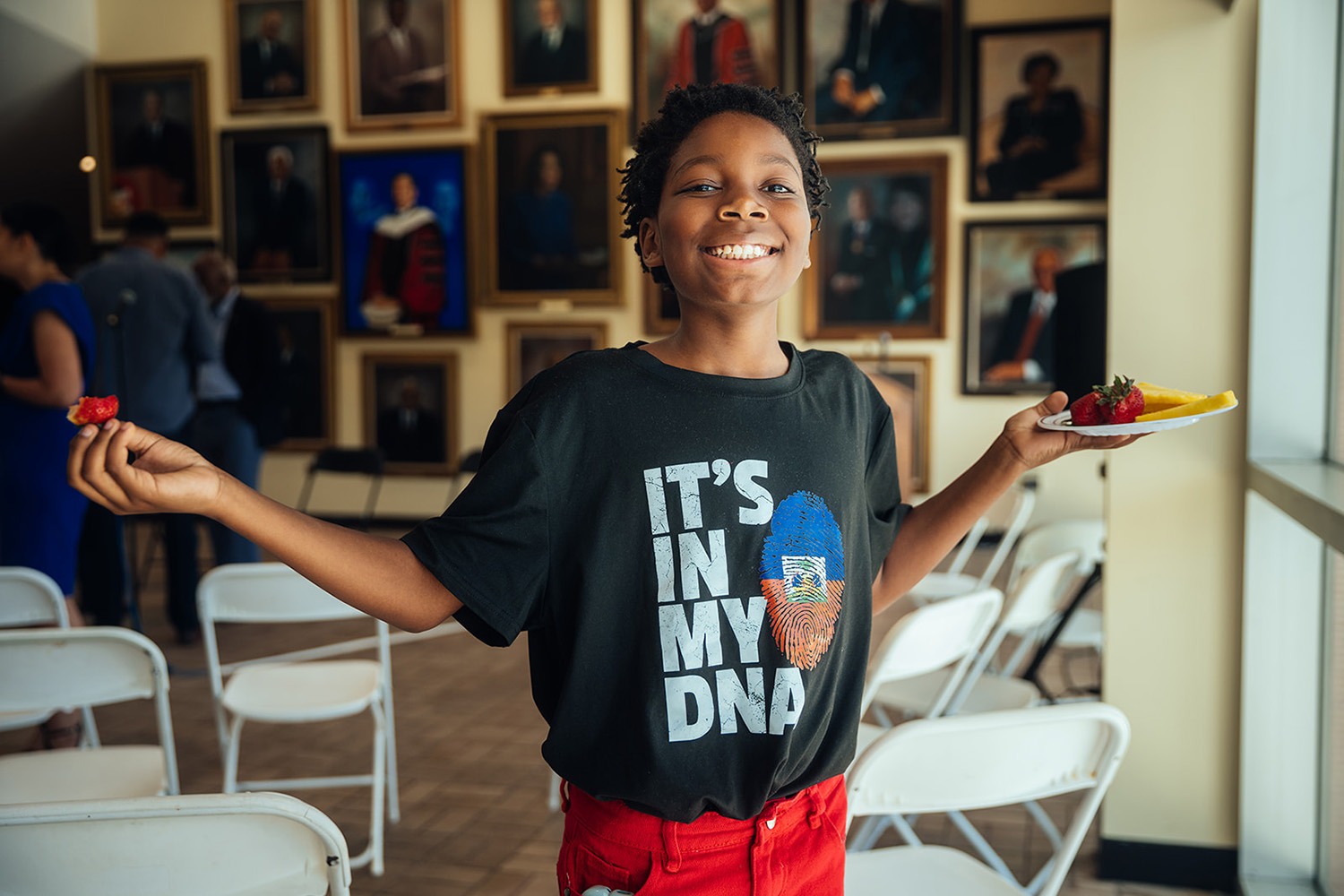
Children and young people carrying identity and their own ideas about Haiti into the future
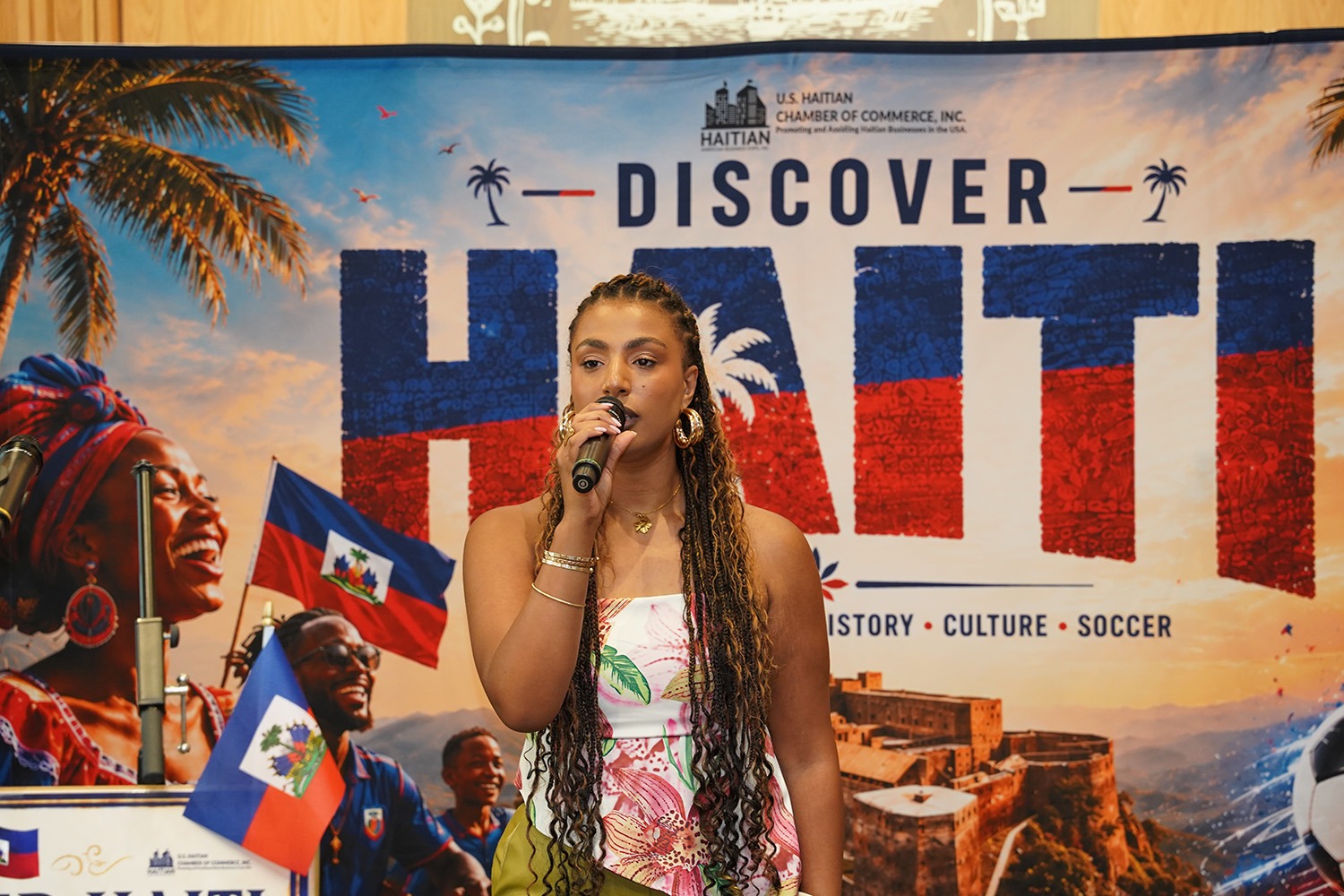
From an early age, Rebecca Zama has sung at Haitian events in the Boston area. She is now an immigration attorney and executive director of a nonprofit working with youth in southern Haiti. She’s among countless Haitian-Americans sharing their talents with the country they grew up in while giving back to their parents’ homeland.
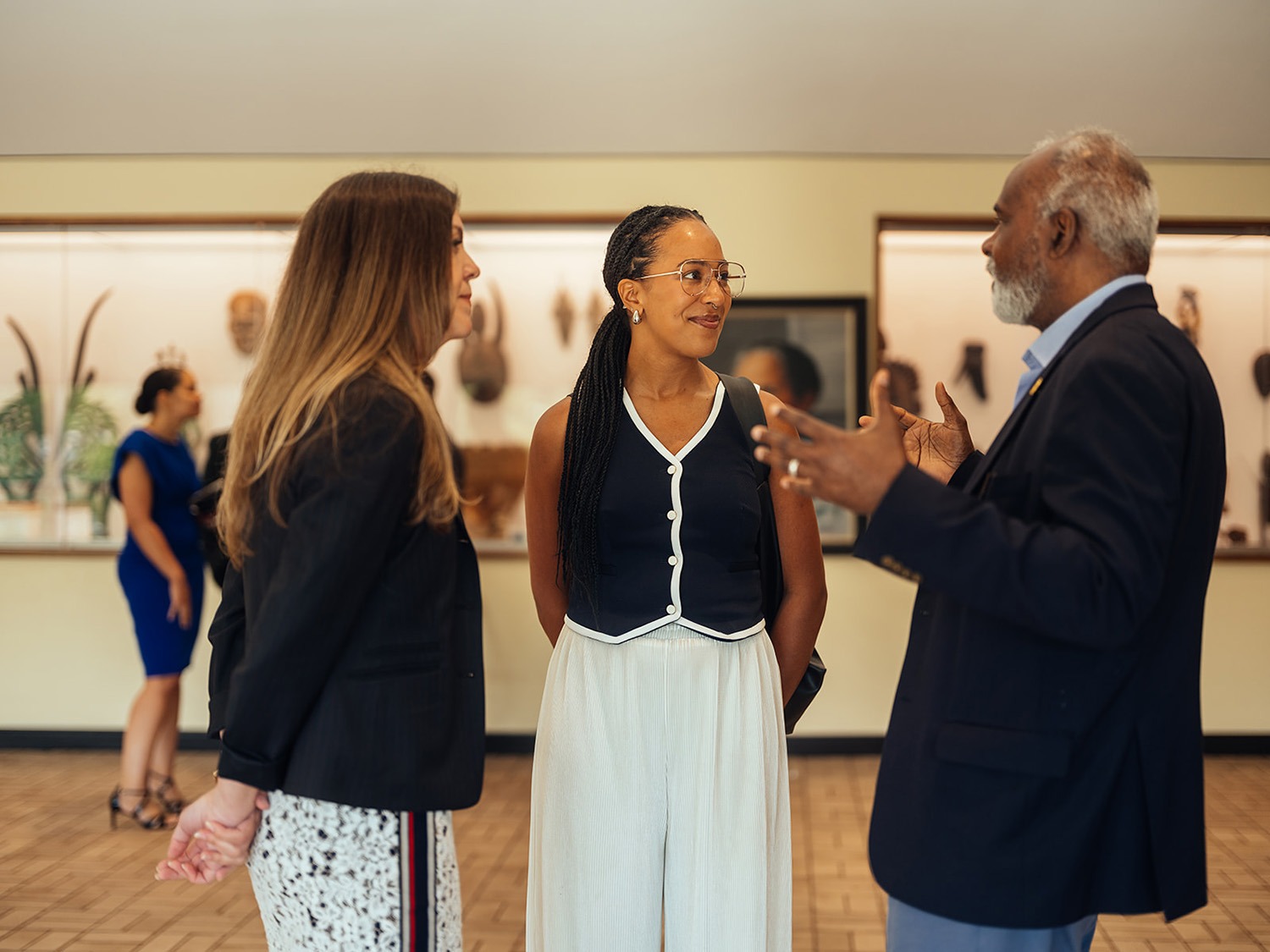
WKKF’s Alix Cantave and Anastasia Ordonez speak with Naomy Grand’Pierre. In 2016, she became the first woman to represent Haiti as a swimmer in the Olympics. She is one of many Haitian athletes in the diaspora to proudly represent her country of origin in the world’s highest level competitions.
Boston
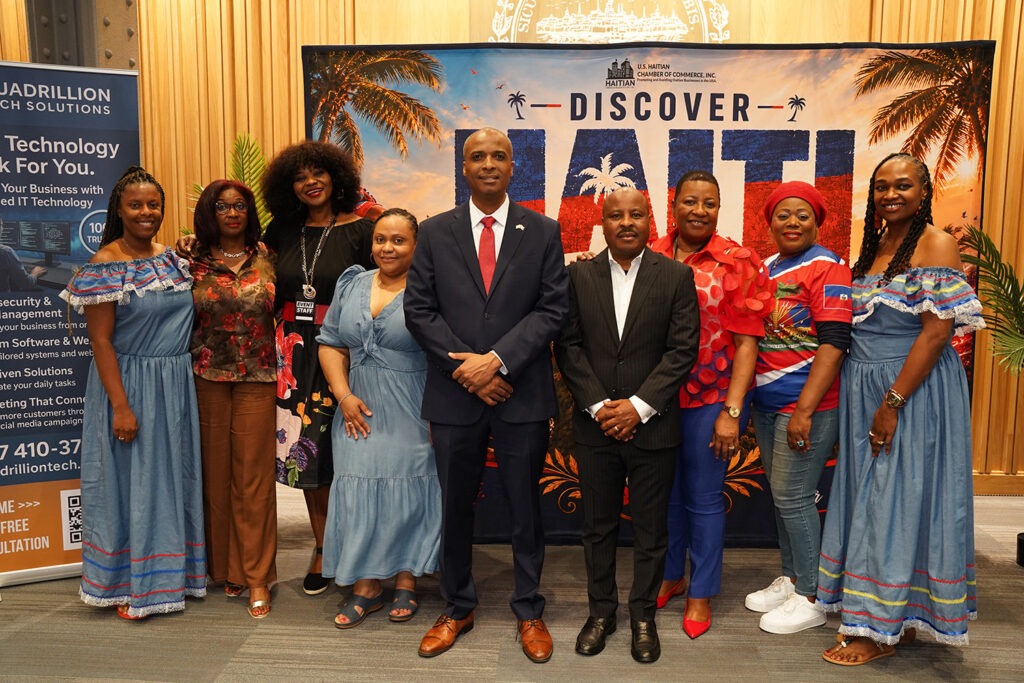
“Soccer is part of our culture. Part of our identity,” US Haitian Chamber of Commerce President Dr. Hans Domercant told CBS News Boston on June 12.
Boston
“Soccer is part of our culture. Part of our identity,” US Haitian Chamber of Commerce President Dr. Hans Domercant told CBS News Boston on June 12.
He was at Discover Haiti, an event hosted by the Chamber, in partnership with the W.K. Kellogg Foundation, City of Boston, and Consulate General of Haiti in Boston.
With the aim of tapping into World Cup fever to celebrate Haiti, the event featured food, art, music, dance, literature, history, and other themes of culture and representation.
Those in attendance included the Haitian prime minister, Boston City Council Member and Haitian-American Ruthzee Louijeune, funders, international diplomats and consular representatives from several countries, including Mexico and Brazil. There were also many community members, as the event was free and open to the public.
Guests were treated to exhibitions of Haitians’ creative and economic contributions, including children’s books, paintings, dance, drumming, poetry and singing. A fashion display featured World Cup shirts designed by a local artist, and food by a local restaurant owner was served beside a poster explaining each dish’s cultural and historical significance in Haiti.
A statement from the US Haitian Chamber of Commerce described the event as part of its effort to change the narrative about Haiti to one centered on innovation, investment, pride, culture and opportunity.
Word of Discover Haiti was circulated by attendees on social media, and by the US Haitian Chamber of Commerce and CBS Boston, further spreading the excitement and curiosity.
Atlanta
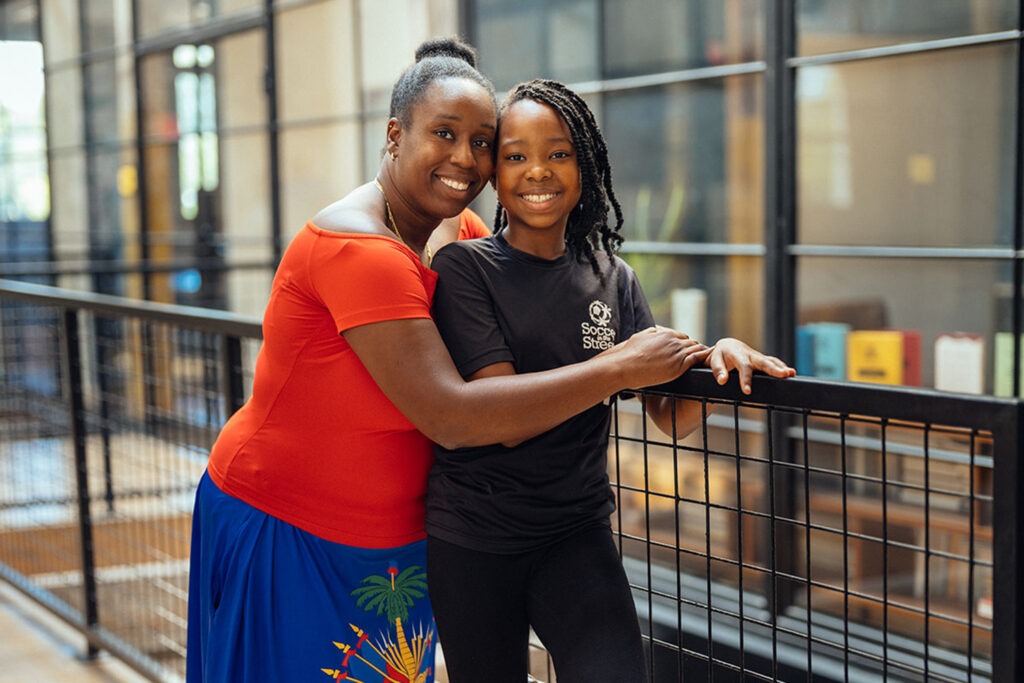
“Sometimes we don’t get the best light,” Johanna Kernizan-Van told Fox5 Atlanta on June 24.
Atlanta
“Sometimes we don’t get the best light,” Johanna Kernizan-Van told Fox5 Atlanta on June 24. She was referring to the negative way Haiti is often presented in the media, while explaining her joy over Les Grenadiers’ participation in the World Cup. “It’s such a great thing to have us unified again, feeling so excited, motivated… Everybody is getting ready to watch Haiti on the screen.”
It’s personal for Kernizan-Van because she’s Haitian, and also because her daughter, Josephine “Josie” Van, was one of the 22 youth soccer players in Atlanta escorting the Haiti and Morocco teams onto the field for their big match at the Mercedes-Benz Stadium. In fact, 10-year-old Josie was assigned to walk alongside Haiti goalie and team captain Johny Placide.
The opportunity came through a partnership between FIFA and Soccer in the Streets, an Atlanta non-profit that advocates for and provides community spaces for soccer and advances youth development through sports programming.
Van and her mother, along with several other youth soccer players and their families, were featured in a storytelling event hosted by Soccer in the Streets and the W.K. Kellogg Foundation (WKKF) that aimed to capture the excitement around Haiti’s participation in the World Cup, as well as local youths’ joy, cultural pride, and leadership.
Van embodied all this when she told Atlanta News First that she was excited about the impact her presence on the pitch could have, “because now people, especially Haitian girls, can be anything you put your mind to.”
The series of World Cup-related youth activities in Atlanta culminated in a community conversation at historic Morehouse College, facilitated by Dr. Regine Jackson, the college’s dean and a scholar of the Haitian diaspora. The conversation emphasized the role of sports as a catalyst for youth development, community connection and narrative change.
Resources
For more on the significance of Haiti in the World Cup, and how sporting events can have a lasting impact, view the resources linked below:
- American Economic Review: Building Nations through Shared Experiences: Evidence of African Football
- Atlanta News First: Local 10-year-old tapped to escort Haitian team onto field at Atlanta Stadium
- CBS Boston: Haiti fans celebrate World Cup return in Boston after 52 years: “Soccer is part of our culture”
- The Conversation: Haiti at the World Cup is more than an underdog tale – it is the story of global migration
- Fox 5 Atlanta: World Cup Atlanta: Youth soccer players escort Haiti, Morocco teams
- Major League Soccer: Haiti’s World Cup Dream Is Bigger Than Sports
- Othering & Belonging Institute: Are you excited about the World Cup? It’s because you belong.
- Robert Woods Johnson Foundation: Narrative Change through Sports & Gaming among Teens
- University of Delaware: How the World Cup Unites Fans Across the Globe
- US Haitian Chamber of Commerce: The City of Boston experienced a powerful celebration of Haiti’s culture, resilience, excellence, and global pride.

Comments