
This post is also available in: Español (Spanish)
With rising entrepreneurial leadership and growing visibility, Mayan fashion design is claiming its place on the global stage. New designs and unparalleled craftsmanship are capturing the attention of a fashion industry long dominated by Western ideas. Moreover, Mayan artisans are building livelihoods and strengthening their children’s well-being through their work. The debut of Colectiva Nuda 6/6 — a collective of grantees of the W.K. Kellogg Foundation (WKKF) — boldly announced that new voices in global fashion had arrived.
When Mildre Ramírez — a Yucatecan Mayan master embroiderer, designer and entrepreneur — was invited to present her work at Spring 2025 Vancouver Fashion Week, she saw a chance to elevate not just her work but the artistry of Indigenous women across Yucatán and Chiapas.
Ramírez works closely with other artisans in a collective to market their products and improve their designs. With support from WKKF and local NGOs Impacto and HANDMADE to Market, Ramírez’s collective joined with others to form Colectiva Nudo 6/6.
Their vision: a contemporary runway collection rooted in traditional Mayan motifs and techniques, handmade by hundreds of Indigenous women artisans across more than a dozen communities separated by hundreds of miles.
With only months to design an entirely new line, the artisans each contributed unique design elements that came together in a striking collection.
The result was 16 original looks for the runway, showcasing handwoven textiles and intricate embroidery techniques passed down through generations. Four artisan designers — Mildre and Fidelia Góngora from Yucatán, and Tania Gómez and Margarita López from Chiapas — traveled to Vancouver, British Columbia to debut Colectiva Nudo 6/6’s collection on a global stage.
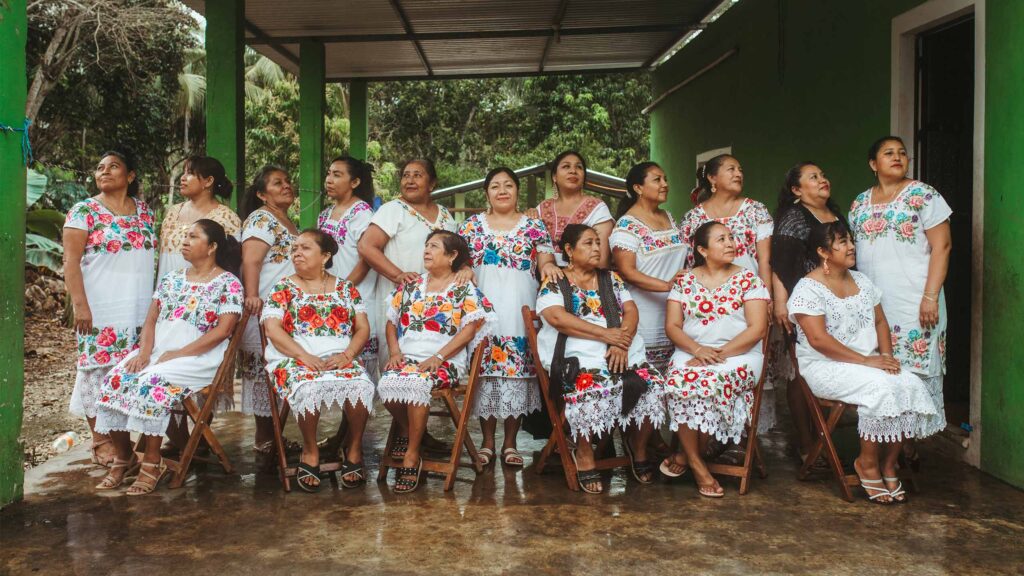
The Maya are an ancient group of peoples indigenous to the Yucatán Peninsula, the highlands and rainforests of the Mexican state of Chiapas, Guatemala, Belize and parts of Nicaragua and El Salvador…
The Maya are an ancient group of peoples indigenous to the Yucatán Peninsula, the highlands and rainforests of the Mexican state of Chiapas, Guatemala, Belize and parts of Nicaragua and El Salvador. Their pre-colonial civilization is widely recognized for their powerful empire, achievements in architecture, advanced mathematics, sophisticated writing system and vibrant arts.
Despite the profound disruptions of colonialism, they have sustained their languages, agricultural knowledge, spiritual practices and collective ways of life that continue to nourish both their people and the lands they steward. Today, they thrive by blending ancestral wisdom with contemporary innovations — cultivating sustainable food systems, revitalizing cultural expressions and leading movements for autonomy and justice — offering powerful examples of perseverance and vision for future generations.
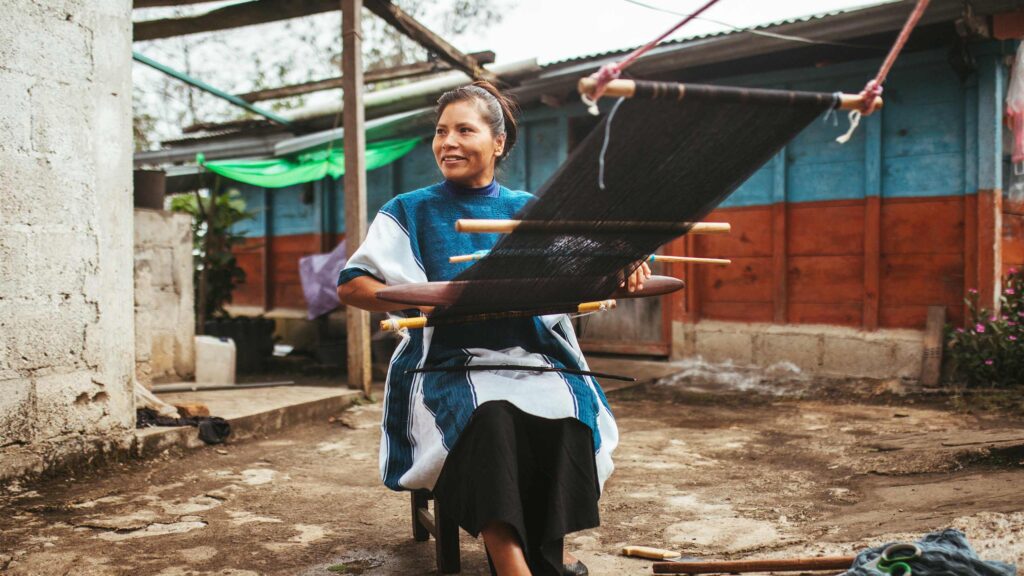
Mayan textiles have a rich history that stretches back thousands of years. Woven on backstrap looms and often featuring intricate embroidery, these textiles are not only practical garments but also carry deep cultural and spiritual significance…
Mayan textiles have a rich history that stretches back thousands of years. Woven on backstrap looms and often featuring intricate embroidery, these textiles are not only practical garments but also carry deep cultural and spiritual significance. The complex patterns and vibrant colors often symbolize connections to nature, cosmology and community identity, with designs passed down through generations. Each piece reflects both the skill of the weaver and the heritage of the village or family it represents.
Today, Mayan textiles remain an important marker of cultural resilience and continuity, while also serving as a source of economic empowerment for Indigenous women artisans. Despite the highly skilled nature of the work and the many years of practice required to master the techniques, Indigenous artisans from the Mayan world often struggle to command prices that reflect the value of their products and access markets outside of their communities.
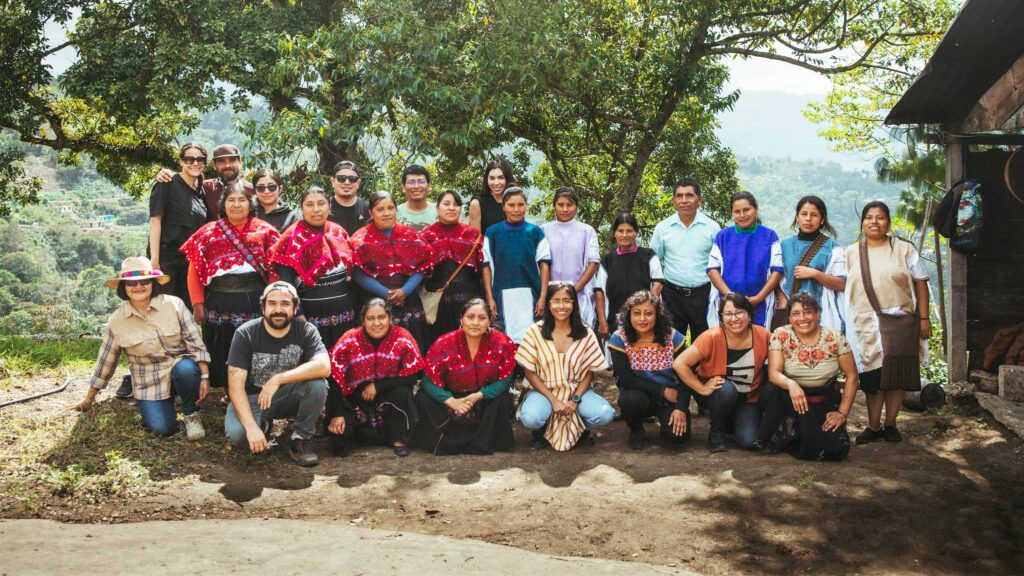
In 2012, WKKF, which prioritizes its investments in the Yucatán and Chiapas regions, partnered with local nonprofits, social enterprises and artisan cooperatives to strengthen the role of handmade Mayan textiles…
In 2012, WKKF, which prioritizes its investments in the Yucatán and Chiapas regions, partnered with local nonprofits, social enterprises and artisan cooperatives to strengthen the role of handmade Mayan textiles as a catalyst for economic opportunity, cultural preservation and women’s leadership. Based on input and direction from the community, WKKF co-developed and funded a long-term growth strategy for the sector that includes:
Through this generational investment in women-led cooperatives and artisan networks, the foundation has helped create sustainable livelihoods that enable mothers to support their children’s education and strengthen family well-being. Beyond establishing themselves as successful earners and entrepreneurs, Indigenous women artisans are reclaiming their traditional roles in Mayan society as influential community leaders and culture bearers. Woven into their crafts and designs is ancestral knowledge that keeps Mayan culture alive and evolving — giving their children and future generations a deep sense of identity, belonging and strength to thrive.
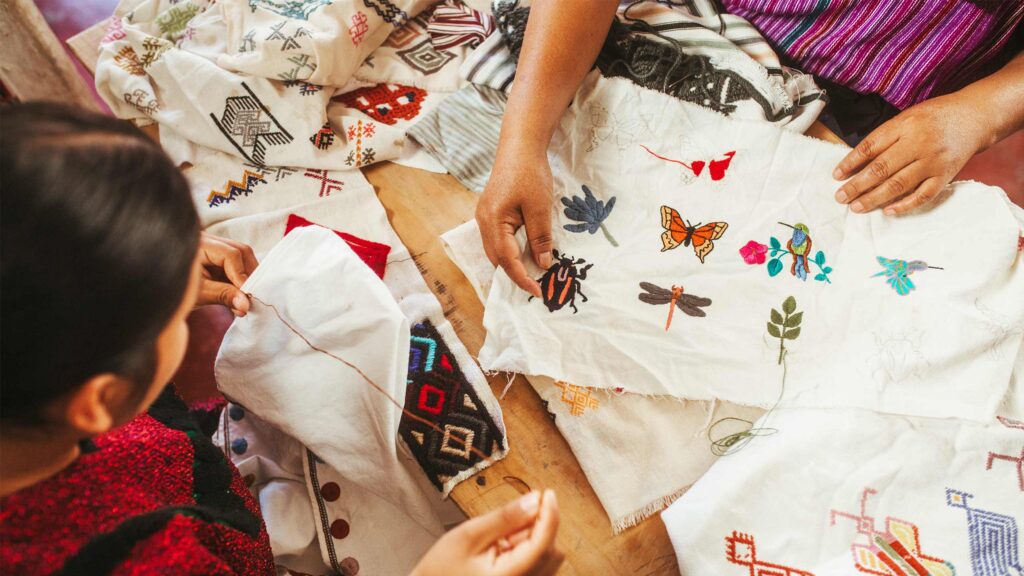
Dozens of Indigenous-owned, women-led cooperatives, enterprises and fashion brands — representing hundreds of artisans and entrepreneurs — are thriving today in a vibrant, loosely connected network…
Dozens of Indigenous-owned, women-led cooperatives, enterprises and fashion brands — representing hundreds of artisans and entrepreneurs — are thriving today in a vibrant, loosely connected network supported by WKKF grantees such as Impacto NGO and HANDMADE to MARKET Mexico. Mayan weavers and embroiderers are carrying forward ancient techniques, styles and patterns passed down through generations, while reimagining them to meet contemporary tastes. Many of these collectives are expanding their reach through online shops, collaborations with established fashion brands, and business-to-business partnerships that build economies of scale.
In early 2025, this growing visibility reached new heights when Aeromexico, the country’s largest airline, partnered with more than 230 Indigenous artisans in Chiapas. Together they created handcrafted embroidery for the new uniforms for flight attendants and ground staff, showcased in a pre-flight video seen by nearly 2 million passengers each month.
Colectiva NUDO 6/6 is a collective of more than 750 Indigenous women from Mexico, whose voices are woven into every thread they create. Born from a proposal to participate in Vancouver Fashion Week, the idea evolved into a collaborative design movement that aims to create a deep and enduring impact within artisan communities and the global fashion industry. By preserving ancestral textile techniques and merging them with contemporary design, the collective generates lasting economic impact, promotes sustainable development and strengthens cultural identity within their communities.
The collective brings together six brands — Kip Tik, Juxta, Antalika’a, Dos Tierras, Mariposas del Sur / Arte Sur and Guillermo Jester — supported by WKKF and WKKF grantees HANDMADE to MARKET Mexico and Impacto NGO. The name “Nudo” (Knot) symbolizes what holds, unites and strengthens them — the bond that connects and propels their movement forward. 6/6 represents the union of six brands and organizations that, together, form a whole where every voice carries equal weight in pursuing a common goal.
For business partnerships and other inquiries: [email protected]
Click on the names below to learn more about each brand.
 Kip Tik is a social enterprise that collaborates with artisans, craftspeople, and designers to promote the development of Indigenous and rural communities in Mexico. It fosters innovation through traditional techniques, emphasizing cultural respect, continuous improvement, fair pay, and high-quality production — dignifying artisanal work and integrating it into the global market with a strong cultural identity.
 Antalika’a is a brand that reimagines the Maya textile heritage, blending ancestral techniques with innovative design. Antalika’a drives the economic development of women artisans in Yucatán through creativity, collaboration, and craftsmanship.
 Juxta is a collaborative platform co-created with women artisans from Los Altos de Chiapas. Through fair trade and contemporary design, Juxta values cultural heritage and ancestral knowledge, strengthening identity, collective dreams, and integral development in a safe space for intercultural dialogue and collaboration.
 Mariposas del Sur/Arte Sur are collectives recognized for their embroidery and originaltextiles from Yucatán and Chiapas. Their work centers on authenticity, quality, and the preservation of tradition, helping to strengthen local economies and the cultural vitality of their regions.
 Dos Tierras is a collective brand of artisans and designers who create contemporary pieces inspired by traditional techniques from Chiapas and Yucatán. Producing two annual collections for fashion and home, Dos Tierras promotes horizontal practices, collaborative design, and positive social impact in artisan communities.
 Guillermo Jester is a brand that embraces a non-binary vision of clothing, challenging the social constructs of fashion and gender. Through collaborations with Indigenous women artisans — primarily from Chiapas — it applies circular fashion methodologies and horizontal design practices to create innovative, inclusive pieces.
 HANDMADE to MARKET (formerly Aid to Artisans) is a non-governmental organization that promotes the ethical commercialization of artisanal products, connecting artisans with international markets. Its mission is to ensure fair conditions for creators while honoring and valuing traditional techniques within a global context.
 Impacto is a non-governmental organization dedicated to strengthening Indigenous communities and promoting the economic empowerment of women artisans. Through capacity-building and marketing strategies, Impacto works to improve living conditions and preserve the cultural richness of Mexico’s ancestral traditions.
women artisans participated in the creation of the pieces presented
national and international outlets featured by Nudo 6/6 Collective
ancestral textile techniques were used: backstrap loom, pleating, brocade, raised brocade, hand sewing, flat embroidery, rococo embroidery and pompom making
original looks were presented on the runway, designed and produced by the Nudo 6/6 Collective
commercial partnerships consolidated, with a strategic alliance currently under development
More than 130 artisans contributed their skill, creativity and vision to the development of the pieces featured in Colectiva Nudo 6/6’s runway show in Vancouver. Each garment is the result of countless hours of collaborative work by hands that carry generations of knowledge.
While it’s impossible to name every artisan whose talent brought this project to life, the following profiles highlight some of the remarkable women and leaders featured in the accompanying film. Their stories reflect the artistry, collaboration and cultural heritage that define this movement and continue to inspire its evolution.
Use the scroll feature below to read the stories of the artisans.
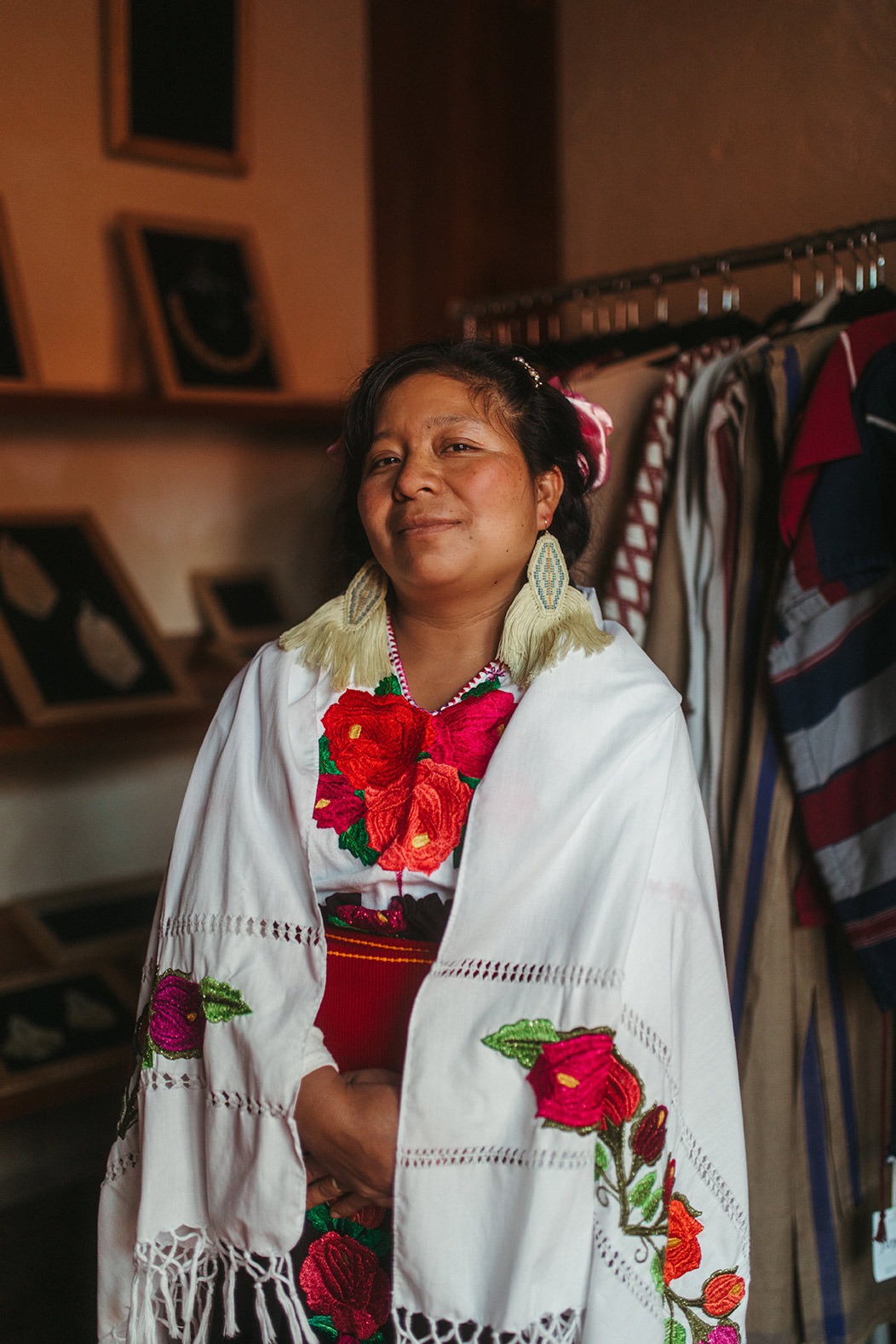
Huixtán, Chiapas.
Eloisa Ara Hernández is a renowned artisan and community leader who was instrumental in establishing and strengthening the Nichimal Kuxlejal Cooperative, a collective of women dedicated to preserving textile traditions through the use of the pedal loom.
Under her leadership, the cooperative has built a model grounded in self-management and continuous learning—strengthening its autonomy and becoming a reference point for other women’s groups. Nichimal Kuxlejal’s influence has extended to neighboring municipalities, inspiring the creation of cooperative models and advancing the empowerment of artisans.
Through strategic alliances, such as its collaboration with Juxta Nation, Nichimal Kuxlejal supports women from multiple communities in forming sustainable cooperatives. As part of its commitment to community empowerment, the cooperative has also developed a curriculum to share its organizational approach, equipping women artisans with the tools to manage their own workshops.
The journey of Eloisa Ara Hernández and Nichimal Kuxlejal embodies the power of collaboration, cultural preservation, and women’s leadership in strengthening Indigenous communities.
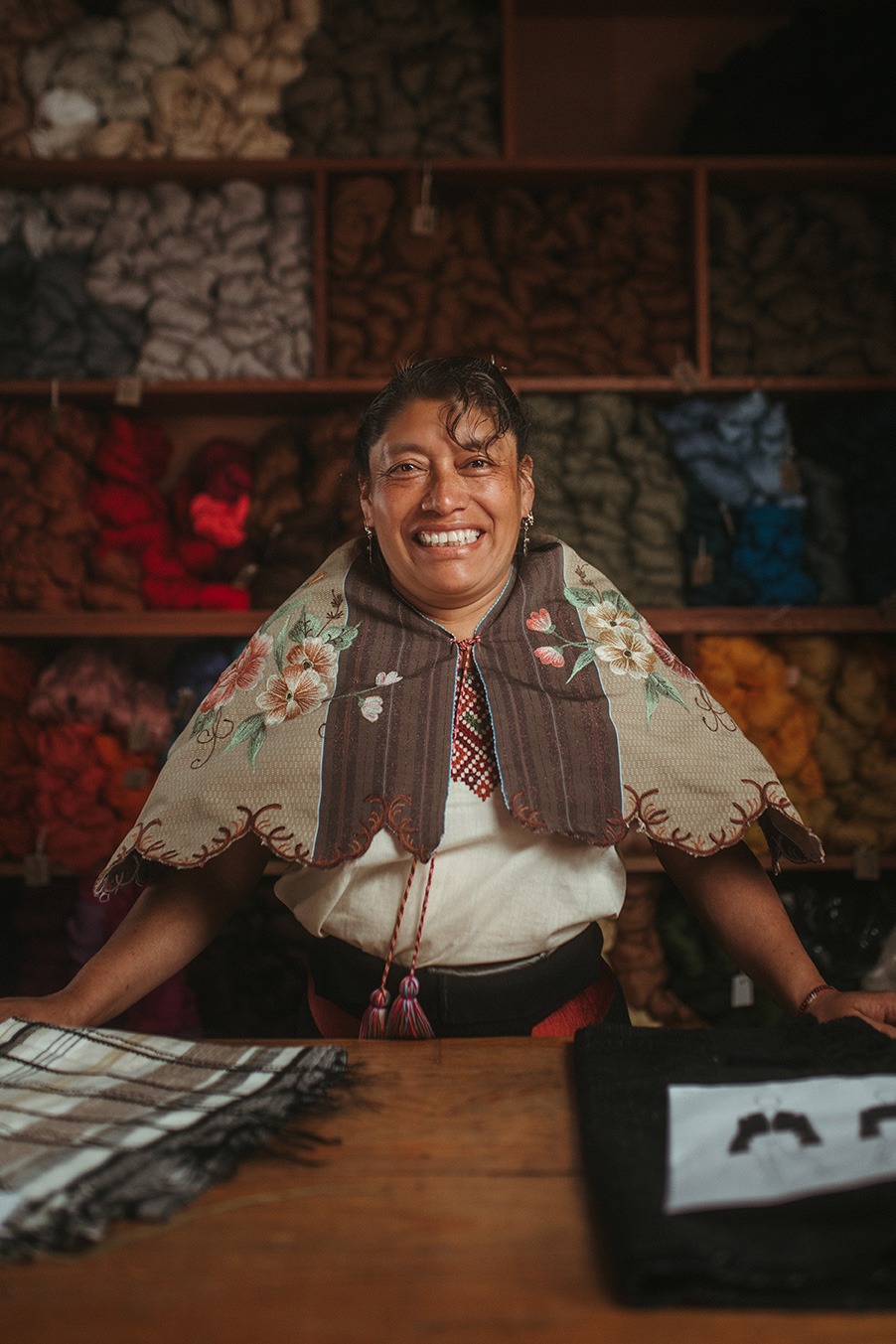
Shulvo Sinacantán, Chiapas
Kip Tik
Margarita López Hernández is a respected Tsotsil leader and artisan from Shulvó, Zinacantán, Chiapas, with more than two decades of experience in inclusion and community development. As co-founder of Kip Tik, she has dedicated her career to promoting and preserving ancestral backstrap weaving and embroidery techniques, working alongside women artisans from across Chiapas. In her leadership role, she oversees production, ensures quality, and manages national sales, helping to strengthen both the local and international artisan economy.
Her work includes collaborations with numerous NGOs and foundations, where she has led workshops on gender equity, health, financial literacy, and product development—always guided by an intercultural perspective. Margarita is recognized for her ability to bridge traditional knowledge with contemporary market needs, fostering cultural pride and expanding economic opportunities for women artisans.
Beyond her work with Kip Tik, Margarita has served as a promoter, translator, and workshop facilitator in fields ranging from nutrition to human rights, sharing her expertise at events and conferences in Mexico and abroad. With a deep commitment to diversity and inclusion, she continues to empower Indigenous communities through visionary leadership and a steadfast dedication to honoring their culture in a globalized world.
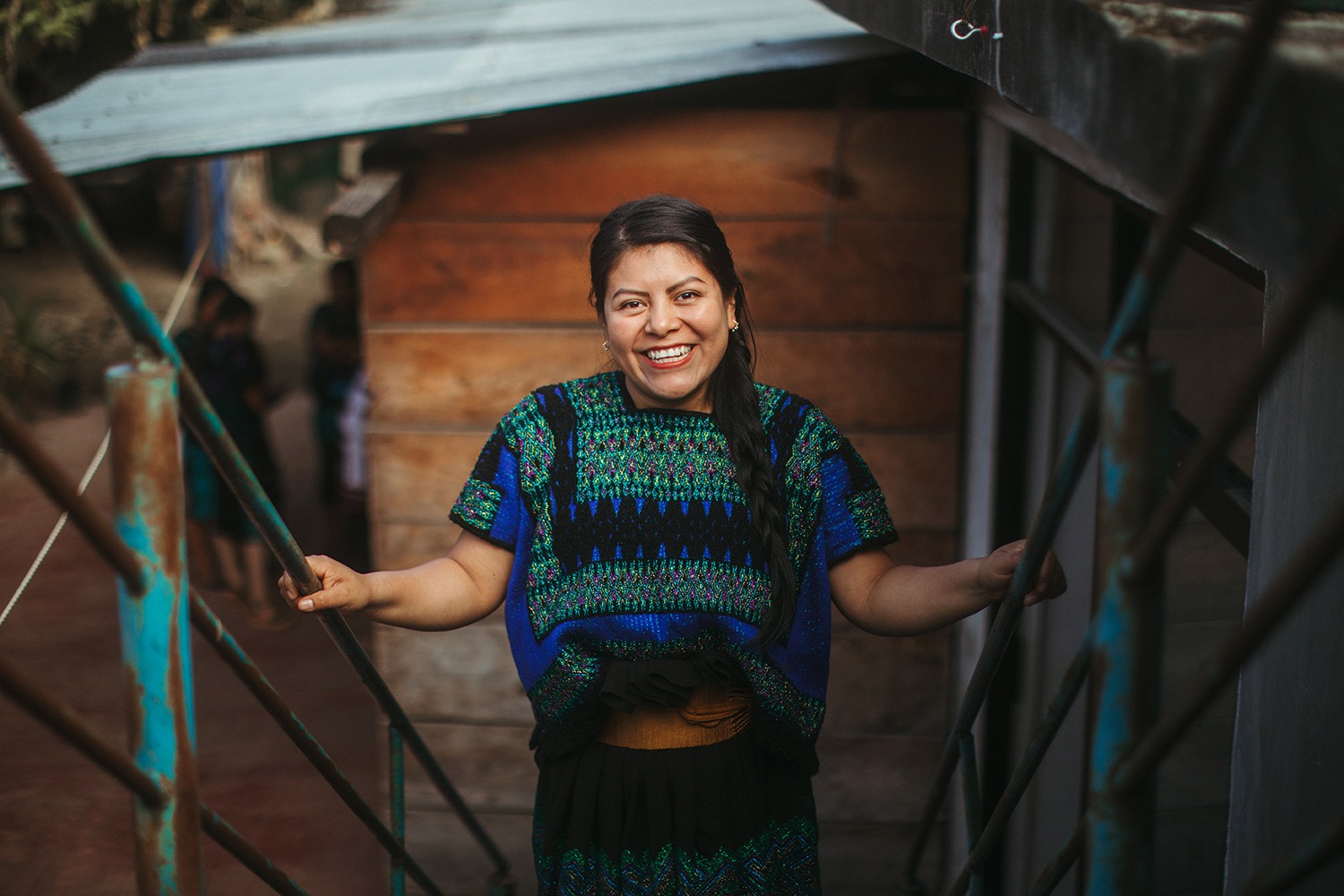
Cabacera Chenalhó, Chiapas
Dos Tierras
Tania is a 33-year-old textile artisan and native Tsotsil speaker from the municipality of Chenalhó, Chiapas. She learned embroidery at a young age, inspired by her mother, a respected artisan and leader in their community.
From childhood, Tania has been part of an artisan collective, receiving training and participating in craft fairs beyond her state. For her, preserving ancestral embroidery techniques—and the cultural meanings woven into them—is a vital part of her family legacy.
As her skills grew, Tania began teaching quality workshops for other artisans and later joined HANDMADE to MARKET’s training programs. Her dedication and leadership earned her a promotion to field promoter, where she led workshops on product quality, finishing techniques, color combinations, and pricing, as well as personal development topics such as self-esteem, leadership, and teamwork.
Today, Tania is a partner in the Dos Tierras project, where she coordinates design and production and supervises several artisan groups to ensure that each piece meets the highest standards of quality and craftsmanship.
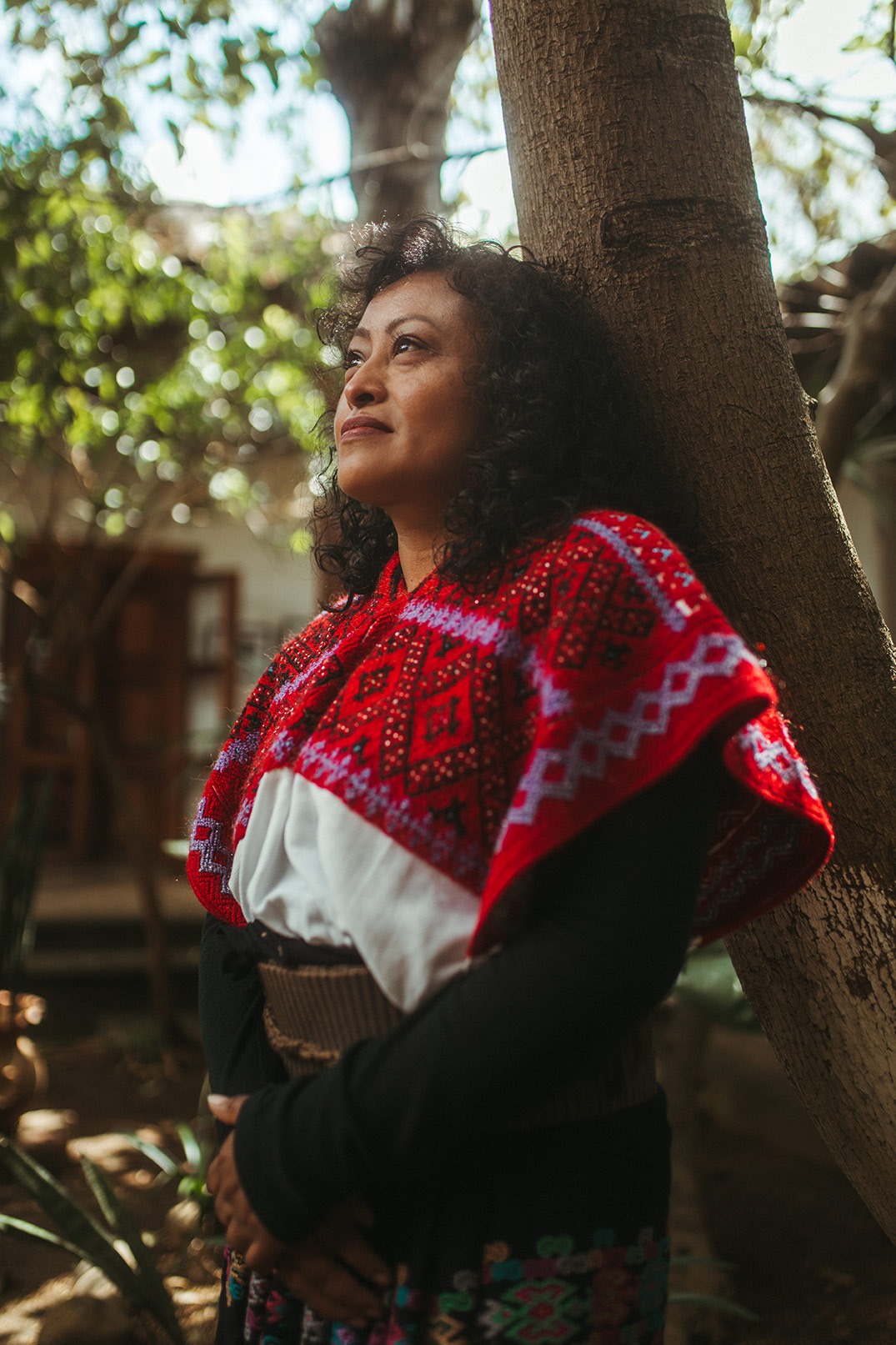
Juxalja, Tenejapa, Chiapas
Dos Tierras
Reyna Jiménez López is a 41-year-old artisan from Juxalja, in the municipality of Tenejapa, Chiapas. She specializes in pompom making, crochet, and embroidery. Reyna began embroidering at the age of 21, inspired by a group of mothers who would sew while waiting for their children at kindergarten. Watching them sparked her curiosity, and with their encouragement, she bought her first materials and took her first stitches. What began as a simple pastime soon became both a vital source of income and a powerful outlet for her creativity.
Over time, Reyna joined a women’s artisan collective, where she discovered the importance of collaboration and the preservation of cultural traditions. She later became involved with Aid to Artisans (now HANDMADE to MARKET), working as a field promoter. In this role, she taught artisans from various municipalities new techniques, stitches, and pompom-making methods—helping to share knowledge and strengthen the region’s textile legacy.
Today, Reyna continues to honor her community’s heritage through her craft and teaching. As a partner in the Dos Tierras project, she remains committed to empowering women artisans and preserving the vibrant traditions of Chiapas.
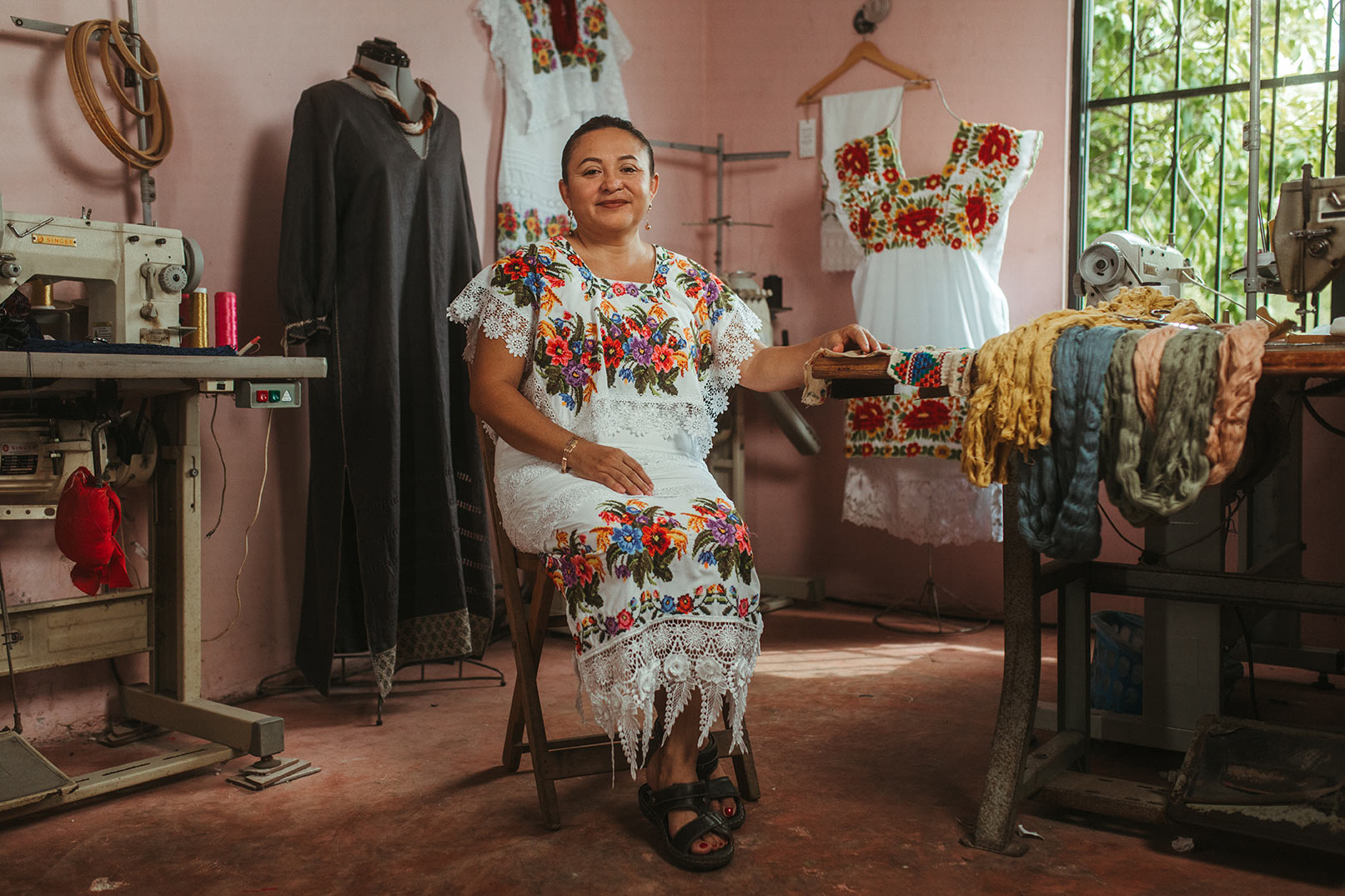
Teabo, Yucatán
Antalika’a
Mildre is a master artisan from Teabo, Yucatán, dedicated to preserving and evolving the traditional textile techniques of her community. Her expertise spans the techniques of Xmanikté, Bac Chuy, Cinta Chuy, Kaxbi Chuy, Mul Och, cross-stitch, and embroidery, each reflecting generations of inherited knowledge and artistic expression.
Guided by a deep passion for textile art, Mildre has become both a creator and a teacher—sharing her skills, training other artisans, and fostering creative collaboration across communities. She is committed to ensuring that ancestral techniques not only endure but continue to grow and adapt within contemporary design.
Her brand, Antalika’a, founded in 2013, embodies this vision. It merges craftsmanship with a modern, elegant sensibility, offering unique pieces that keep Maya traditions alive through innovation and artistry.
Mildre has also collaborated with designer Valeria Lobato on a cross-stitch collection grounded in the spirit of co-creation rather than subcontracted labor. Her work has been featured in international platforms such as FLII in Guatemala and Chicago Fashion Week.
Through her leadership and artistry, Mildre continues to strengthen Yucatán’s cultural legacy, demonstrating how tradition and innovation can come together to inspire future generations.
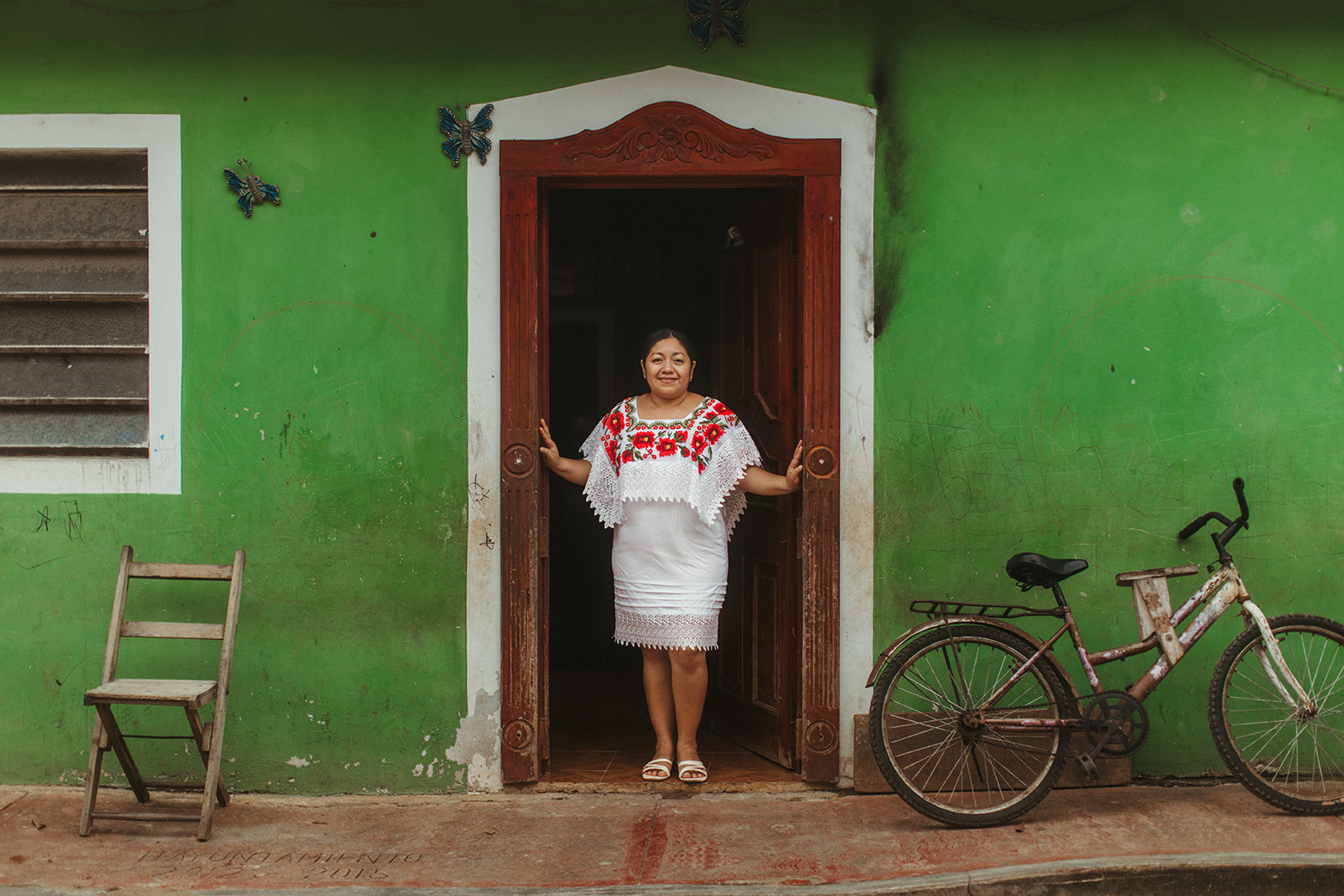
Tixmehuac, Yucatán
HANDMADE to MARKET/Mariposas del Sur
Irene is a master artisan recognized for her expertise in cross-stitch and pedal-machine embroidery, and serves as the president of Mariposas del Sur, an artisanal enterprise that thrives on the talent and traditions of communities in Tixmehuac, Chacsinkín, and Sabacché. Artisans working with the enterprise create handcrafted pieces using pedal-machine embroidery, cross-stitch, weaving, and hammock-making, transforming each creation into a distinctive expression of creativity and cultural heritage.
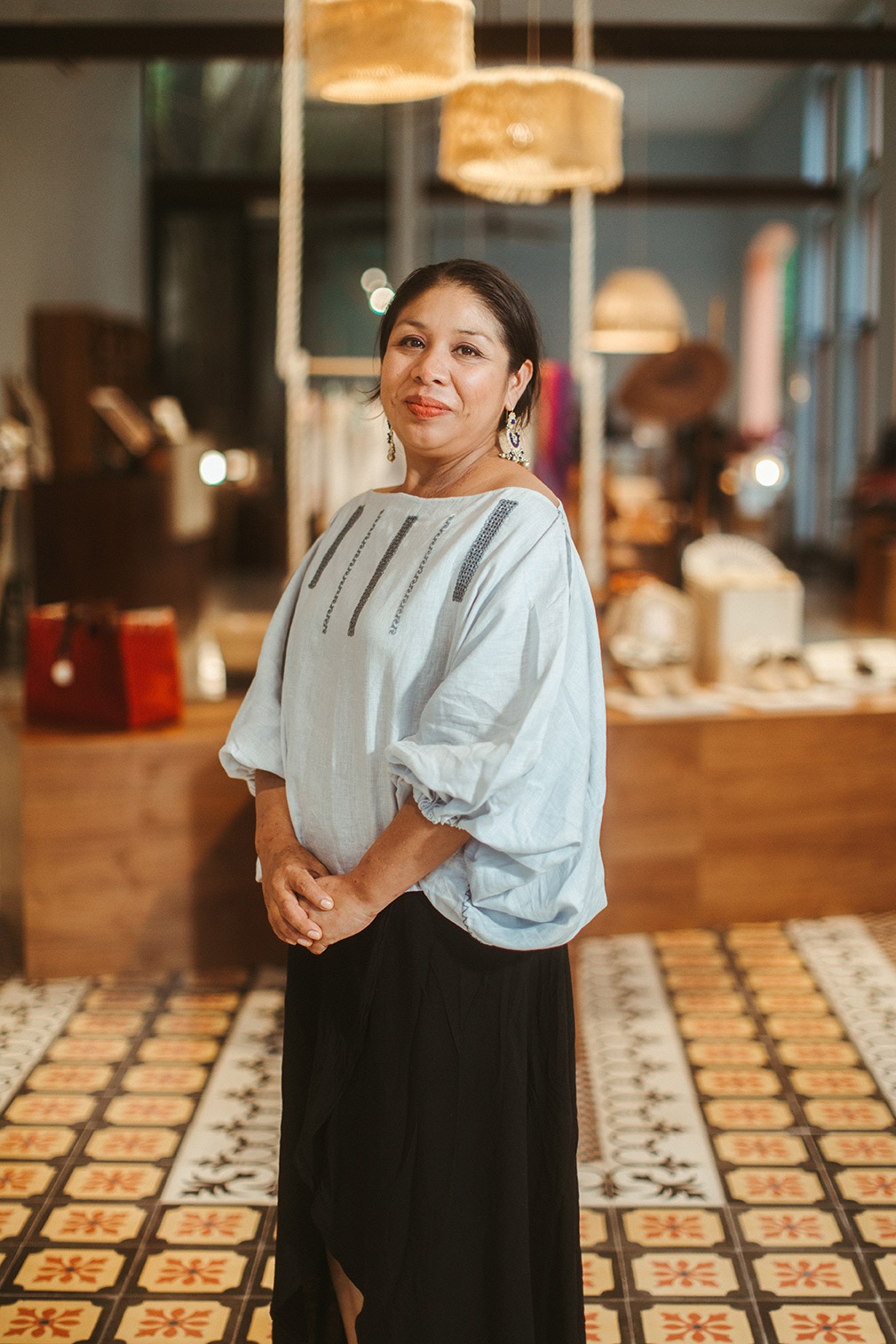
Tipikal, Maní, Yucatán
HANDMADE to MARKET/Arte Sur
Fidelia, from Maní, Yucatán, is the sales representative of Arte Sur and a master artisan in cross-stitch. She is also among the few artisans who continue to practice the ancestral Xmanikbee technique.
Arte Sur is an artisanal enterprise that unites the talent of communities from Mayapán and Maní, Yucatán, to create unique pieces that celebrate Maya cultural heritage. Their signature technique, Xmanikbeen embroidery, weaves tradition and artistry into every stitch. The collective also distinguishes itself through its exquisite cross-stitch and urdido designs, embodying both authenticity and elegance.
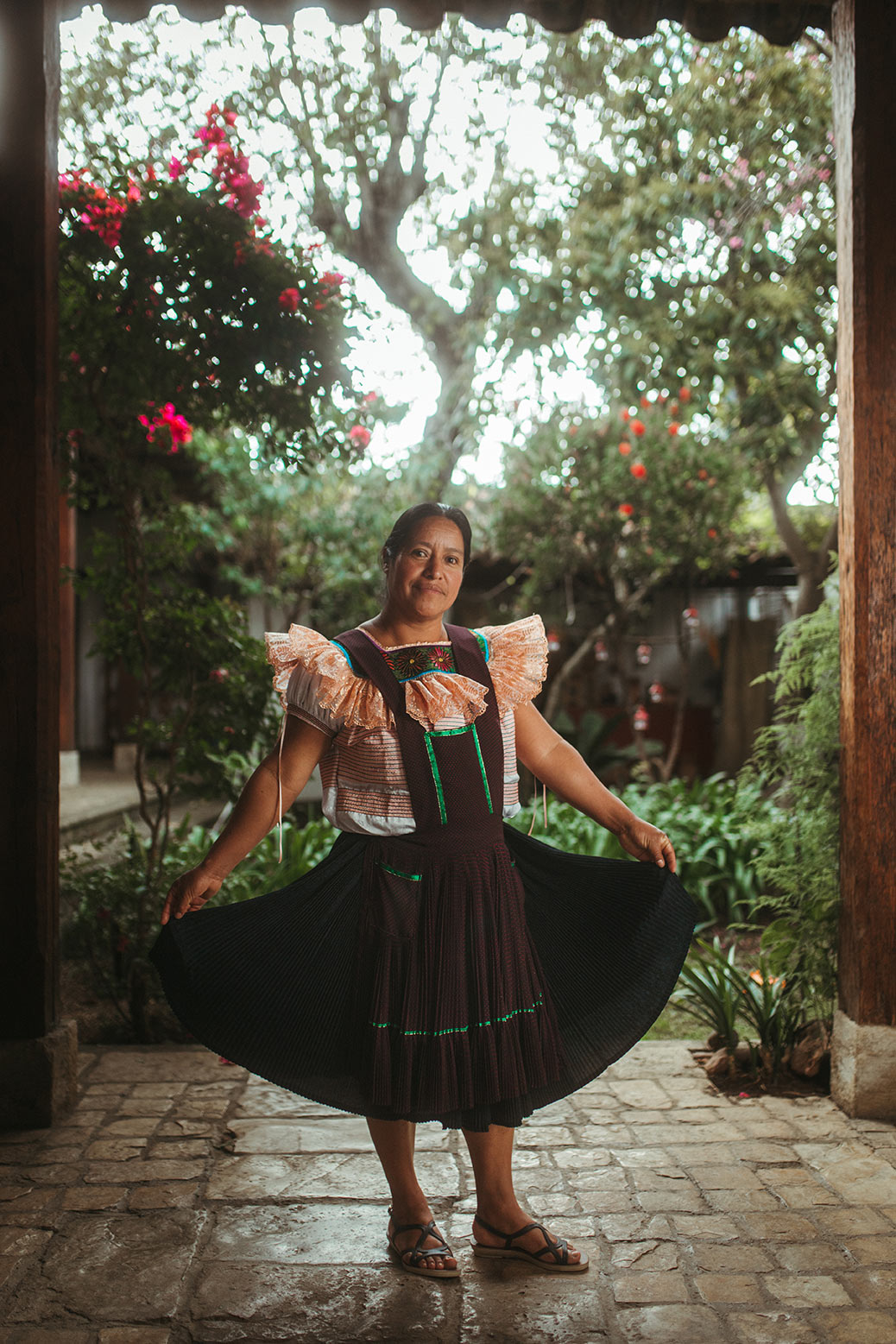
Amatenango del Valle, Chiapas
Guillermo Jester
Esperanza Pérez is a master artisan from Amatenango del Valle, Chiapas, renowned for her exceptional skill in pottery and textile pleating. From a young age, she learned to shape clay under her mother’s guidance, and together with her sister, has kept this ancestral tradition alive—creating everything from miniature jaguars to large-scale pieces that embody the spirit and identity of her community.
In addition to pottery, Esperanza discovered a passion for pleating, which she transformed into one of her principal crafts. Guided by determination and an entrepreneurial vision, she opened her own shop in Amatenango, offering fabrics, pleated skirts and aprons, ribbons, and other textile supplies. Today, her business stands as a community reference point, preserving and evolving traditional techniques.
Since 2019, she has collaborated with designer Guillermo Jester, developing pleats that have become a hallmark of his brand. Together, they have explored new forms and materials, creating pieces worn by renowned artists and featured on international stages. Beyond recognition, their partnership has grown into a friendship grounded in mutual respect, creativity, and a shared passion for handmade artistry.
Esperanza is not only an extraordinary artisan but also a community leader, dedicated to both preserving and reinventing tradition. Her work stands as a testament to the cultural richness of Chiapas and to the transformative power of collaboration in keeping stories alive through art and design.
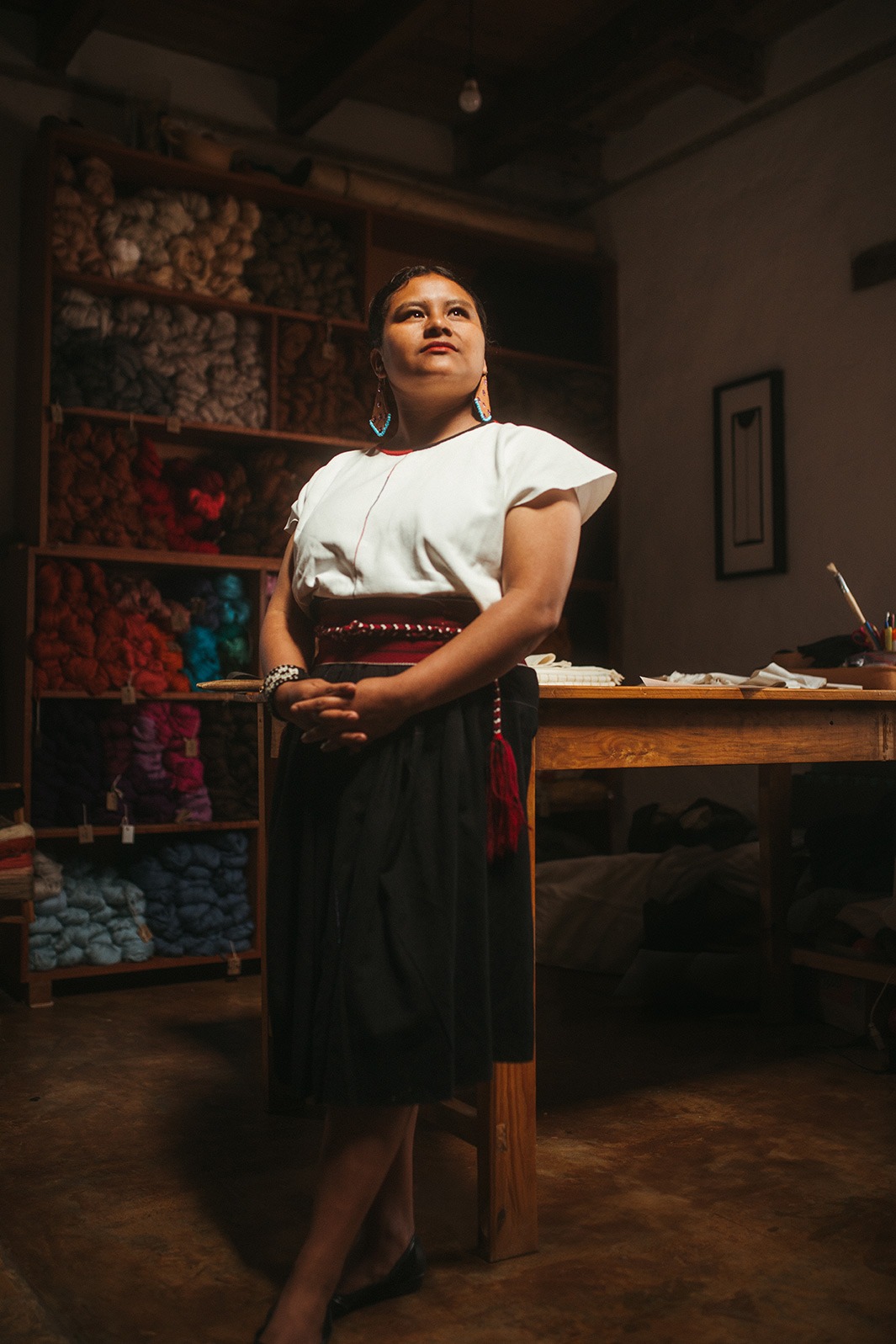
Santiago el Pinar
Juxta
From Choyo, Santiago El Pinar, Chiapas, Juana is deeply rooted in the traditions and values of her Tsotsil community, where creativity is not only an art form but a way of life.
As an artisan, she believes that every piece tells a story. She learned the art of backstrap weaving through ancestral techniques that have been preserved for generations. For her, the creative process is more than physical labor—it is a meditation, a dialogue with her roots, and a way to share the wisdom and beauty of Tsotsil culture with an increasingly globalized world.
Each garment she weaves carries a soul, reflecting not only the work of her hands but also the dreams and aspirations of the women who, like her, find in textile art a path to transform their lives and strengthen their families.
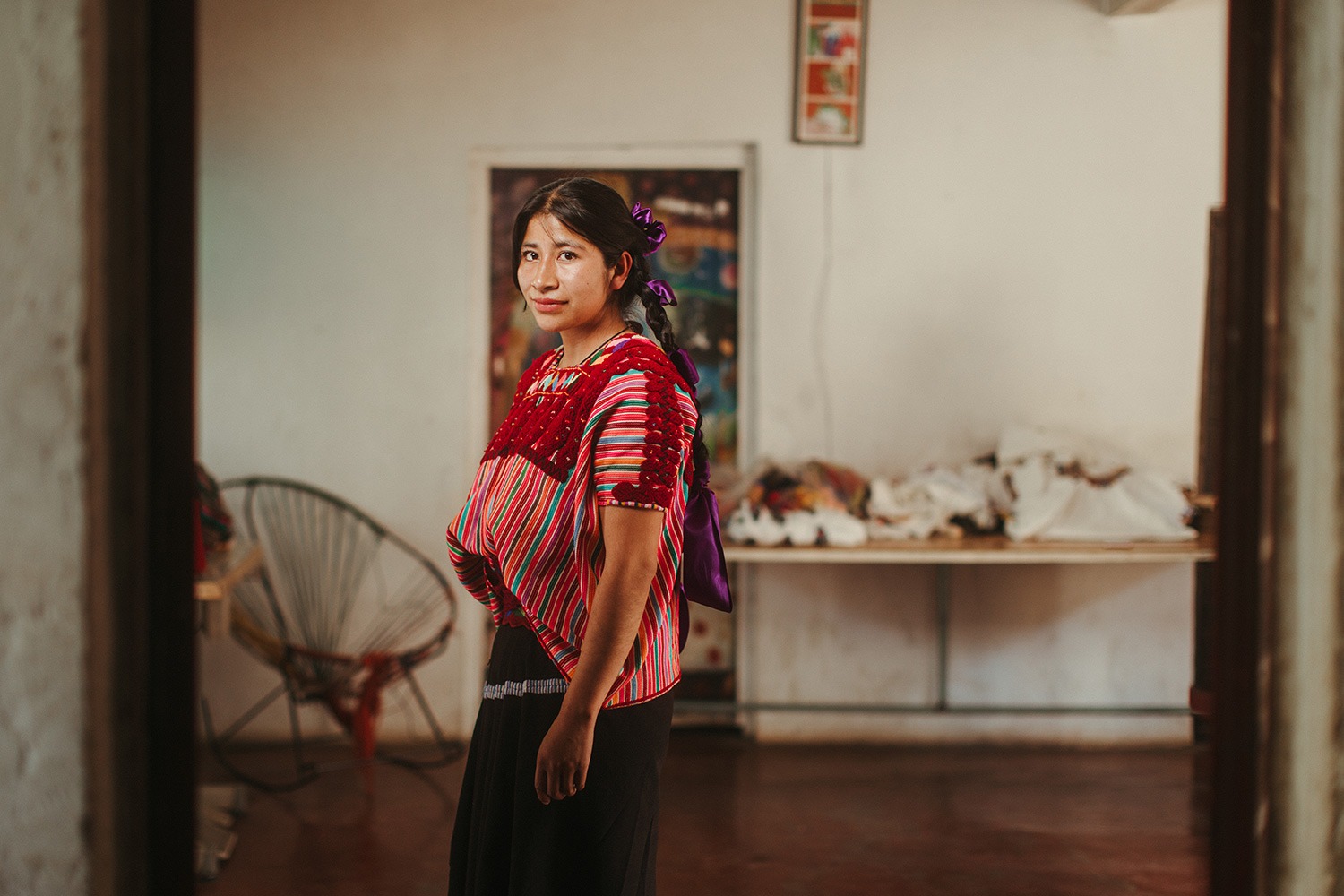
Agua Viva, Chenalhó, Chiapas
Handmade To Market
Sofía is a talented 29-year-old Tsotsil artisan from Agua Viva, Chenalhó, Chiapas. From a young age, she accompanied her mother to artisan workshops organized by Fundación León XIII, where she discovered elevated embroidery as both a form of artistic expression and a source of livelihood. With a forward-looking and dedicated spirit, she aspires to become a designer—expanding the boundaries of her craft while remaining deeply connected to her roots.
Her love of learning and reading has led her to continuously develop new skills in areas such as design, gender equity, financial literacy, and entrepreneurship. She recently completed the School for Indigenous Migrant Women, Sjamel jol ko’ontontik li antsotike, run by Voces Mesoamericanas, an experience that deepened her commitment to women’s empowerment within her community.
Currently, Sofía works as a preschool teacher while pursuing a diploma in Compassionate Relationships and Healing with Comaletzin. She is a woman eager to explore new horizons—constantly evolving, sharing her knowledge, and ensuring that every step forward is also a step back toward her roots, strengthening both herself and her community.
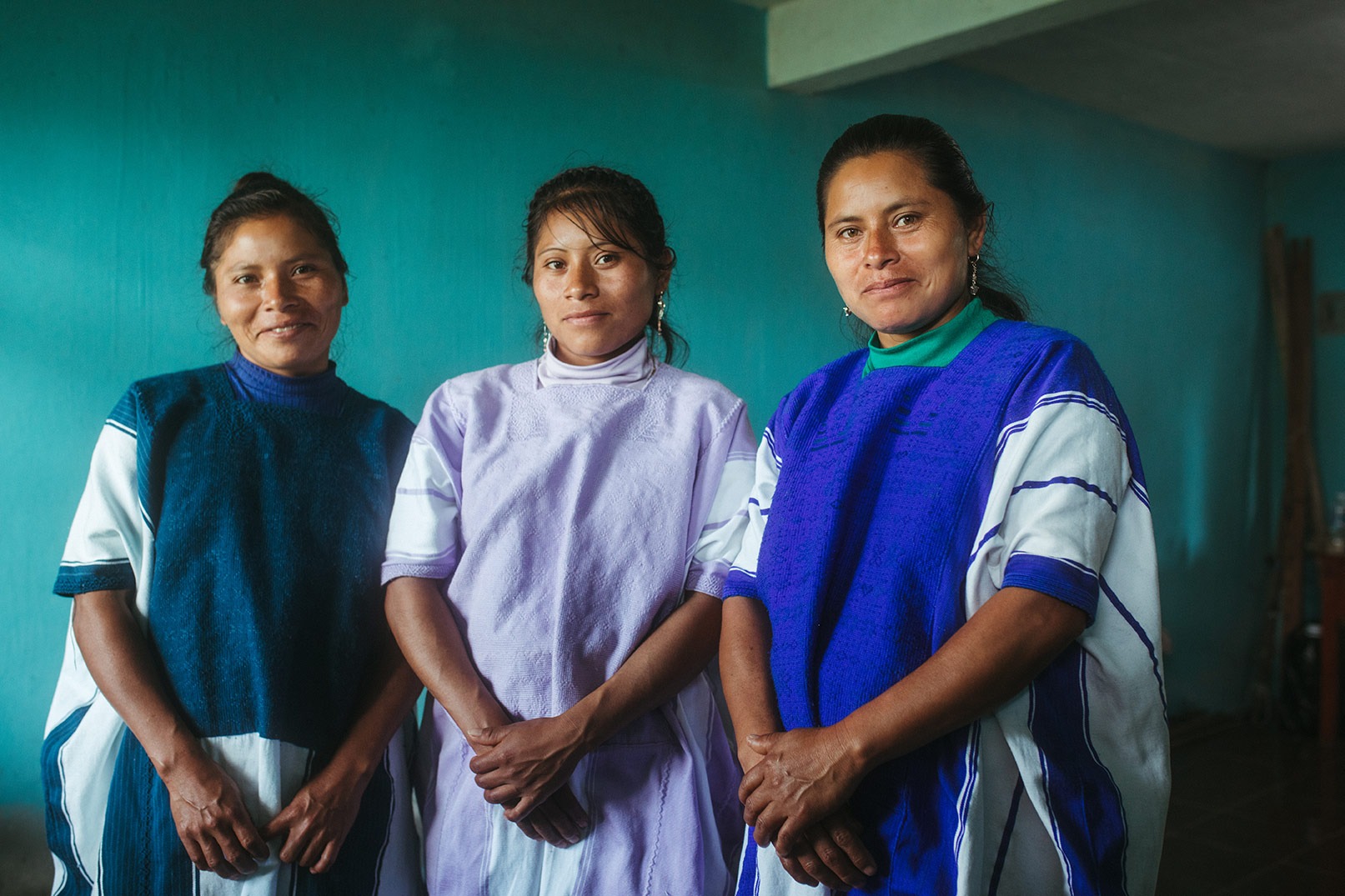
Before finding success with the Kip Tik collective, sisters Ana Maria, Petrona and Natalia Santíz Méndez faced many barriers to developing their textile craft into a source of sustainable income for their family. In a previous collective, they faced unfair treatment when a representative mismanaged and withheld their earnings. At home, traditional gender expectations also weighed heavily: backstrap weaving was not considered valuable work, and before they could sit at their looms, they were expected to finish long hours of farm labor. Financial independence seemed out of reach.
Yet through perseverance and community support, everything changed. The sisters’ determination to learn and improve their craft quickly established them one of the most dynamic groups within the Kip Tik collective. Today, they have built their own independent collective where weaving is not only respected but serves as their family’s main source of income:
“Now our father can pay others to work the fields, and we dedicate ourselves to backstrap weaving. He supports us in attending workshops and trusts us to manage our orders.”
Known for their high production capacity, exceptional quality, and reliability, the sisters have become role models in their community. Despite having no formal academic training, they skillfully manage technical sheets and orders—collaborating with national and international clients who value both their artistry and professionalism.
This collection is a tribute to cultural richness and contemporary creativity as the artists weave together threads, memories and meanings. Each design is the result of an exceptional collaboration between brands and organizations committed to preserving and reimagining ancestral artisanal traditions. Every motif, every line resonates with stories that invite us to reflect and feel our connections to the past and their enduring significance.
Use the scroll feature below to read about the looks presented at Vancouver Fashion Week.

Woven light, embroidered memory.
This look brings together a backstrap loom-woven dress tied on shoulders. It’s paired with two handwoven belts. A sunset in texture and tone.
Techniques Used: Backstrap loom weaving, raised embroidery, cross-stitch embroidery
Communities Represented: San Juan Cancuc, Chiapas
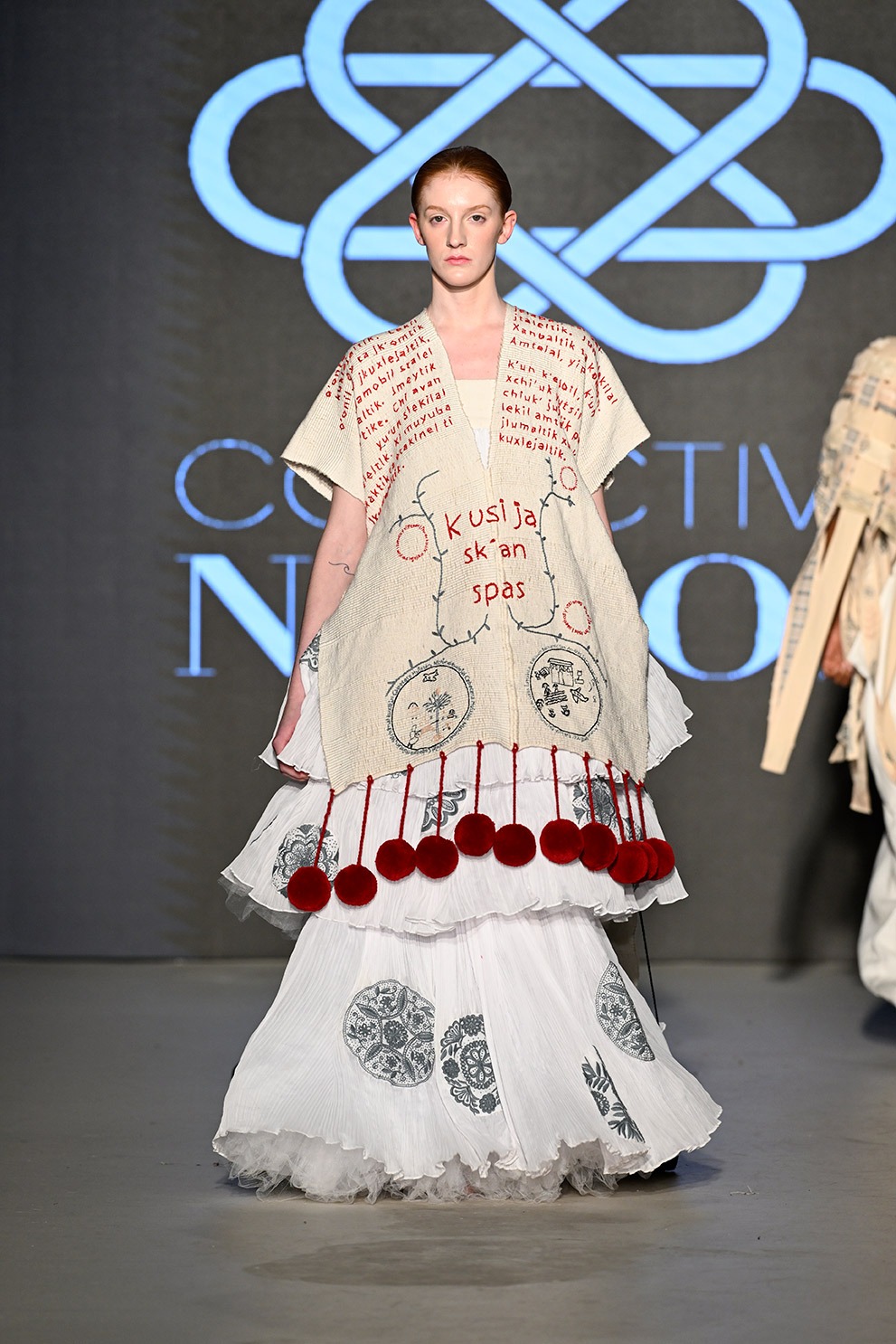
Ritual in every thread.
This ceremonial cape is woven on a traditional backstrap loom with a blend of wool and cotton, embodying timeless heritage. The dress beneath features pleated panels and hand embroidery—each detail crafted with purpose, elegance, and ancestral care.
Techniques Used: Backstrap loom weaving, hand pleating, hand embroidery
Communities Represented: Aldama, Aguacatenango, Huixtán, Chiapas.
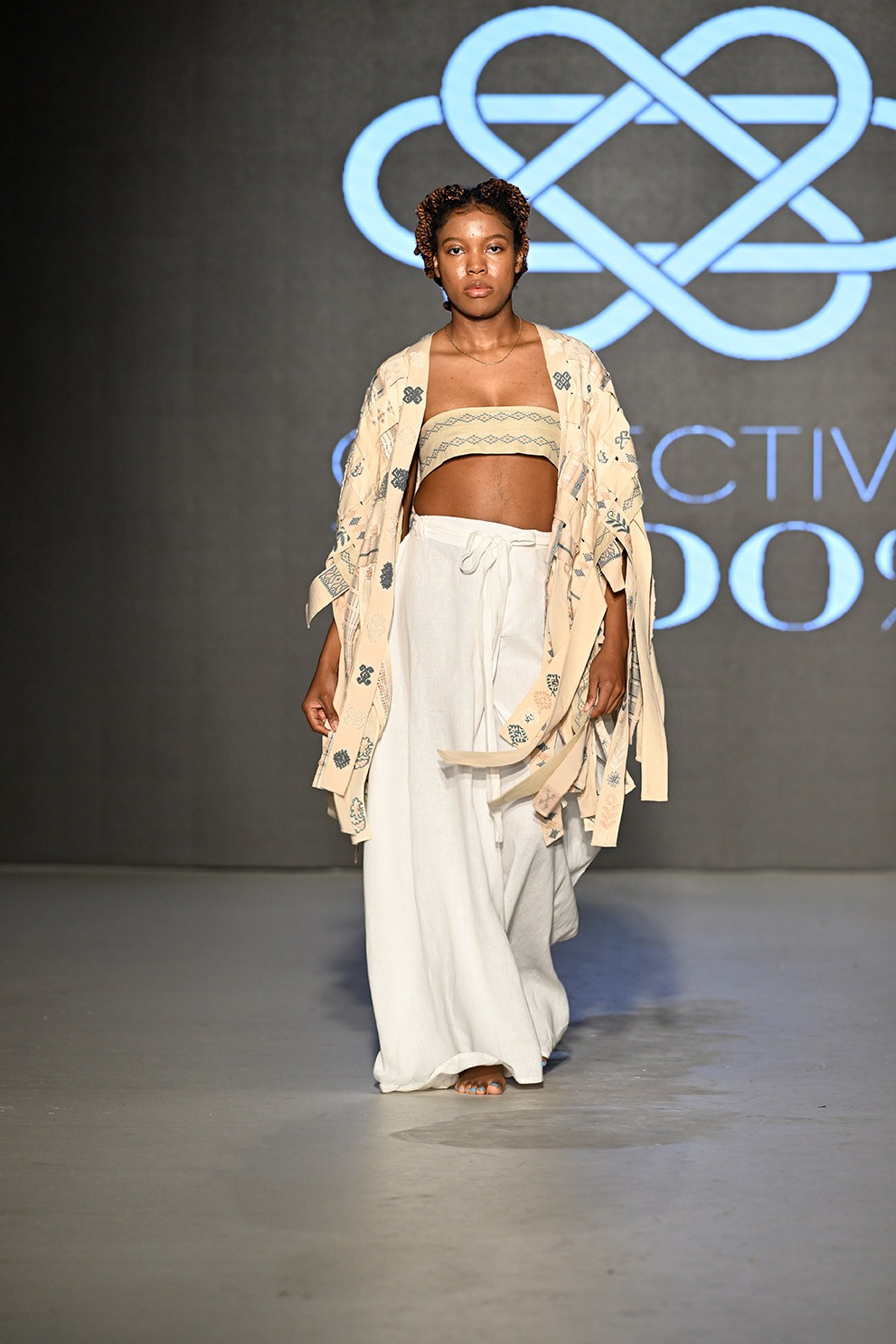
A fabric of many hands.
This huipil features a maxi weave composed of interwoven strips, blending techniques from Chiapas and Yucatán. A visual language of unity, materials, and movement—each segment a tribute to collective craft. Paired with wide-leg crossover pants inspired by traditional silhouettes, offering comfort and flow.
Techniques Used: Mixed artisan weaves and embroideries from Chiapas & Yucatán

Ancestral elegance in motion.
This top, woven on a backstrap loom, is adorned with intricate hand embroidery—each thread adding depth and quiet luxury to its timeless shape.
Paired with a hand-pleated skirt, detailed with strips of loom-woven fabric. A composition of structure and fluidity, rooted in craft.
Techniques Used: Backstrap loom weaving, hand embroidery, hand pleating
Communities Represented: Choyó, Santiago El Pinar, Aldama, Aguacatenango, Larraínzar, (Chiapas)
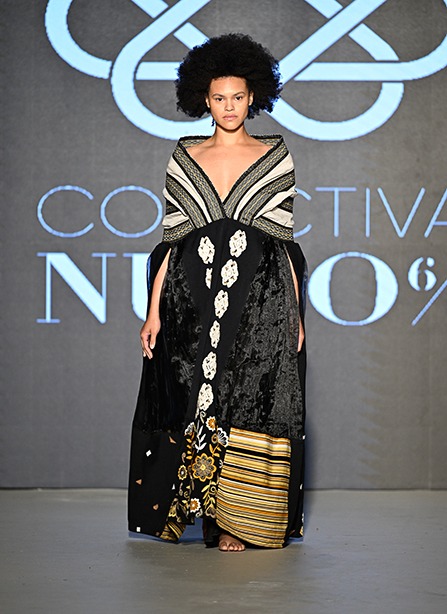
A collective weave of time and tradition.
This cape brings together backstrap loom weaving, Jach’ub mixed warps, embroidered reinterpretations, and hand-pleated details—techniques rooted in Chiapas and reimagined as one statement piece.
Paired with crossover pants made from black cotton fiber, honoring Yucatán’s rich textile legacy.
Techniques Used: Backstrap loom weaving, Jach’ub, hand-embroidery, pleating
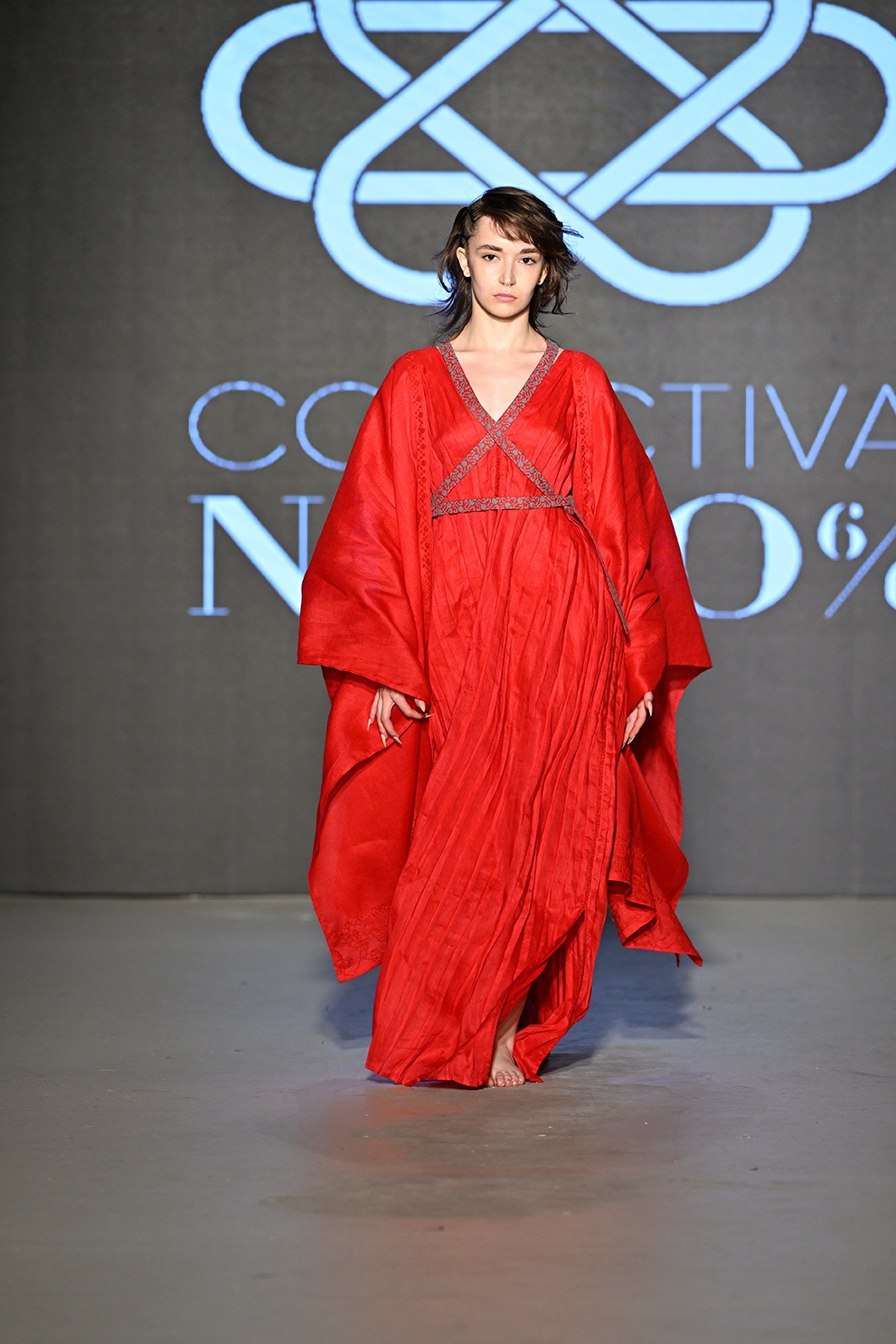
Earth red, sky thread.
This look combines a hand-pleated linen dress with decorative seams and a crossed belt in muted tones of red and blue-gray. Layered with a red linen cape (ruana) embroidered in cross-stitch and Xmanikbeen, an ancestral Mayan technique that carries both beauty and legacy.
Techniques Used: Xmanikbeen, cross-stitch embroidery, hand pleating
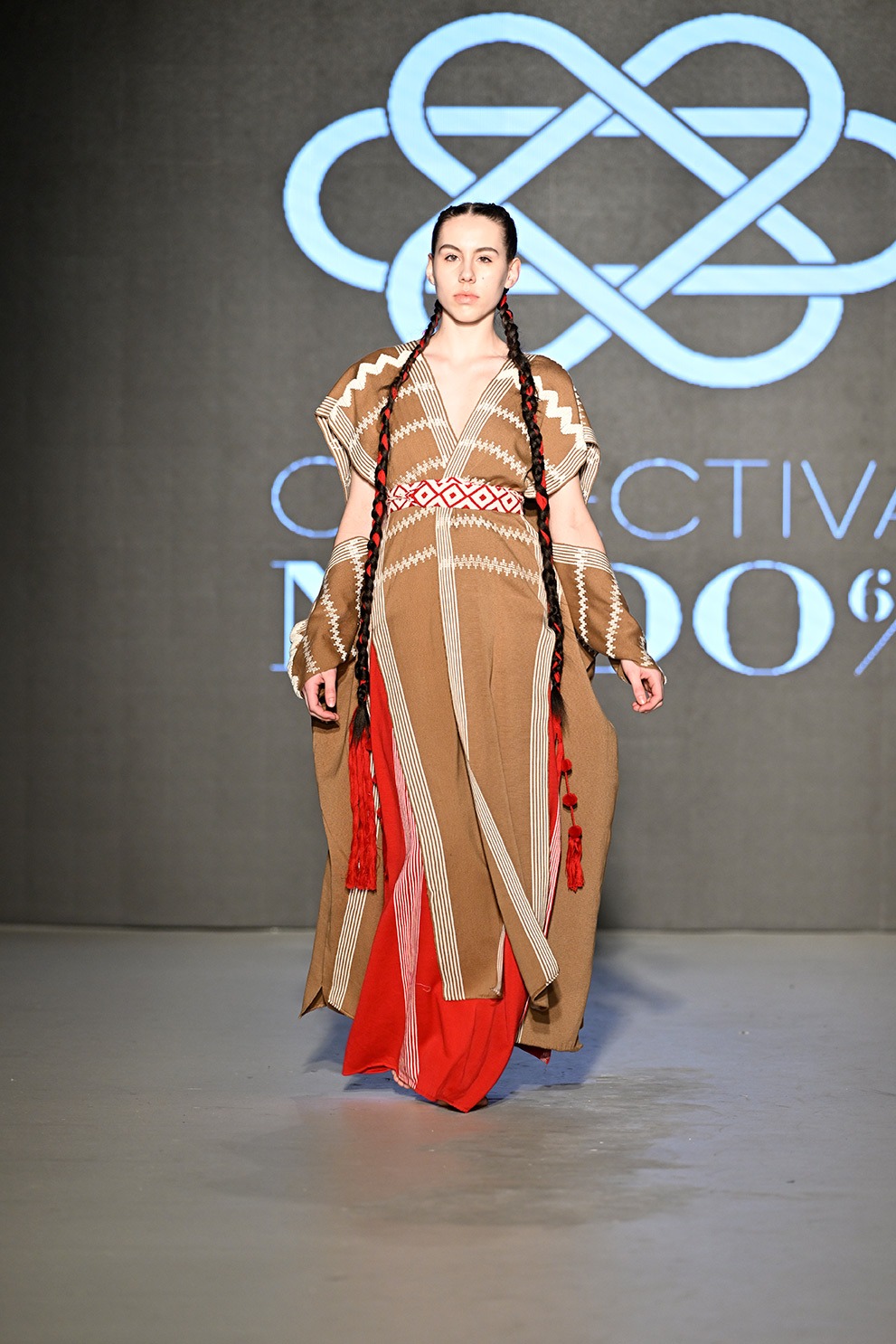
Geometry in motion. This maxi huipil and high-waisted wrap skirt are handwoven on a backstrap loom with raised brocade embroidery. Inspired by the traditional garments of Cancuc, Chiapas, the design plays with symmetry, structure, and the bold contrast of red, tobacco, and off-white tones.
Techniques Used: Backstrap loom weaving, raised embroidery
Communities Represented: San Juan Cancuc & Chenalhó, Chiapas

Flow as resistance.
This mustard dress features hand-pleating, a tied halter neckline, and a draped cape over the arms. Its side slit and elegant movement are rooted in the traditional garments of Amatenango del Valle, crafted by Esperanza Pérez.
Techniques Used: Hand pleating
Communities Represented: Amatenango del Valle, Chiapas
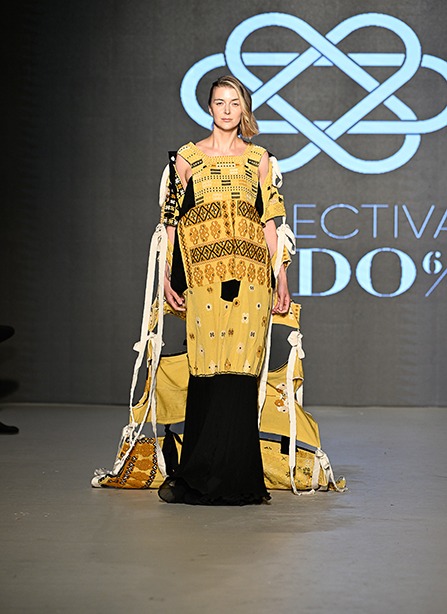
Many voices, one garment.
This dress fuses handwoven panels from eight different communities—each woven on a backstrap loom, then pleated and joined to form a silhouette that flows with structure and story. A contemporary interpretation of the huipil, honoring the diversity and depth of ancestral knowledge.
Techniques Used: Backstrap loom weaving, hand pleating
Communities Represented: Chenalhó, San Juan Cancuc, Aldama, Tenejapa, Larraínzar, Zinacantán, Huixtán, Santiago El Pinar, Aguacatenango
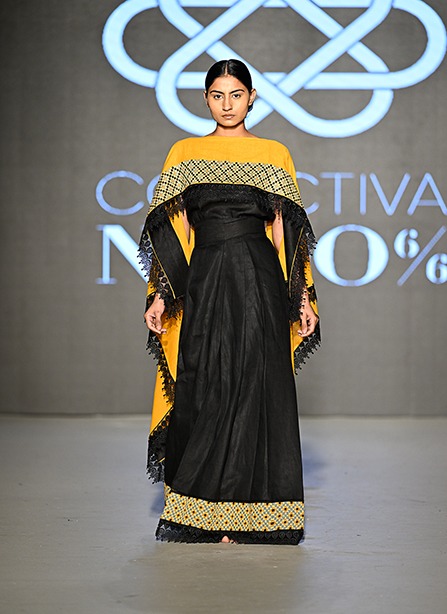
A stitch that speaks of ancestry.
This flowing cape and linen skirt are embroidered with the Kaxbichuy technique—an ancient Mayan stitch brought back to life. Today, only a few artisans continue to preserve it, making this piece a rare treasure. Each thread adds depth, texture, and a quiet resonance of cultural memory in mustard, bluish, and earthy tones.
Techniques Used: Kaxbichuy or Al revés Chuy embroidery.
Communities Represented: Teabo, Yucatan
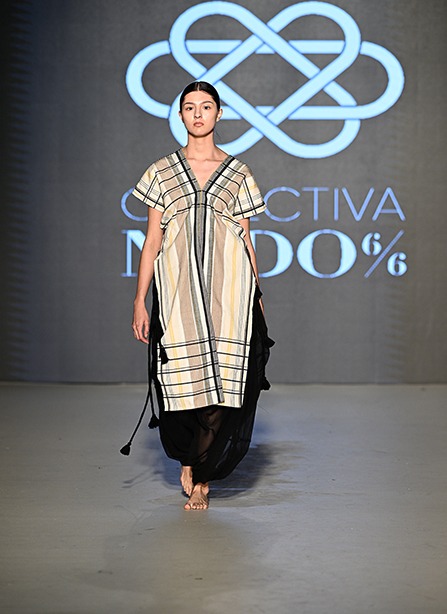
A silhouette shaped by memory.
The long huipil, open at the sides, is woven in Zinacantán using the ancestral Jach’ub warp technique and linear brocades—finished with a hand-joined randa. The pants reinterpret the Huixteco calzón, paired with a stack of hand-braided belts and fajas, echoing the layered richness of tradition.
Techniques Used: Backstrap loom weaving, Jach’ub warp, hand-joined randa
Communities Represented: Zinacantán, Chiapas
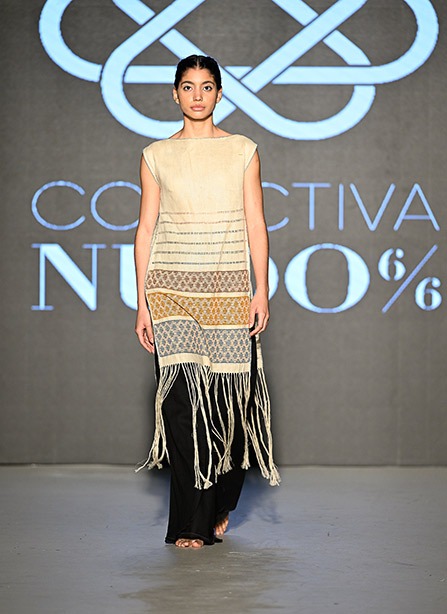
A delicate force.
This look pairs black cross-tied cotton trousers with a lightweight linen blouse, embroidered using Xmanikté, one of the oldest known techniques of Maya heritage.
Threads in shades of grey, tobacco, gold, and bluish-grey flow across its surface, while a subtle unraveling detail at the top adds lightness, texture, and a whisper of tradition in motion.
Techniques Used: Xmanikté embroidery, unraveling.
Communities Represented: Teabo, Yucatan, Mexico.
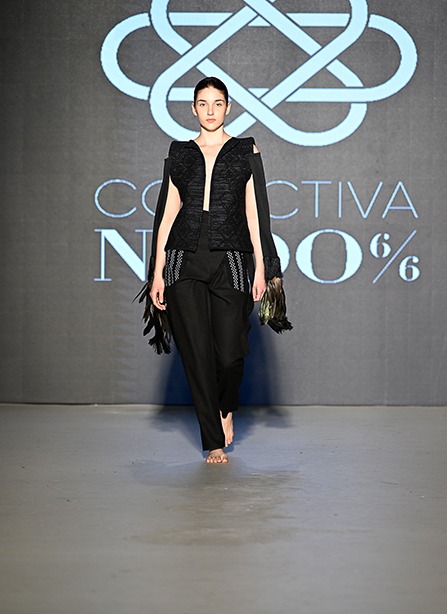
A reimagination of ceremonial form.
The Kapal vest features jaspe weaving and brocades from Larraínzar, elevated by detachable sleeves adorned with feathered knotting from Ahuiran, Michoacán. The pants reinterpret the Indigenous calzón, with side panels from Cancuc and delicate fraying that reclaims and renews ancestral design.
Techniques Used: Backstrap loom weaving, feathered knotting
Communities Represneted: Larraínzar, San Juan Cancuc (Chiapas) & Ahuiran (Michoacán)
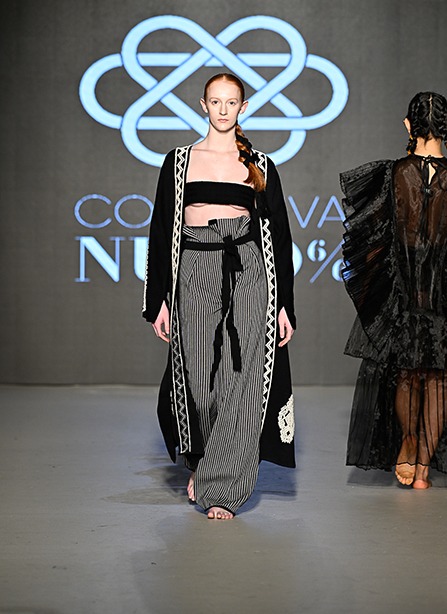
Lines that carry legacy.
The long coat is handwoven on a backstrap loom and embroidered with the iconic Pata de Perro symbol—its patterns echoing the huipiles of Chenalhó, Chiapas.
Paired with high-waisted wrap pants, also handwoven, inspired by the same ancestral geometry.
Techniques Used: Backstrap loom weaving, raised embroidery
Communities Represented: Chenalhó, Chiapas
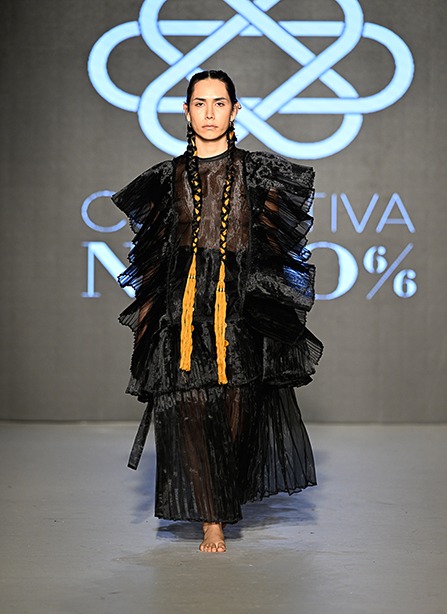
A tribute to memory through movement.
This look pairs a hand-pleated organza dress with a voluminous maxi skirt, both crafted by Esperanza Pérez from Amatenango del Valle, Chiapas. Each pleat echoes traditional silhouettes from her community, reimagined in black, with quiet strength and presence.
Techniques Used: Hand pleating
Communities Represented: Amatenango del Valle, Chiapas
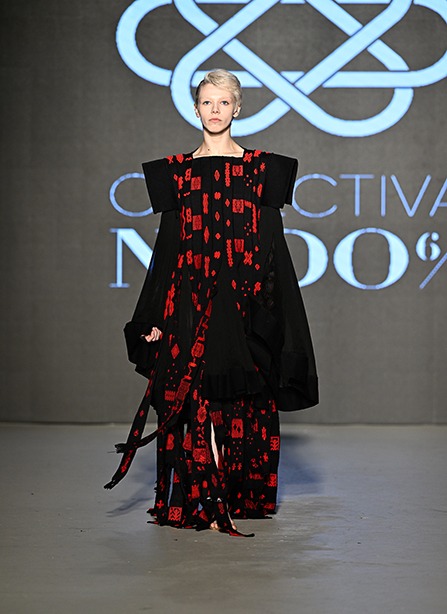
A guardian woven in layers.
This look features a top layer of intricately woven cotton strips on a backstrap loom, enriched with brocade and hand embroidery. Below, a finely pleated dress—crafted with loom straps from Aldama and Chenalhó—moves with quiet strength. A composition of red, black, and off-white. Fierce, fluid, and timeless.
Techniques Used: Backstrap loom weaving, brocade, hand embroidery, hand
pleating
Communities Represented: Chenalhó, Larraínzar, Aguacatenango, Aldama (Chiapas)