
 By
By 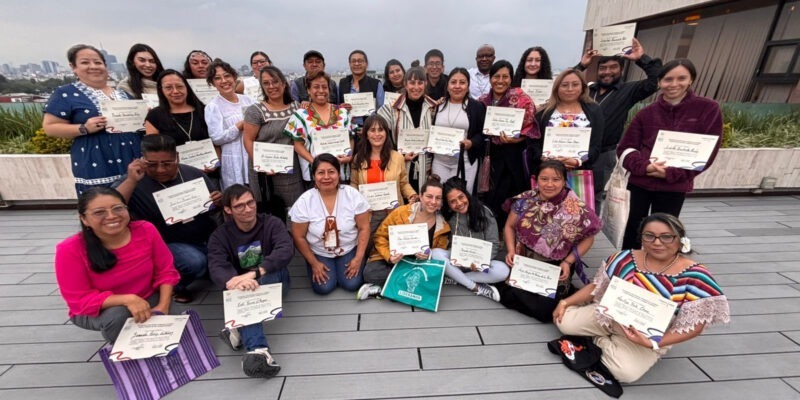
This post is also available in:
Across Mexico, leaders working to address racism, discrimination and other forms of oppression are also confronting a quieter but equally urgent challenge: how to sustain themselves emotionally, spiritually and collectively while doing this work. They’re constantly juggling, trying to fix broken systems while also being responsive to the pressing needs of their neighbors. Increasingly, leaders are recognizing that the pursuit of justice without healing is unsustainable.
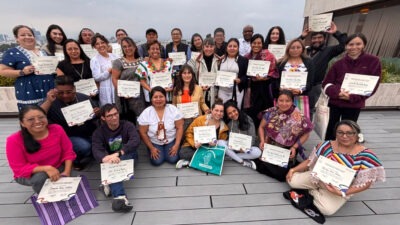
Sixteen leaders from the W.K. Kellogg Foundation’s Global Fellows Network (GFN) in Mexico recently gathered in Mexico City to explore healing-centered leadership practices based on empathy and accountability. Partners at the Colectivo para Eliminar el Racismo (COPERA) led the training, grounded in a practice they call “radical tenderness.” Radical tenderness utilizes vulnerability, care and deep listening to resist systemic violence while fostering deep connections and healing environments.
Healing as a leadership practice
Guided by COPERA’s Collective Racial Healing framework, fellows examined how racism, privilege and identity shape not only systems, but also their internal lives as leaders.
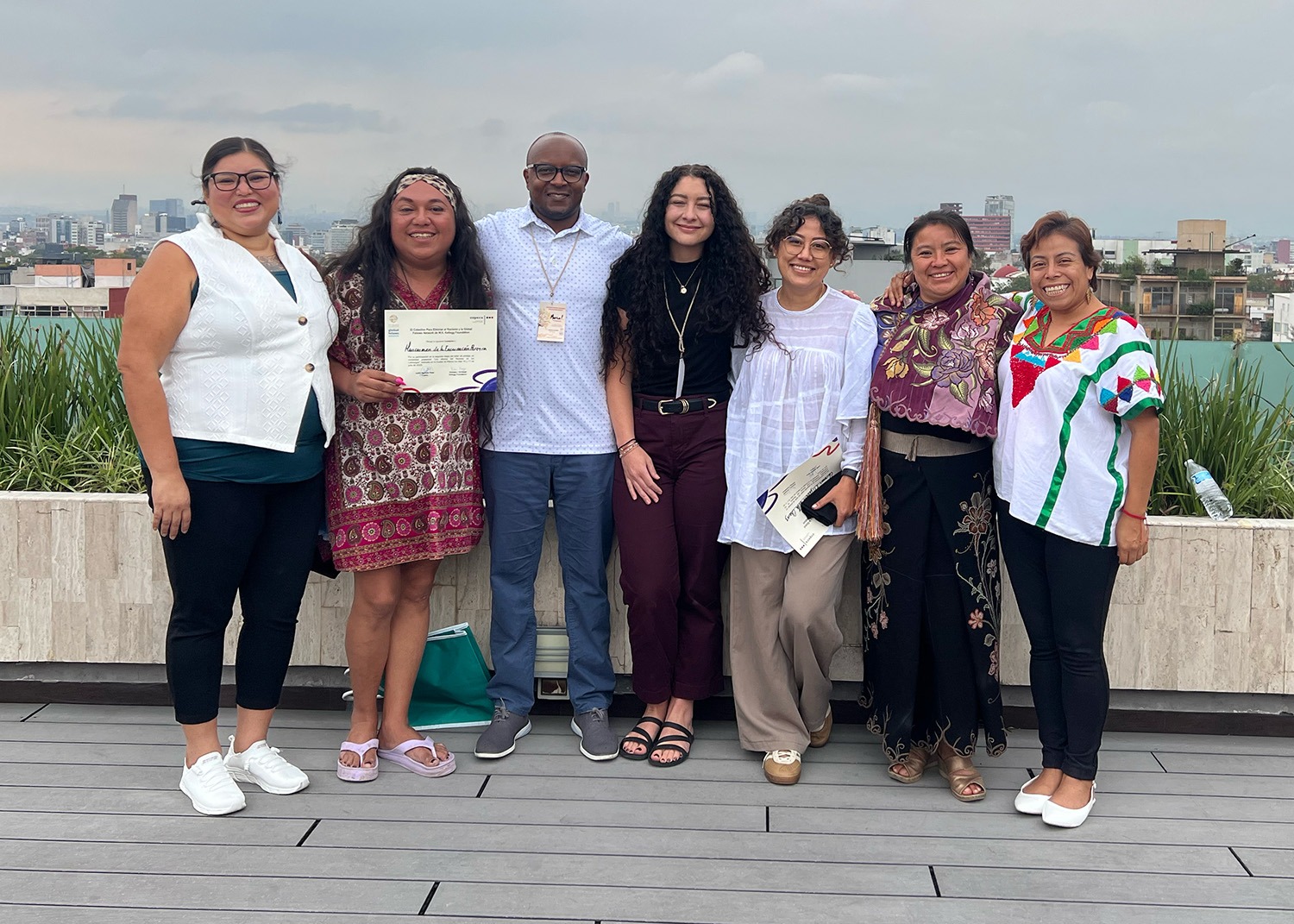
“We created a challenging yet comfortable space for holding deep and difficult conversations,” said Global Fellow Maricarmen De la Encarnación. “Not just in terms of the level of analysis but in terms of sharing personal stories and experiences.”
The conversations, fostering empathy and mutual connection, invited participants to explore their own wounds while reflecting on moments when their actions or words caused harm to others, De la Encarnación said.
Listening, history and the cyclical nature of racism
Fellows engaged in a process of introspection, dialogue and group learning intended to build trust and proximity among the cohort. Global Fellow Gabriela Loaeza, an Indigenous woman based in Oaxaca, said she found the active listening exercises, in which participants paired up to share their experiences of racism, particularly enriching. “Listening and being listened to was so powerful and so healing,” she said.
De la Encarnación said the key takeaway for her was learning more about the historical context of structural racism and violence in her home of Chiapas, Mexico. “This is instrumental to understanding the current state of my country,” she said.
“They say that if you don’t know your history, you’re bound to repeat it.”
From reflection to responsibility
Both Loaeza and De la Encarnación work in their respective communities on issues of women’s rights and well-being. In Oaxaca, Loaeza explores the deep connections between women and their local natural environments, while De la Encarnación focuses on improving the safety of trans women across Mexico. They both stressed the importance of women working together to protect each other, counter oppression and build collective strength in their communities.
They also enjoyed meeting other fellows, learning from and with each other and examining the unique ways their communities are impacted by racism.
Loaeza recounted how the group worked together to better understand a matrix for oppression developed by COPERA. The framework maps how systems such as racism, sexism, classism and other forms of discrimination intersect and shift depending on context, relationships and power. Rather than placing people in fixed categories of oppressor or oppressed, the matrix shows how individuals can experience both privilege and marginalization at different moments and in different spaces.
For her, it was a revelation. “I figured out that racism is not linear,” she said. “One single person or one single event can put you in a privileged sphere, but it can also move you into a situation where you are living in or practicing racism.”
Having those kinds of conversations with colleagues is important, she said, because they can lead to action. “The power to name [racism] and see it also leads us to the core responsibility of assuming what is within our control.”
Although the conversations could at times be challenging, she said they were always held with love and without judgment, describing them as a source of nourishment. There were also moments of playfulness — such as reframing something as simple as yawning as an expression of healing rather than disrespect.
Loaeza admitted that the work she does can feel exhausting at times, “Because it seems like we’re not having much impact on changing oppression, inequality and privilege.” But, she added, “When I’m with other people and we share the same dreams, it fills me with enthusiasm, energy and motivation.”
A collective path forward
The experience reinforced for many fellows that leadership does not happen in isolation.
“The workshop reminded me that I’m not alone,” Loaeza said. “We are part of a network, a collective and we’re making transformative changes in the society we live in.”
De la Encarnación echoed that sentiment, describing the journey as “Extremely loving and healing.” Another key takeaway for her was the realization that “I am the teacher,” as she hopes to carry the COPERA practice of “Radical Tenderness” into her work with trans communities. This workshop was timely for De la Encarnación, who is preparing to attend a session at the United Nations (UN) Permanent Forum on People of African Descent.
Through its collaboration with COPERA, the Global Fellows Network continues to nurture leaders who see justice and healing as inseparable. In Mexico, fellows are demonstrating that confronting racism requires not only courage and clarity — but also tenderness, community and the willingness to heal together.
“Being a Global Fellow has helped me by giving me empowerment, agency and opportunities for a more expansive vision,” said De la Encarnación.
Learn more about the Global Fellows Network.

Comments