 By
By 
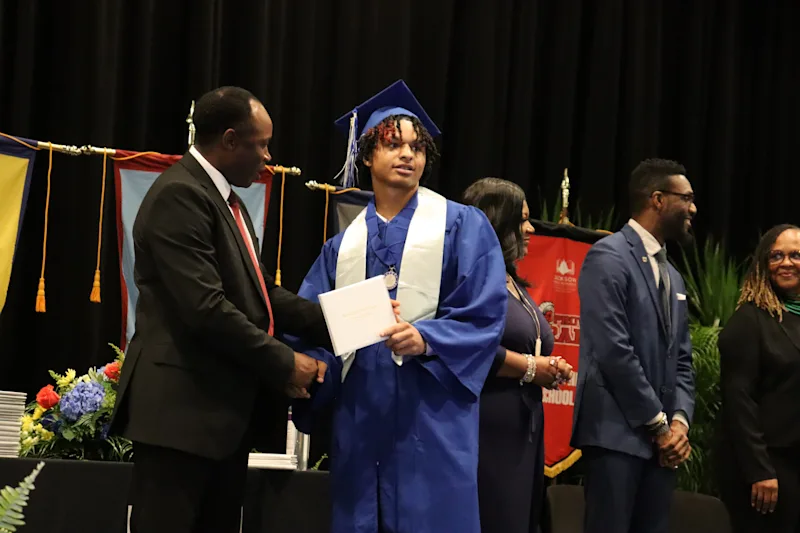
On graduation day for the class of 2025, the energy at Jackson Public Schools (JPS) was electric. Scholars in caps and gowns celebrated not just their diplomas, but tens of millions of dollars in scholarship offers. Among the many success stories were Ryan Rhodes who earned the National Merit scholarship, and Jayme Anderson, who received over $10 million in offers from more than 50 universities, including Stanford University, University of California, Berkeley and University of California, Los Angeles.
Such achievements represent a transformation that might have seemed impossible just eight years earlier.
When an “F” threatened their futures
In 2017, Jackson Public Schools — Mississippi’s second-largest district serving nearly 27,000 students — had earned an “F” rating from the state. Only about 20% of scholars were proficient in English Language Arts, and just 17% in math. Nearly one in three scholars wasn’t graduating.
Behind the statistics lay misaligned curricula that left teachers unsure what scholars had learned in previous years, teacher shortages that understaffed classrooms, crumbling schools that failed safety standards and a patchwork of well-intentioned but disjointed programs.
But the community refused to accept failure as their children’s destiny. Families, educators and civic leaders stepped forward, determined to change course.
A community shows up
The Better Together Commission — established with support from the W.K. Kellogg Foundation (WKKF)— became their vehicle for change, staving off the threat of a state takeover of the state’s second-largest school system. Fifteen volunteers — from educators and parents to business and faith leaders — designed Jackson’s transformation with support of then Republican Gov. Phil Bryant, then Democratic Mayor Chokwe Antar Lumumba and Jackson Public Schools leadership. Over 18 months, the commission held listening sessions across all city wards, youth summits, stakeholder meetings and a citywide canvassing effort, producing 51 recommendations to guide the district’s transformation, all reflecting the priorities identified by families, teachers and local leaders.
Turning recommendations into results
Working from the community’s recommendations, the district aligned curriculum so teachers knew what scholars had learned before, restructured professional development around evidence-based practices, made data-driven school consolidation decisions with community input and expanded opportunities through international exchanges while addressing operational needs.
Today, the district serves nearly 18,000 scholars — and despite facing challenges like COVID-19, water crises and school consolidations, the results are clear:
Academic performance:
JPS improved from an “F” rating in 2017 to a
"C"
rating first achieved in 2022 and maintained through 2025.
Math proficiency has increased from 17% to
29%
English Language Arts proficiency increased from 20% to
29%
Scholar outcomes:
Graduation rates rose from 70% in 2016-2017 to more than
84%
in 2025, meaning hundreds more scholars earn diplomas each year.
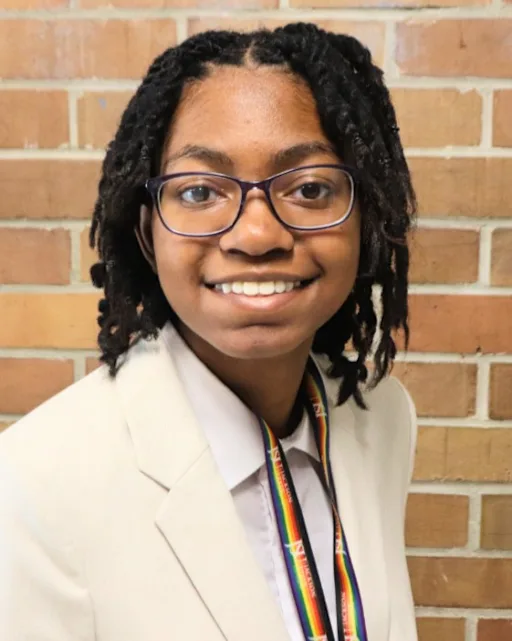
The Jackson Public School district’s collaborative commitment to student-centered support proved transformative for students like Ryan Rhodes. Arriving at Murrah High School from a smaller district, his previous coursework didn’t align with JPS’s structure. Teachers provided materials to close learning gaps while administrators worked to ensure his placement kept him on track. ‘My teachers were helping me with material that technically wasn’t their job,’ Rhodes recalled — the kind of all-hands-on-deck approach that defined his experience.
By junior year, Rhodes was thriving. His instructor Rhonda Murphy-Johnson, who embodied the district’s focus on nurturing academic and personal growth, became one of the most impactful figures in his education. “She helped me grow as a person and become more comfortable and more confident in myself,” he said. When she encouraged students to compete publicly, Rhodes stepped up — winning locally and competing at the national level. That momentum carried through: a perfect ACT score, a National Merit Scholarship and a presidential scholarship that now covers his college education. Today, Rhodes is preparing to return to JPS as a teacher. “Education is one of the very few ways to leave an impact on somebody that lasts forever,” he said.
A model for the nation
The district’s approach will continue through 2029 with a new plan that maintains this community-centered approach. But the true measure of success isn’t found in ratings or statistics — it’s in the scholars crossing graduation stages each year, prepared for bright futures their community helped create.
Jackson showed that when families, teachers and local leaders shape solutions together, they drive progress rooted in what scholars need to thrive. Asked what the secret was, Superintendent Errick Greene credited, “A whole community of folks wrapping their arms around our kids to try to make a difference.”
Explore more
Scholar success stories
Accountability data
- JPS 2016 – 2017 District Report Card (PDF)
- 2025 School District Ratings (PDF)
- Mississippi Department of Education Data Explorer
Strategy & planning





Comments