 By
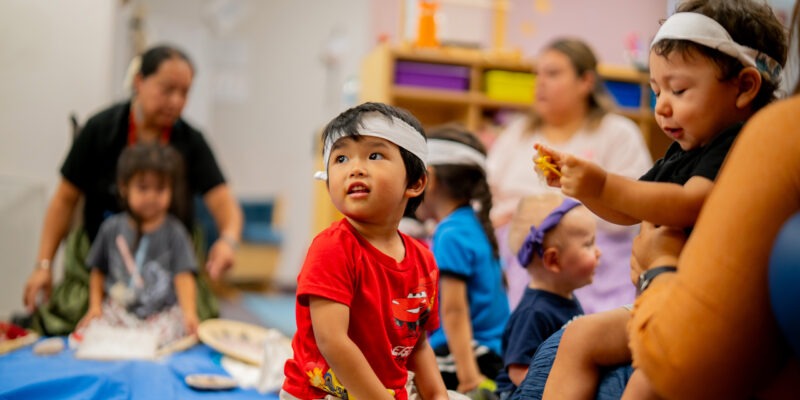
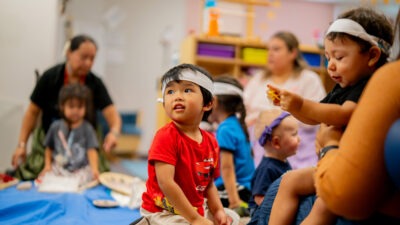
When his teachers sang the words, 1-year-old Jack Cardenas knew exactly what to do.
“Náníyis,” they intoned in Diné Bizaad, the native language of the Navajo People, to the tune of “If You’re Happy and You Know It.”
Without looking to his classmates or caregivers for cues, Jack reached out his arms to steady himself and turned a series of circles on the spot, just as the lyrics had requested.
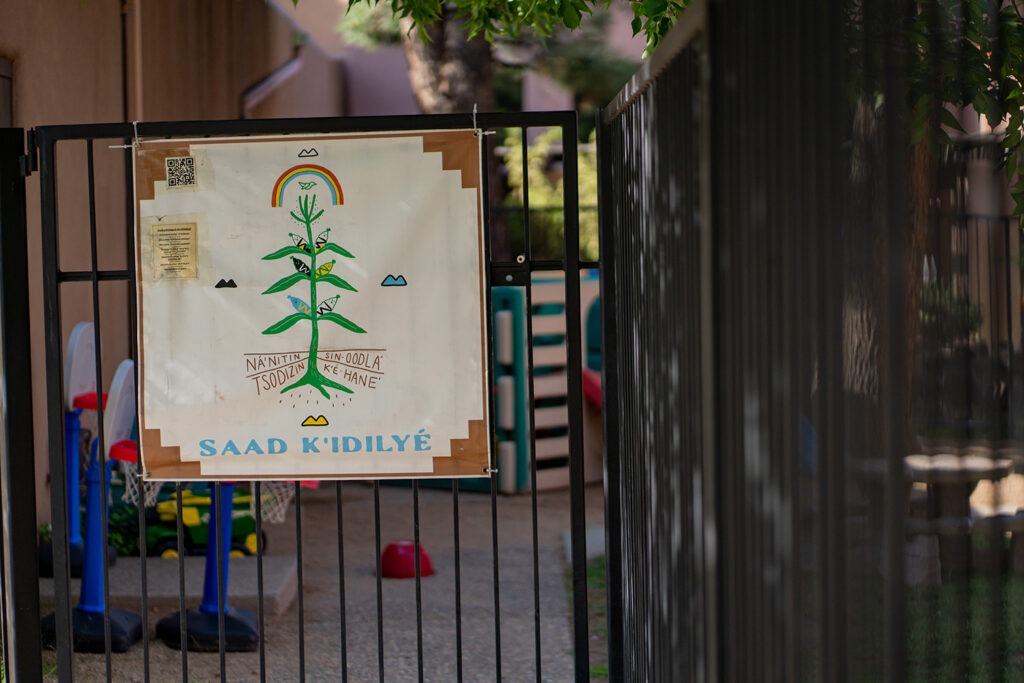
Jack’s comprehension might have delighted any teacher or parent: It was a sure sign of language development. But for the community of educators and caregivers at Saad K’idilyé, an Albuquerque-based preschool and WKKF grantee since 2025, that toddling turn on the lawn signaled something more: evidence that their yearslong effort to save their endangered language was working.
After decades of forced assimilation and an increased use of English, Indigenous languages across the country are in decline. The United Nations Educational, Scientific and Cultural Organization (UNESCO) estimates that more than half of the roughly 300 Indigenous languages once spoken in the U.S. have gone to sleep, and most of those still spoken are endangered.
Diné Bizaad is the most commonly spoken Indigenous language in the United States, with an estimated 161,000 speakers. But Warlance Chee, Saad K’idilyé’s executive director, says the story is much more nuanced. These days, most people speak Diné Bizaad as a second language. Fluency is falling off. He thinks just a few dozen young children are learning from native speakers at home.
“If we don’t do anything about it, our language is due for extinction,” Chee said. “That’s a situation we don’t want to be in.”
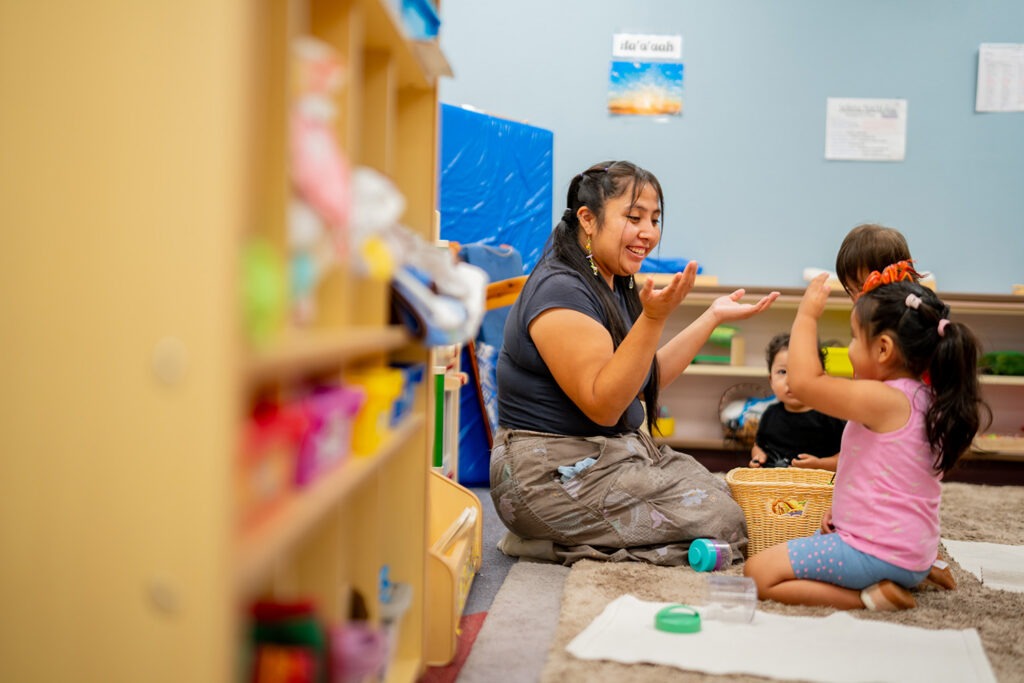
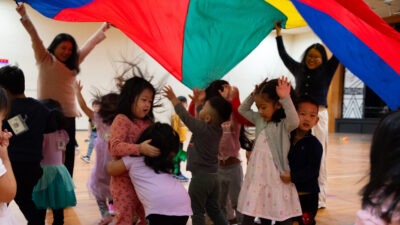
Saad K’idilyé students and instructors practice opposites — fast and slow, loud and quiet — while singing “The Caterpillar Song.”
Back from the brink
Chee and several colleagues started Saad K’idilyé in 2019 with the goal to recreate intergenerational language transmission, even when parents themselves are not fluent speakers. Families enroll early — sometimes prenatally — and commit to immersing both their children and themselves in Diné Bizaad. Children hear the language from birth through their earliest years, a critical period of time for language development.
This full-immersion model of learning is called a language nest. From New Zealand and Hawaii to Canada and the mainland United States, the model has shown promise in revitalizing endangered Indigenous languages. That work is especially critical, Chee said, in urban areas and other communities where Indigenous people are removed from their language and culture.
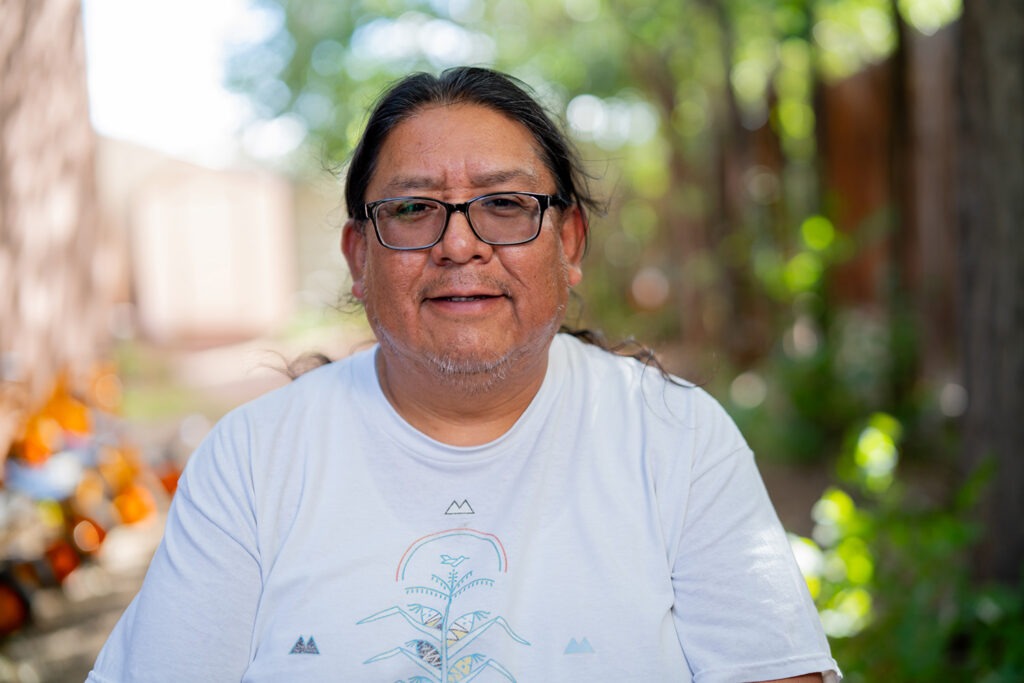
As the child of an older generation, Chee’s experience was different. Growing up on the Navajo Nation in northwestern New Mexico, he heard his native language all around him. Relatives and friends used it at home. Teachers, bus drivers and cafeteria workers reinforced it at school.
But even in his youth, the language’s decline was already underway. With the prevalence of English, Diné Bizaad slowly became community members’ second language instead of their first. A generational gap developed. Many grandparents were fluent, but their grandchildren often had little to no access to primary speakers in the home.
An analysis of U.S. Census data shows the decline in real time. In 1990, 61% of children ages 5-17 who identified as Navajo reported speaking Diné Bizaad in the home. By 2020, that number had fallen to 20%. (The data does not measure fluency, so the number of fluent young speakers was likely far less.)
As an adult, Chee spent more than a decade teaching Diné Bizaad to older children, but the experience left him frustrated and discouraged.
“I started asking myself, how many conversational or highly proficient speakers did I produce in that 12-15 years of teaching?” he remembered. “And my answer was none.”
So he began searching for a new approach.
The immersion model
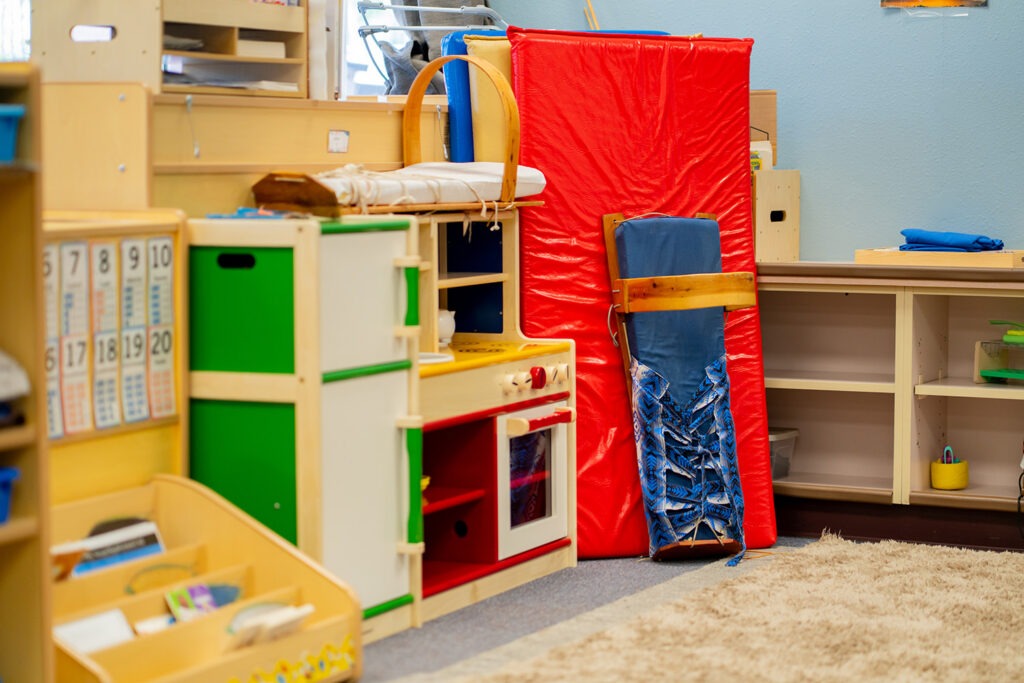
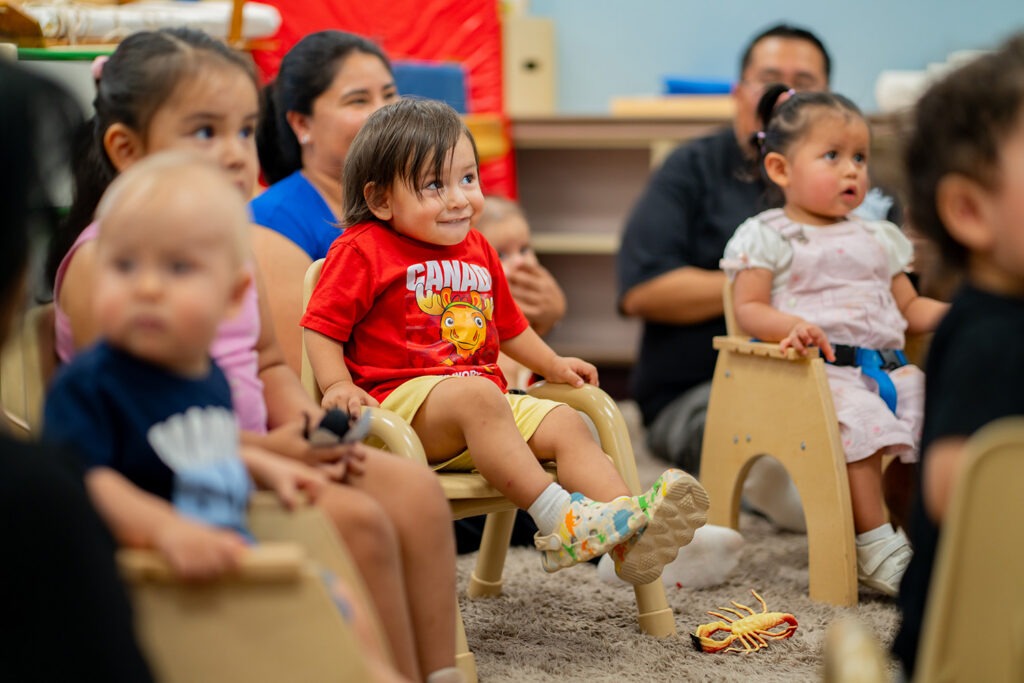
At Saad K’idillyé, learning begins early in a setting not unlike a home. Babies as young as three months old are surrounded by language — both from adults and older children — at a time when their brains are primed for language learning. It’s this early-and-often method of immersion that helps cement Diné Bizaad as a primary language.
On a typical day, the sounds of music, stories and traditional songs fill the air. Children learn to name animals by singing to a Navajo rendition of “Old MacDonald Had a Farm.” They talk about the foods their parents have packed them for lunch and answer questions about the traditional stories read aloud to them.
Saad K’idilyé Executive Director Warlance Chee speaks to preschool student Naabaahii in Diné Bizaad. Naabaahii wants to sing “Old MacDonald Had a Farm.”
English is forbidden at school — a rule that is strictly enforced. Chee and Saad K’idilyé’s other founders modeled the program in part after Hawaii’s successful language nest, or aha pūnana leo, schools. Through a mix of immersion, parent involvement and cultural teaching, these programs helped restore intergenerational language transmission, making Hawaii a shining example of language revitalization. During the 1980s, experts expected native Hawaiian, or ‘Ōlelo Hawai‘i, to go extinct within a generation. By 2010, 24,000 people reported speaking the language at home.
Part of the Hawaiian program’s success was the focus on continued immersion learning beyond preschool. As Saad K’idilyé’s oldest children near kindergarten, Chee said he hopes to be able to open an immersion elementary and middle school. He knows it will take a long-running commitment from parents to make that happen.
‘Just listen’
Like other programs that follow the language nest model, Saad K’idilyé requires parents to learn alongside their children, offering them classes and other opportunities — like the paid apprenticeship program — to immerse themselves more deeply.
The goal, Chee said, is to start bridging that generational gap in proficiency.
“None of our parents speak the language fluently,” he said. “That is our greatest challenge, making sure our parents become proficient speakers, too,” so they can support their kids’ learning at home.
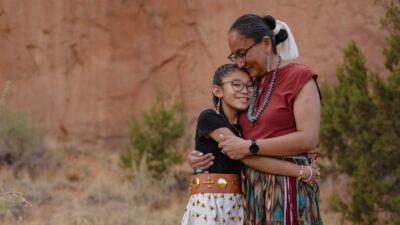
When she started as a parent apprentice at Saad K’idilyé in 2025, Jennifer Tyler looked to her infant son for inspiration.
She had grown up near the reservation with her Navajo father and her Jewish mother, but it had been years since she had spoken Diné Bizaad, and trying to learn a new language felt like a wildly overwhelming task.
“I really just tried to go in with a mindset of, you’re going through this with your son,” she said. “He’s a baby. Treat yourself kind of like a baby. He’s smiling through it, so you smile through it, too, and just listen.”
One year later, both generations of learners are making progress. One-year-old Dylan frequently delights his mother with his comprehension. “Go and put the diaper in the trashcan,” she tells him in Diné Bizaad, and he doesn’t miss a beat. His mom is celebrating her own wins, too.
“I have moments where I’m high-fiving myself at the end of the day,” she said. “I’m like, ‘Wait, that word I learned two months ago finally sunk in.’”
Where language and culture meet
With the rhythmic chanting of the corn grinding prayer sounding in the background, each student took a turn at the millstone. Hands moving back and forth, they ground until the dried kernels broke down into dust, ready for use in tomorrow’s morning prayer.
For Chee and his staffers, language learning and culture go together, and the revitalization of one helps save the other, too. Students learn Diné Bizaad in the context of both traditional and modern practices. Strollers are parked alongside cradleboards. Traditional Navajo stories are told alongside Western songs, and activities like corn grinding not only teach language and culture but also impart critical fine-motor skills.
For staffers like Anesha Yazzie, the combination of cultural and language continuity is about more than education. It’s about identity.
“Before I started working at Saad K’idilyé, I felt a sense of hopelessness because there were so many things that I felt like I missed out on learning from my grandparents’ generation,” she said. “It felt like there was a big piece of my heart missing. We’re going to be future elders. I just hope we’re bridging that gap for our children so they have something to pass down as well.”
Comments