 By
By 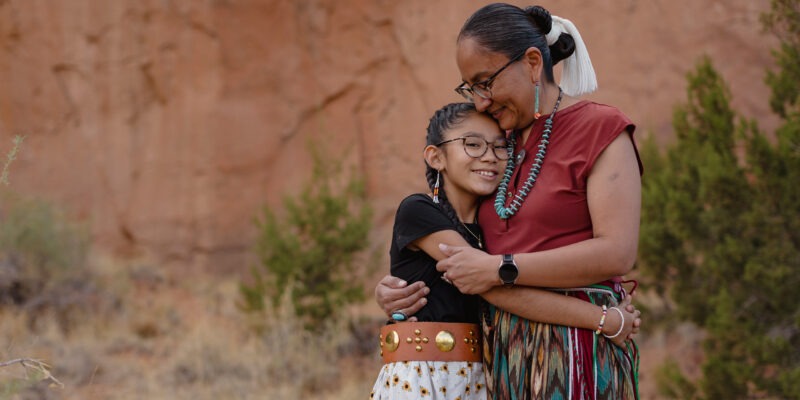
The sky above Gallup, New Mexico, was just beginning to blush with the pinks and oranges of sunset when a freshly filed court ruling popped up on paralegal Wilhelmina Yazzie’s computer screen. It was a sweltering midsummer Friday in 2018, and all of her colleagues at her law firm had left for the weekend.
If Yazzie herself hadn’t been listed as the lead plaintiff in this case, she, too, may have packed up and headed for home. Instead, with a growing sense of excitement, she clicked the link, scrolled through the first few dozen pages of background, and landed on the court’s judgment. What she read left her in a state of cautious elation.
“I was like, is this really what I think it is?” Yazzie recalled. “I kept re-reading it, and I was sitting here alone thinking, ‘OK, who do I call?’ It was so exciting.”
In the consolidated school finance case of Louise Martinez and Wilhelmina Yazzie v. the State of New Mexico, First Judicial District Court Judge Sarah Singleton had ruled in favor of the plaintiffs, holding the state accountable for the “dismal outcomes” of low-income students, Native American students, English language learners and students with disabilities, and requiring officials to overhaul much of New Mexico’s public education system.
The legal journey Yazzie had begun more than a decade before on behalf of her two sons — and on behalf of all of the children in her Diné (Navajo) community — had culminated in this transformational moment for children “whose lives, not just as students but also as adults,” Singleton wrote, “are directly affected by New Mexico’s education system and its funding decisions.”
In the years since, Yazzie and the dozens of co-plaintiffs, advocates and lawyers involved in the case have come to see Singleton’s landmark decision not as a culmination, but as a starting line of their persistent effort to transform New Mexico’s educational system and ensure that every public school student, regardless of race, ability, or background, has a chance to thrive.
‘Our kids have so much potential’
Had it not been for state testing, Yazzie would have had no hint in 2014 that her 9-year-old son Xavier was falling behind. Throughout his early schooling, she had heard nothing but praise from his teachers. They were “very proud of him, of the work he did and how he presented himself,” she said. And yet, in third grade, when Xavier took his first standardized test, he scored “very low on everything.”
“That was very concerning,” Yazzie said. “I was like, he’s only in third grade. How is he not where he needs to be? And as he went on to middle school, it was the same thing. He did great in school. He was getting straight A’s. But when it came to testing, he was still falling below, below, below.”
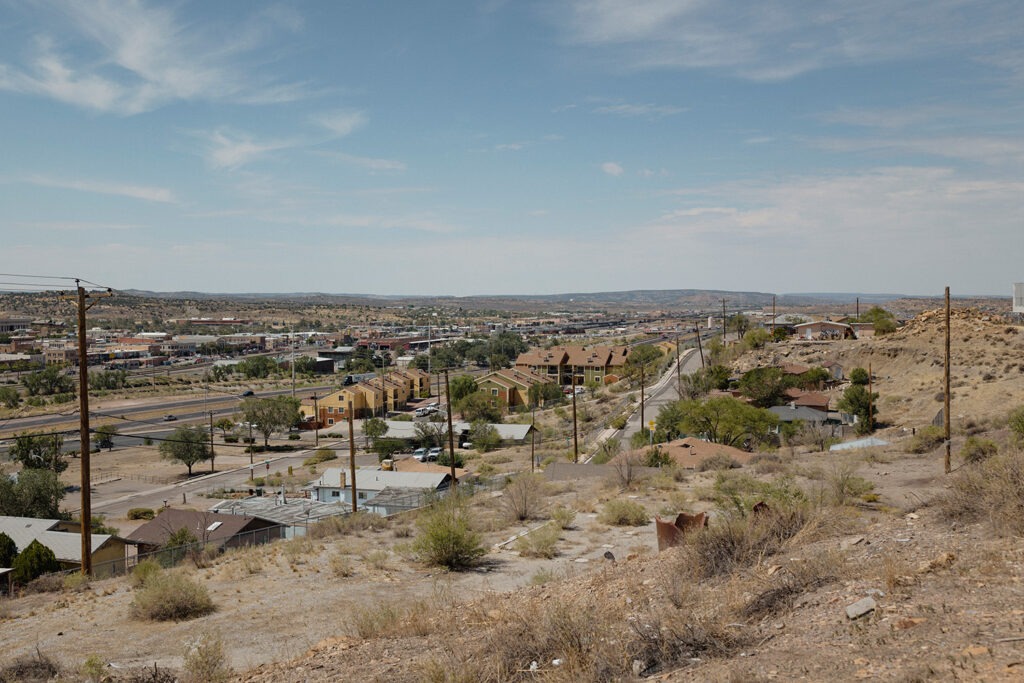
Xavier’s teachers, she said, were passionate educators who made sacrifices to help their students. But too often unfilled positions would leave children to be taught by long-term substitutes. The state didn’t provide adequate funds for transportation, books, extracurricular activities, teacher training and academic support. And even though more than 70% of Gallup’s students are Native American, instructional materials presented a European worldview.
“The kids weren’t seeing themselves represented,” Yazzie said. “And it was the same for me growing up. I never saw myself in those spaces, and I was never confident that I could make my dreams possible.”
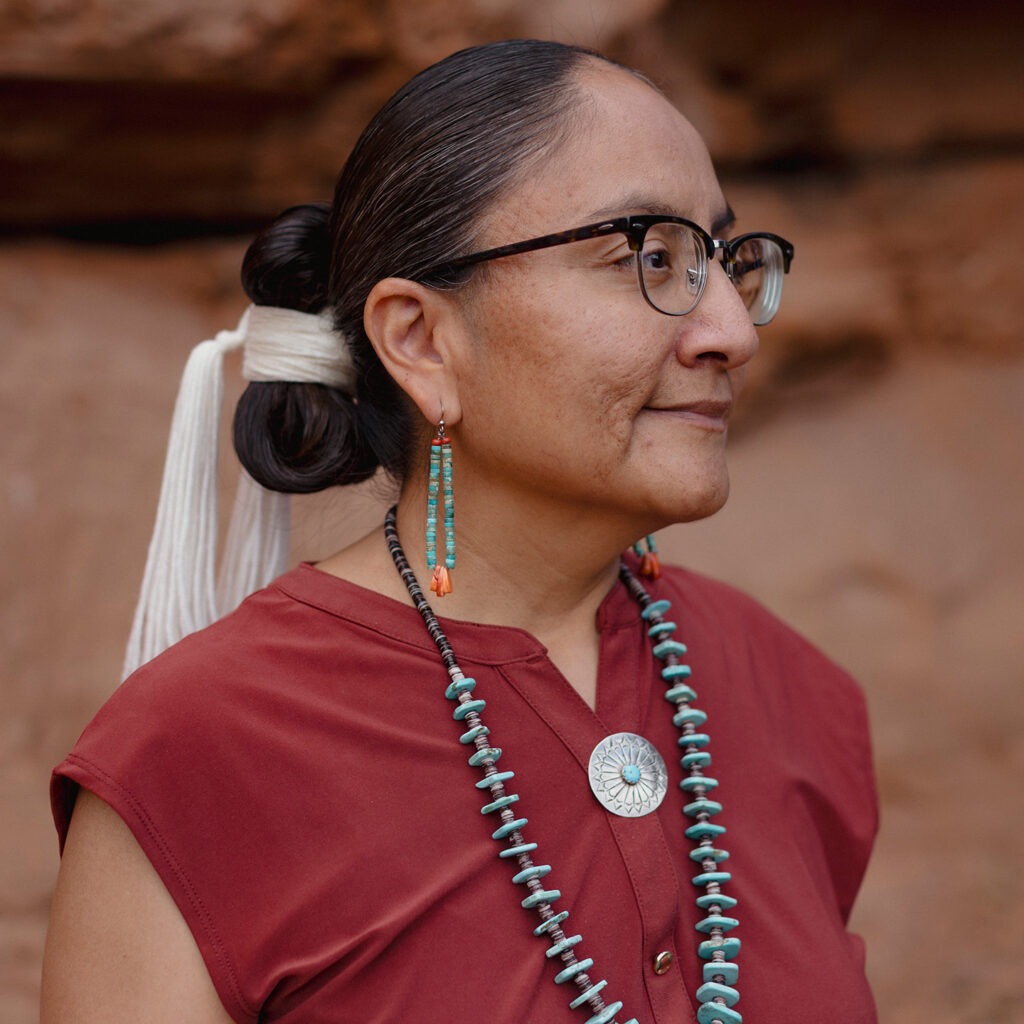
Originally from Casamero Lake, New Mexico, on the Navajo Nation, Yazzie and her spouse had made sacrifices to give their kids the best chance at success. In 2011, they moved an hour west to Gallup to be closer to work and school and to have internet access. When she learned the Gallup School District had joined a lawsuit to hold the state accountable for adequate public-school funding, Yazzie attended a few community meetings and decided to join as well. She saw it as her duty as a mother, and as a way to care for the children in her community.
“We know that our children have so much potential — especially if they know their identity, and especially if they’re proud of where they come from and who they are,” she said. “That plays a big role.”
The W.K. Kellogg Foundation (WKKF) had supported the plaintiffs’ legal team, the nonprofit New Mexico Center on Law and Poverty (NMCLP), since 2009. Advancing racial equity is central to the WKKF’s values — which made support for the Martinez-Yazzie case critical.
“This was New Mexicans saying to our kids, ‘We see you, we love you, and you deserve the best,’” said WKKF Program Officer Michelle Gutiérrez said. “‘You deserve an education that is culturally responsive, that supports your language and your social-emotional learning. We’re going to provide all of the things that make a child whole. That’s why we get emotional — because it is what our kids deserve, and they haven’t received that in the past.”
What happens when the system fails
NMCLP’s legal team spent years culling data and taking depositions from parents, school administrators, academic researchers and education leaders — building a body of evidence that proved compelling in court. The case they built and filed in 2014 charged that the state, its Public Education Department and a handful of other codefendants had systematically denied at-risk students their constitutional right to a sufficient education. At the heart of the case were four specific groups of children who, together, comprise about 70% of the state’s public school students: English language learners, Native American students, low-income students and students with disabilities.
Evidence documented the state’s lack of compliance with laws meant to protect and uplift these children. The New Mexico Indian Education Act, for example, requires the state to provide culturally relevant instructional materials to American Indian students, and yet in most cases the state had not only failed to provide those materials, the judge noted, but officials also had failed to fill the posts of the three regional officers responsible for doing so.
During the trial, which began in June 2017, witnesses testified that New Mexico’s public schools often had to draw from their operational funds to pay for textbooks because the state’s stipend didn’t cover the cost. Teacher pay and teacher retention were exceedingly low, especially in low-income districts, oftentimes leaving the students at the center of the lawsuit to learn from the least experienced teachers. Subpar teacher training and class sizes that exceeded state-mandated maximums exacerbated poor student outcomes. Many rural districts lacked internet connectivity and computers.
Prosecutors drew a line from these poor inputs to students’ poor outcomes. At the time of the ruling, between 4% and 15% of at-risk students were proficient in reading and math. On average, New Mexico’s public school students tested three years behind grade level, and about half of all students entering college needed remedial classes to catch up to their peers.
“We had over 100 witnesses testifying about the failures of the system in New Mexico,” said Preston Sanchez, lead counsel on the case. “We were able to show the disparity between what funds schools actually needed and what they received.” (A 2008 study by the American Institutes for Research concluded that New Mexico public schools were underfunded by $334 million.)
In her ruling, Singleton said this evidence proved that “the vast majority of New Mexico’s at-risk children finish each school year without the basic literacy and math skills needed to pursue post-secondary education or a career.”
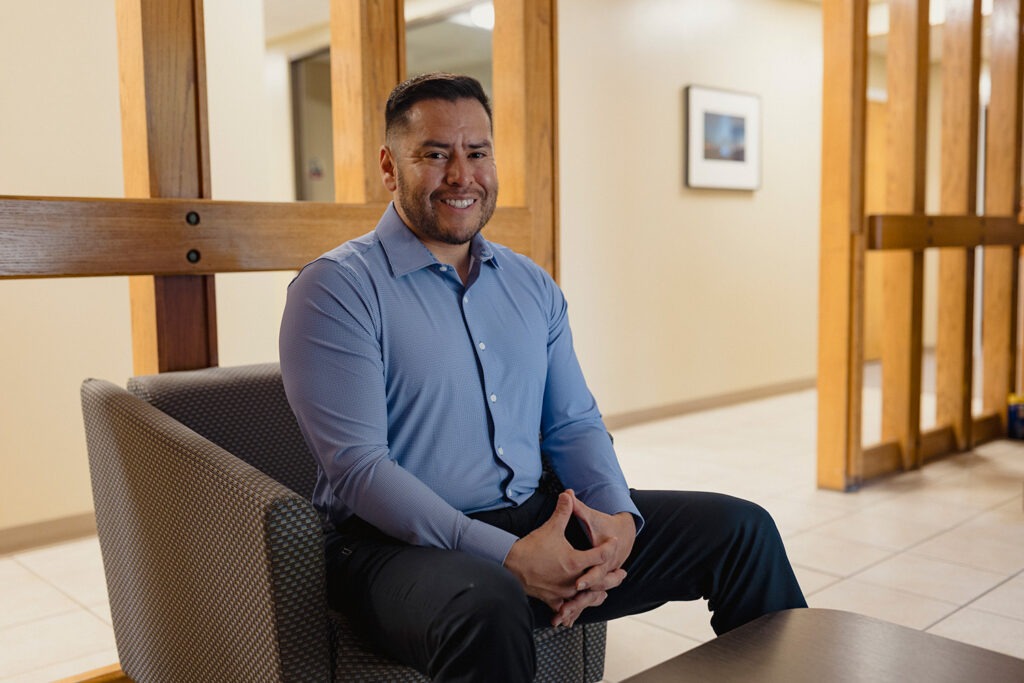
Sanchez, who is Jemez/Laguna Pueblo and Diné, was fresh out of law school in 2012 when he joined NMCLP, an Albuquerque-based organization that uses the legislative and justice systems to advance social and economic equity. A product of Albuquerque’s public schools, Sanchez said his own early experiences drew him to the case. Growing up, he had few mentors, and by early adulthood, he had been arrested several times.
“Life could have gone a different way very easily,” he said. “I was trapped in a system and an environment that wasn’t really working for me.”
On the advice of friends, he went to college.
“Education was this outlet that would take me out into the world and allow me these opportunities to grow as a person and a professional — and hopefully provide young folks with the support and help that I needed when I was young,” he said.
Progress and accountability
Seven years after the ruling, the Martinez-Yazzie case remains at the forefront of New Mexico’s education policy discussions. The state has made strides toward complying with the ruling, appropriating funds for culturally aligned instructional materials, increasing base pay for all teachers, and vastly expanding the state’s early-childhood services, among other policy wins. New Mexico families with young children now have access to free universal childcare and universal Pre-K. The state’s Public Education Department (PED) oversaw a 62% increase in appropriations for public education between 2016 and 2024, and public school students’ test scores are on the rise.
But plaintiffs and advocates describe the state’s efforts as scattershot, unfocused and insufficient. Despite developing several drafts of a plan to respond to the ruling, none was ever adopted. In April 2025, a district judge sided with the plaintiffs’ motion for noncompliance and ordered the state to develop a comprehensive plan to comply with the ruling.
“PED and the state, they’re on the hook,” said Melissa Candelaria, education director at the NMCLP. “They have the responsibility to ensure this happens in the right way — that it’s a collaborative approach involving all of our community stakeholders. There’s been some progress. We acknowledge that. But there’s still a long way to go in this case.”
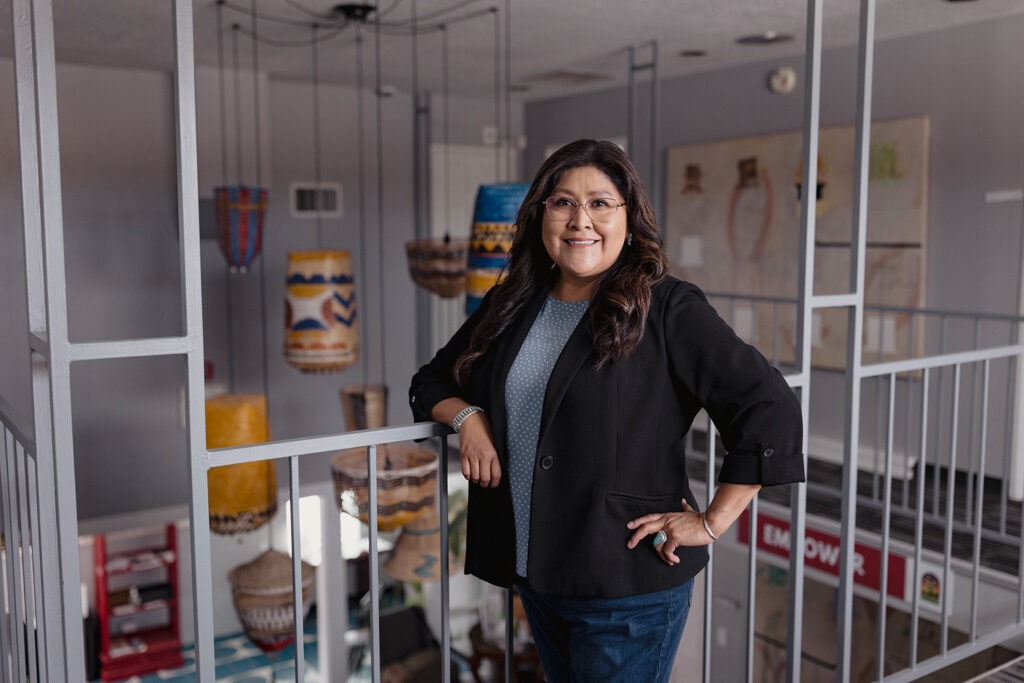
Defendants released their draft plan in October 2025, and Candelaria joined other plaintiffs who say its “dismal” and vague. The Public Education Department submitted their final plan draft in November, which plaintiffs rejected as inadequate. In February, plaintiffs formally challenged the plan with support from several sovereign New Mexico Tribes and asked the court in an April 2026 filing to allow them to develop an alternative plan that more fully addresses their concerns.
Candelaria says NMCLP will continue to partner with stakeholders to promote a culturally responsive education system that adequately prepares every child for success in college and/or career.
“We all have a stake in this,” she said. “We all want our kids to have bright futures, so it behooves us to come together and work toward building a good system.”
Embracing K’é
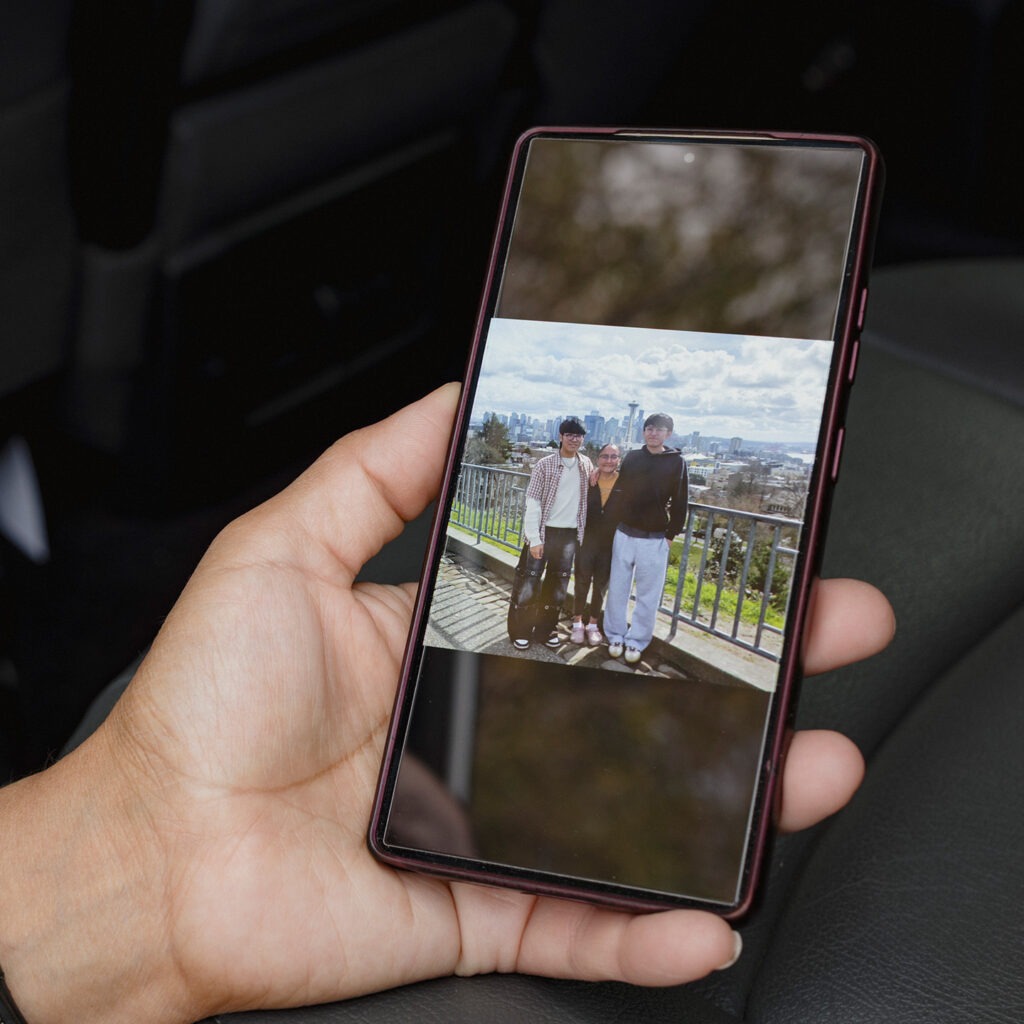
Wilhelmina Yazzie’s sons are now grown. Xavier, 23, attended the University of New Mexico, and her younger son, Reese, 21, is pursuing a degree at Northwest Indian College in Washington. In 2015, in the time between the case’s filing and the trial, Yazzie gave birth to a daughter, Kamimila. When it came time for her to begin school, Yazzie and her partner made a different choice for their daughter. Having seen no improvement in Gallup’s public schools, they enrolled her in a local private school — a choice Yazzie knows many families cannot afford to make.
The decision proved critical. Kamimila is in the fifth grade now, a bright and confident student. Yazzie said the private school offered a more inclusive, respected experience for Native American students, with strong academics and a focus on family. Reese, who had struggled to feel confident in school, transferred to the private school in his sophomore year.
“He totally turned himself around, and this wouldn’t have happened if he stayed in a public school,” she said. He kept his grades up, got into the National Honor Society and earned a college basketball scholarship.”
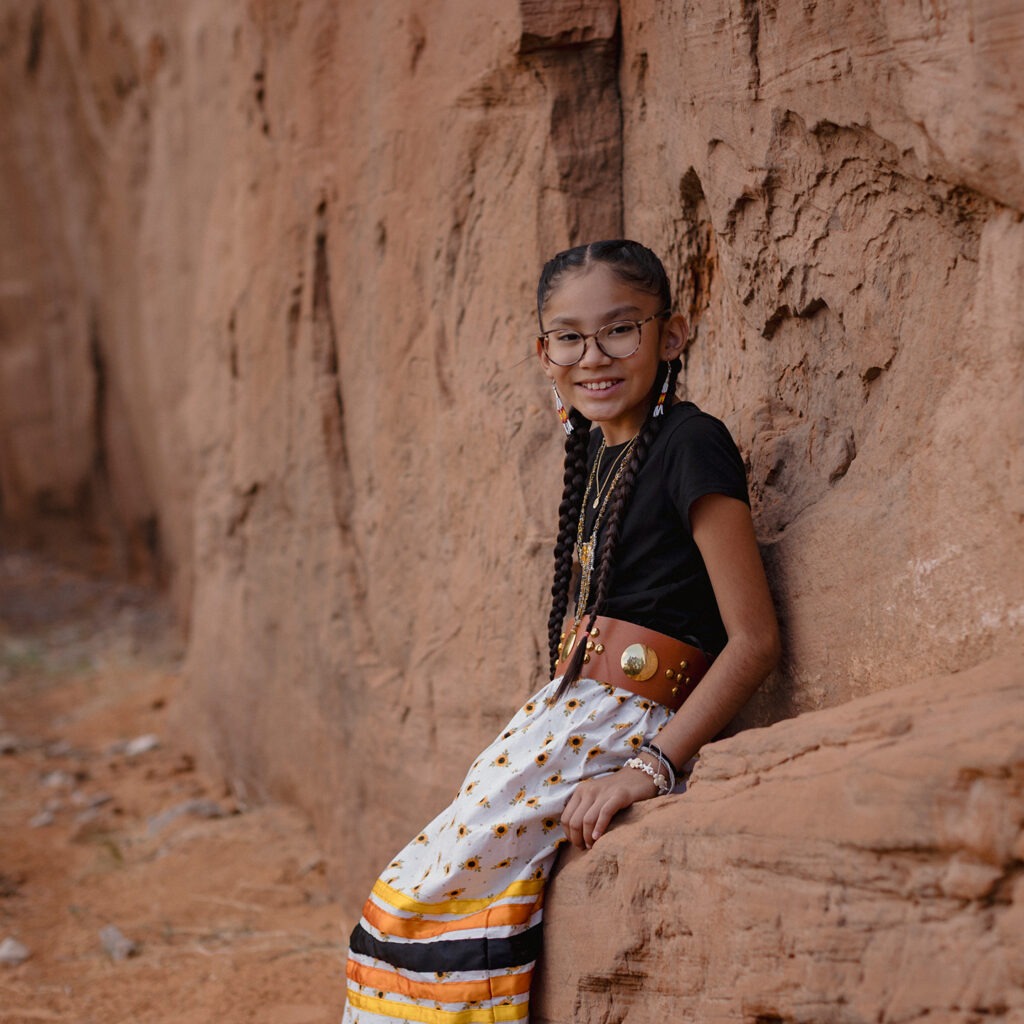
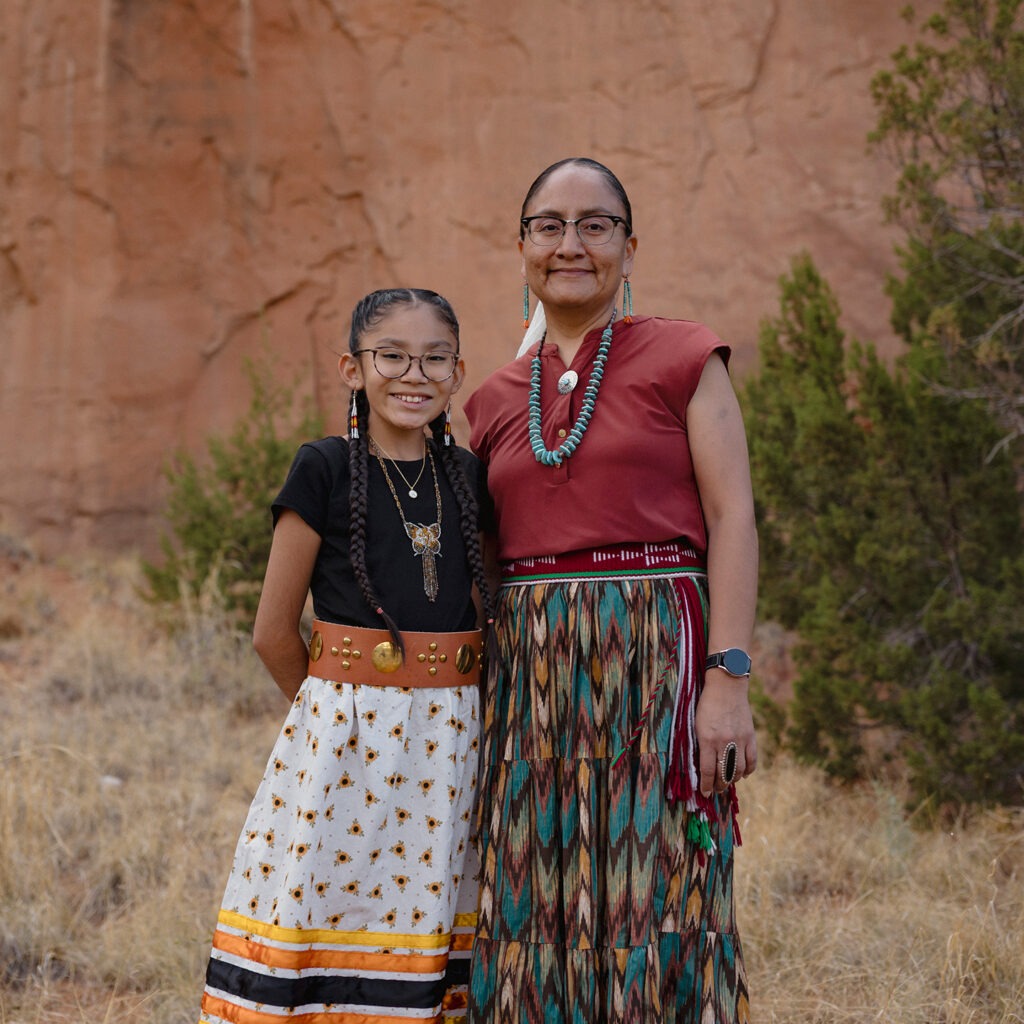
As litigation continues in the case that bears her name, Yazzie remains committed. Over the summer, she attended community meetings where parents and educators met to envision what a statewide plan should look like. Her own children may be doing well, but Yazzie’s Navajo culture teaches her the concept of ‘K’é,’ a word meaning kinship, interconnection and shared humanity. And so, she will continue to fight for the children of New Mexico until all students have the resources and opportunities to succeed.
“As a mother, I want my children and all children to have a good future where they know they can reach their dreams and use their gifts,” she said. “It’ll take time. I know things don’t change overnight, but I’m staying optimistic.”
The New Mexico Center on Law and Poverty files a lawsuit, charging the state with denying at-risk students, including Native American and Latino students, their constitutional right to a sufficient education. Yazzie vs. the State of New Mexico is later consolidated with another lawsuit, Martinez vs. the State of New Mexico.
The trial begins.
In a landmark decision, First Judicial District??? Judge Sarah Singleton rules in favor of the plaintiffs and holds the state accountable for the “dismal outcomes” of students who are English language learners, Native American students, low-income students and students with disabilities.
Plaintiffs file a joint motion for noncompliance, charging that the state has failed to develop a comprehensive plan to provide a sufficient education for all students.
The court orders the State of New Mexico to develop a comprehensive plan.
The state submits its final plan.
Plaintiffs challenged the state’s remedial plan. Yazzie-Martinez plaintiffs argued PED’s November plan lacked measurable benchmarks, timelines, accountability and adequate funding commitments. Several Tribal governments also opposed the plan.
Plaintiffs proposed developing a new plan with families, educators, Tribal leaders and experts—potentially shifting significant responsibility for designing the remedy away from PED.


Comments